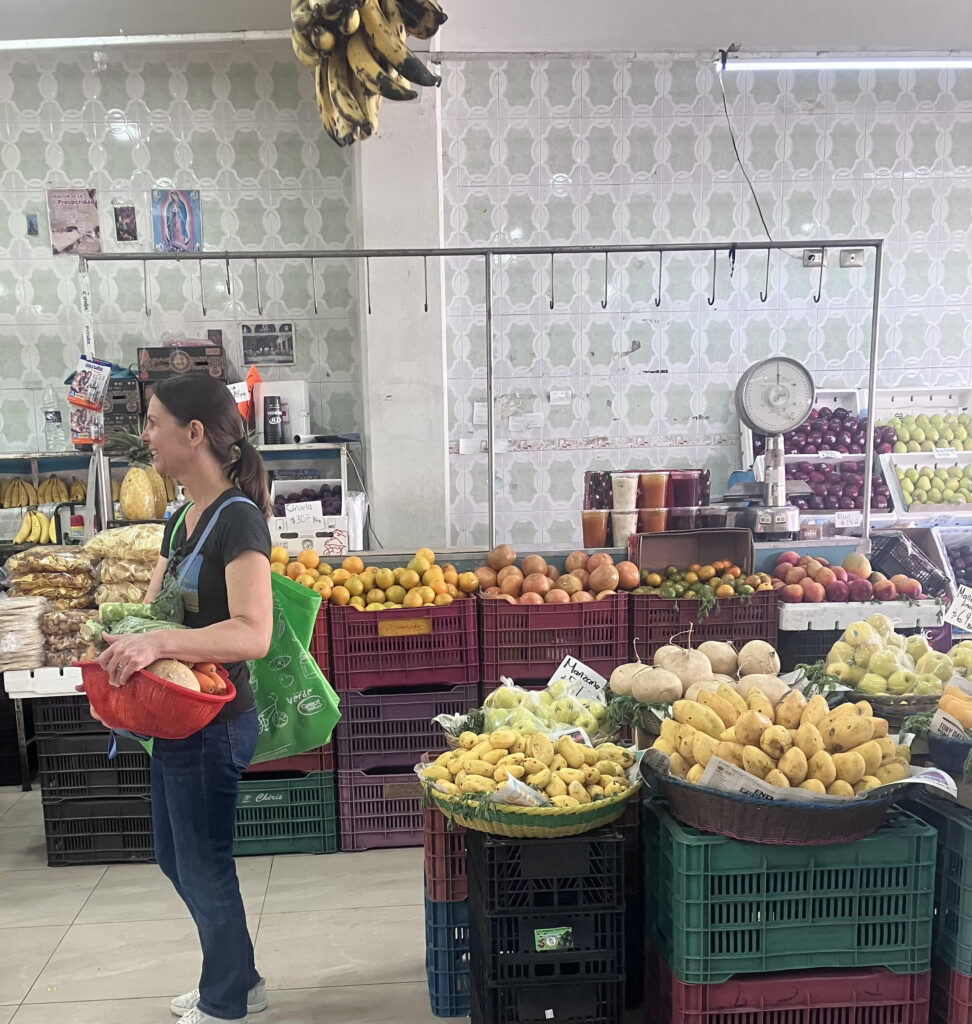
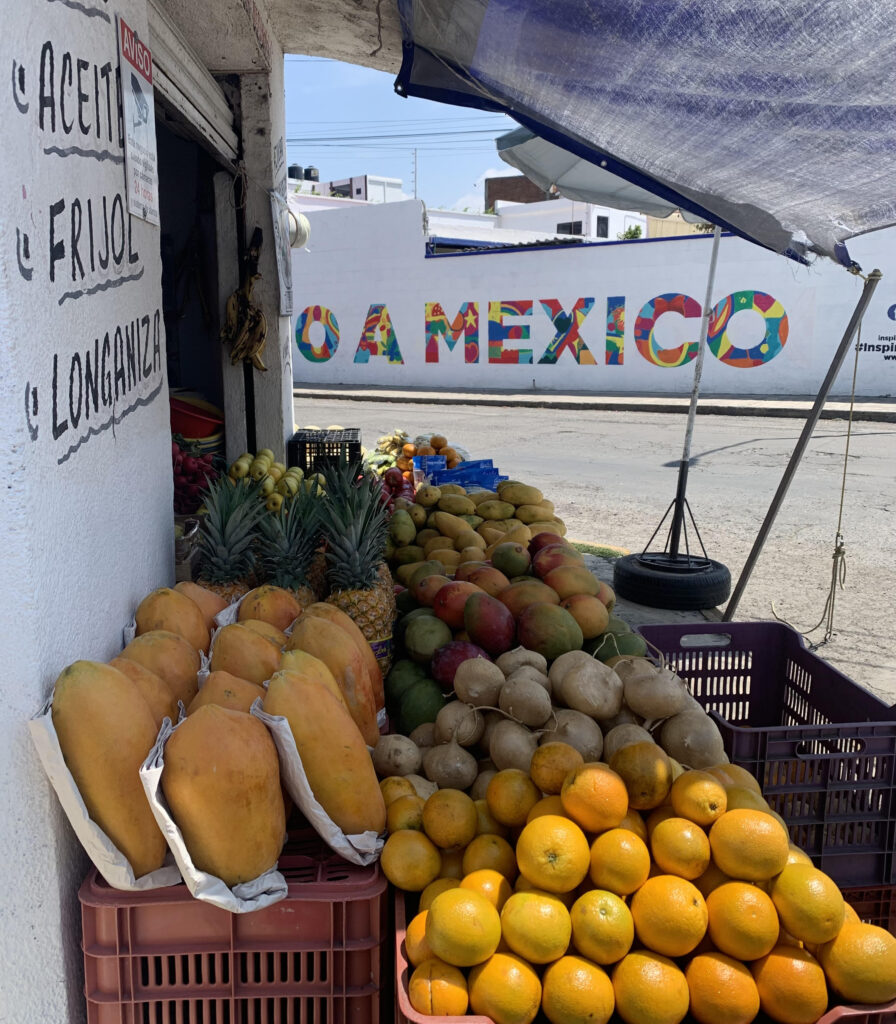
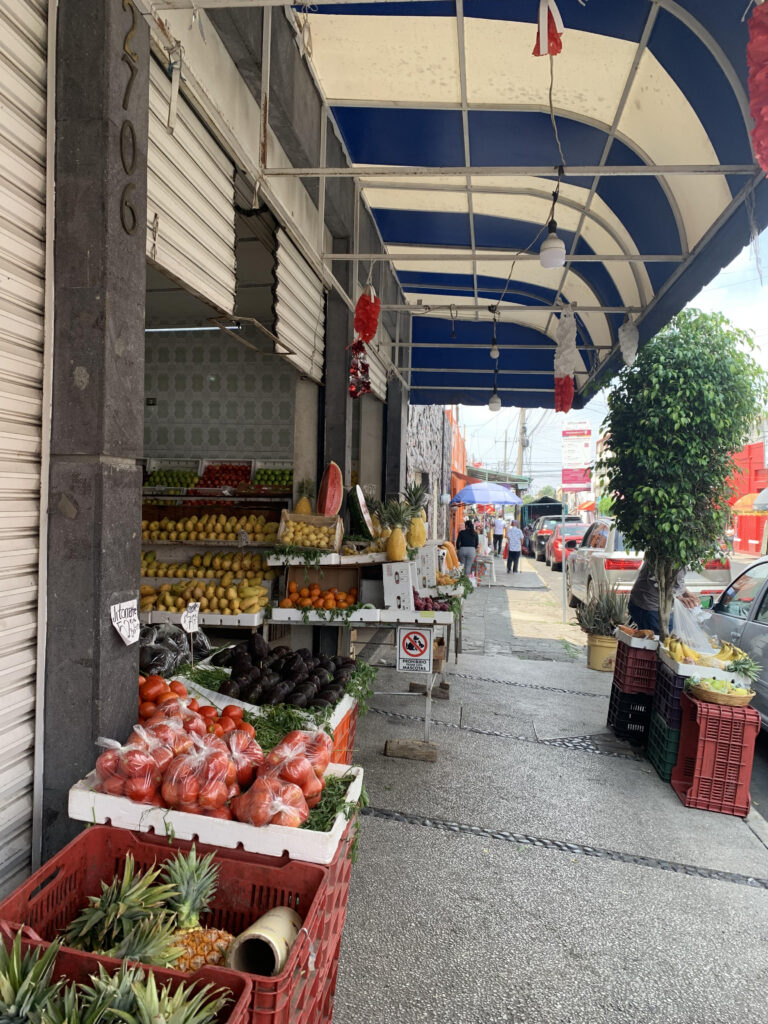
“When are you going to eat this?” asks the fruit seller holding up an avocado that I selected, “today or tomorrow?”
“Tomorrow,” I answer.
“Let me get you another one.” He selects one that is slightly less ripe than the one I chose and puts it in our bag.
Here I am with the wrong avocado.
“I am so happy to see you!” says Larissa as she greets me and then another woman participating in the exercise class. Larissa lived in New York City for twelve years. If ever I have a question or am confused in the class, she is there to help.
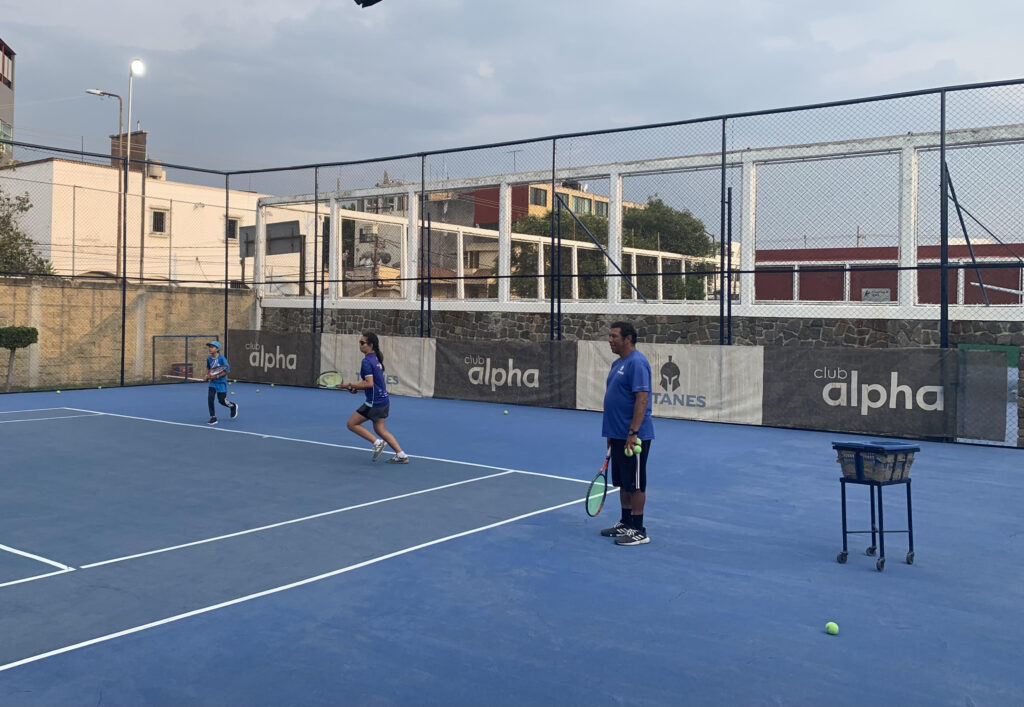
I exercise when Simone plays tennis.
“Los Juegos de Hambre!” exclaims the book seller, noticing the author of The Hunger Games. He has tables of used books outside the Facultad de Lenguas where I work, and I’ve brought him one of Suzanne Collins’ early books. Because the girls and I finished reading it, he can sell it to one of the students. He and I disfrutamos placticar, enjoy chatting, about books and authors.
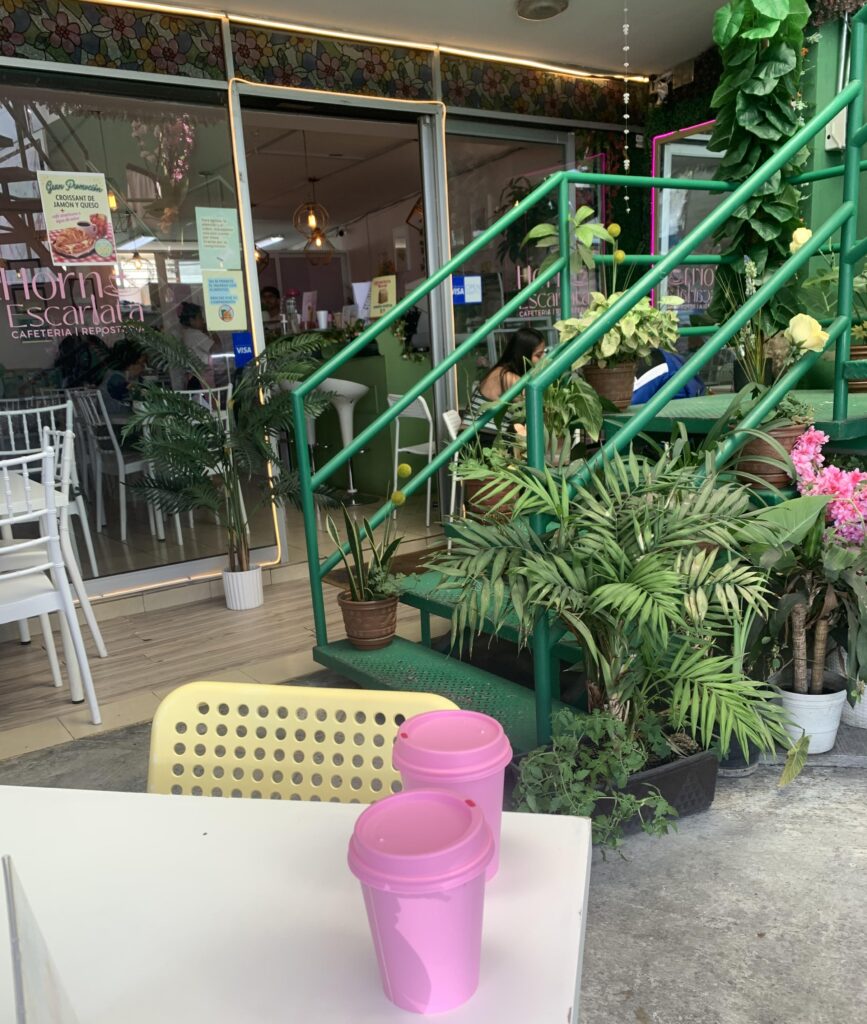
The cafe across from the book seller.
On their birthdays, I read the kids a blessing that is adapted from one of Cardinal Newman’s Meditations. “You are a link in a chain,” I remind them as they roll their eyes. “A bond of connections between persons.” (Apparently, being reminded of this is SO embarrassing.) “God has not created you for naught.”
Part of the reason that I applied to Mexico rather than another country is that it is close to Arizona. If, I reasoned, we are going to make connections, new links in the chain, then we’d be able to maintain them in the future. And we will. We will stay in touch with the people we have become closest to, and I hope to visit again. But leaving is weird.
And, I realize now, all the links are ephemeral.
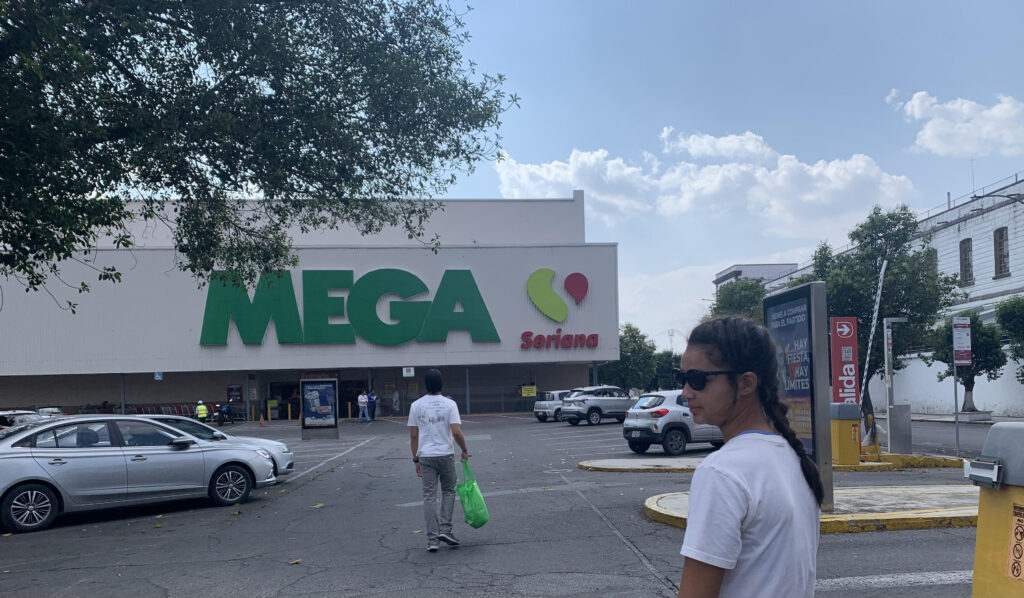
“Hola!” Simone and I wave at the toddler in the supermarket.
“Hello!” He crows back at us.
We all laugh together, he at his own cleverness, and we at the fact that this human who has been in the world for less than two years realizes that we speak English.
And that is our moment.
Our link in our chain.
He will never remember us, but we have had this moment together.
Heading into the grocery store to be outsmarted by a two year old.
I will likely never see the fruit seller, Larissa, or the book seller again. But we have had our moment.
In my middle age, I realize saying goodbye is a blessing. We so rarely realize that something is the last time.
Goodbye at the Facultad de Lenguas.
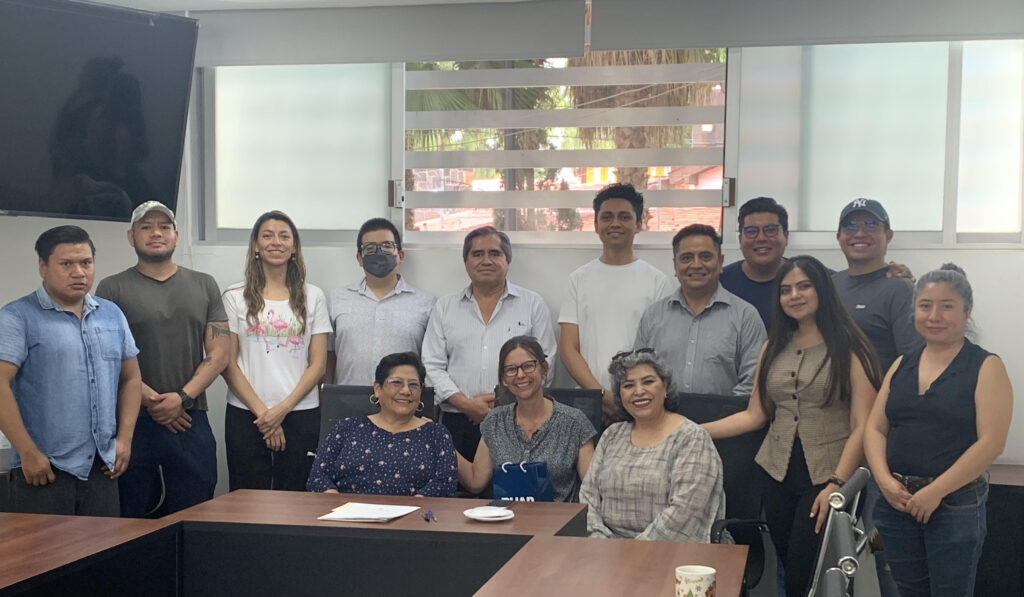
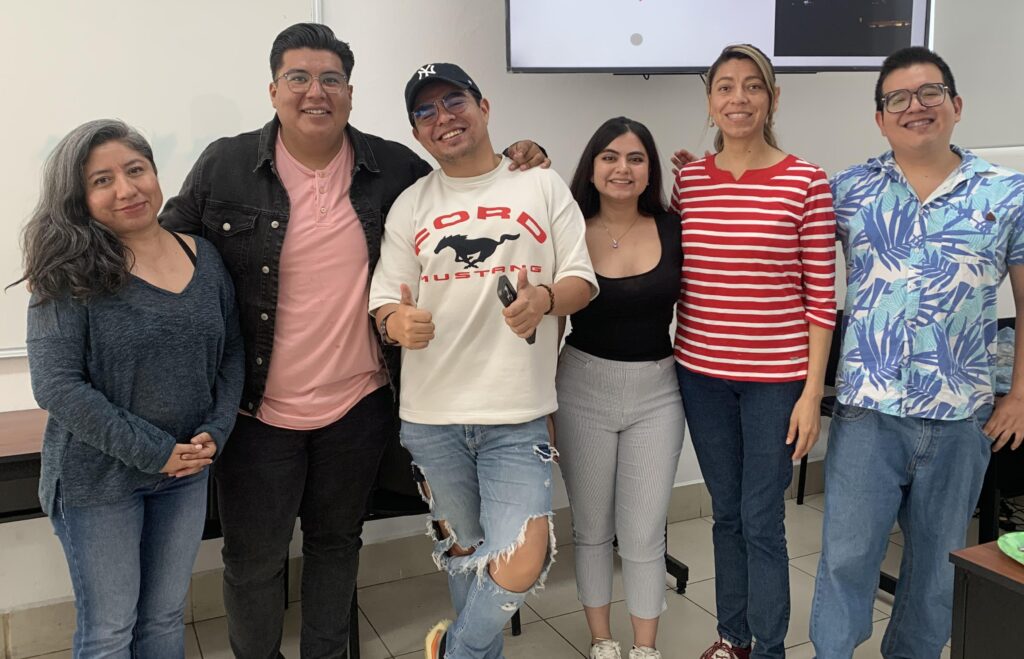
In preparing to say goodbye to my students, I have organized and shared my materials. Here are a few things to remember, I tell them. We stayed long after the last class, talking and taking photos.
Some of my wonderful M.A. students.
It is strange that saying goodbye is so sad when it is a normal and necessary part of life. That fact that saying goodbye feels somehow wrong does seem like a sort of evidence of deeper links to the humans around us, links of which we are not yet fully aware, a hint of the eternal and the life of the world to come.
We will be back in Tucson in less than two weeks. All four of us feel differently about this. We have been talking about things we will miss, things we will not miss, and things we are looking forward to. The list below is mostly my own.
Things we will miss
Our friends and colleagues. Veronica, Celia, Daniel, Erica, Letty. . . It will be so sad to say goodbye.
Work. The goal of my Fulbright project was to help strengthen the English teaching (specifically of writing) at the Benemérita Universidad Autónoma de Puebla. I have loved the work because the English teaching here is already strong, and the students are smart, motivated, and thoughtful. I’ve been teaching, creating materials, and working with individuals without the usual administrative work. I love it.
Teaching
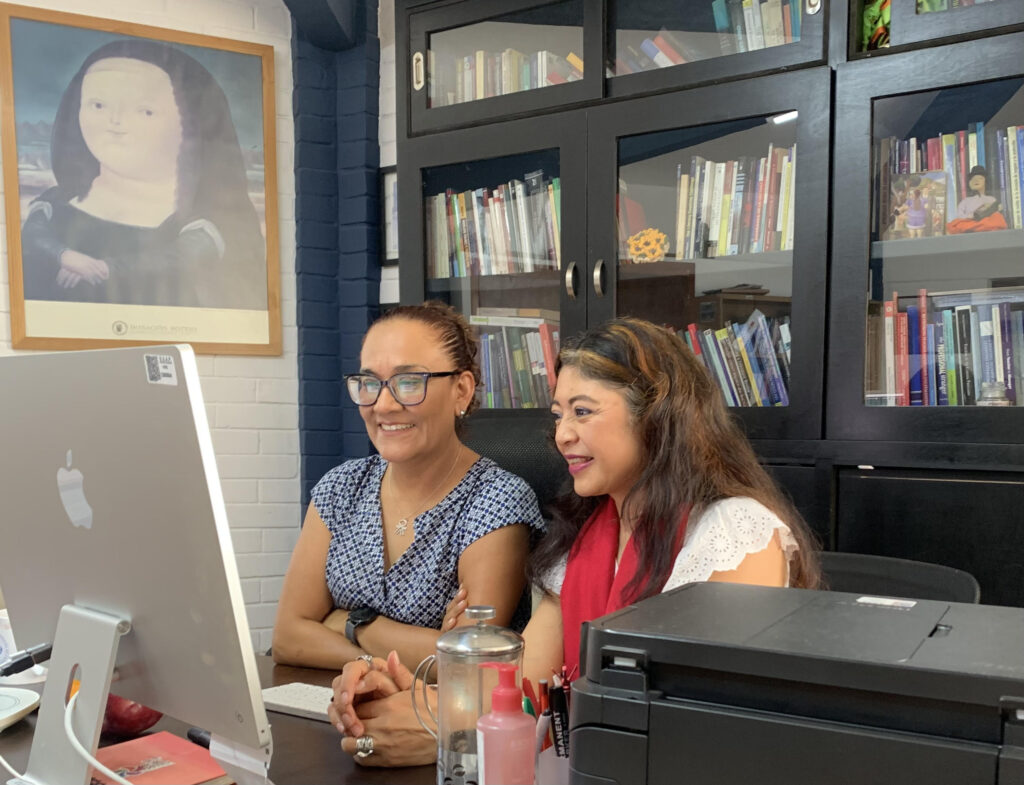
Colleagues not acting hurried. My colleagues at work publish, teach, advise students, work in national and international organizations. But they sit down and have coffee together. When I asked them why they never talked about being busy, they said, “that would be so rude! That would mean I didn’t have time for you.”
My dear colleagues working.
Social niceties. I will miss that everyone greets one another. At work, we give one another a hug and kiss on the cheek. Even at my exercise class, everyone greets one another, at least with a “good afternoon” or often a hug and kiss. After the exercise class, everyone claps and individually thanks the teacher. It is nice.
Fruit. Have I mentioned the pineapple? “Would you like me to take off the peel?” The fruit seller asks. The sweet, pungent smell wafts up from the bag as I bring it home. “Oh. Thanks for buying that, Mom!” Simone says, “do you want me to cut it up?” I do. And we sit down to enjoy it, the bright, yellow juice like music in our mouths.
Delicious pineapple
“Where are you from?” conversations. While I am looking forward to returning to familiarity, I love the inroads that being a foreigner provides. “¿De dónde nos visitas?” a shopkeeper asks. “Los Estados Unidos,” I respond. She answers in a familiar litany that leads us to a new place, a new connection, and a surprising, although brief, intimacy.
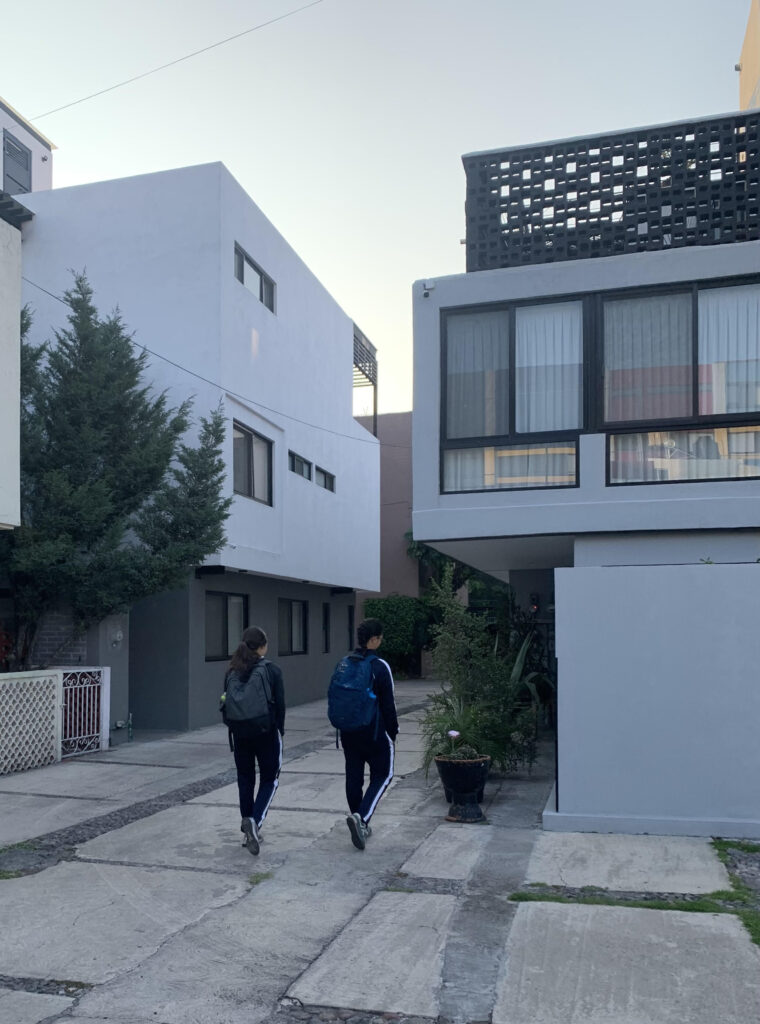
Walking the kids to school. We walk a quarter of a mile to school together in the cool mornings. We say good morning to the juice man. A used paper bag flies in the breeze under a purple bougainvillea.
“It is just,” Marie continues her conversation about one of her classmates, “we don’t like each other. Common misconceptions about teenage girls, they like everyone.”
Simone chuckles, “Common misconceptions about teenage girls,” she repeats. “They know their mother is always right.”
That was one morning. Another morning one child was angry that we weren’t walking fast enough, and another child was furious that we always walk way too fast.
Heading to school
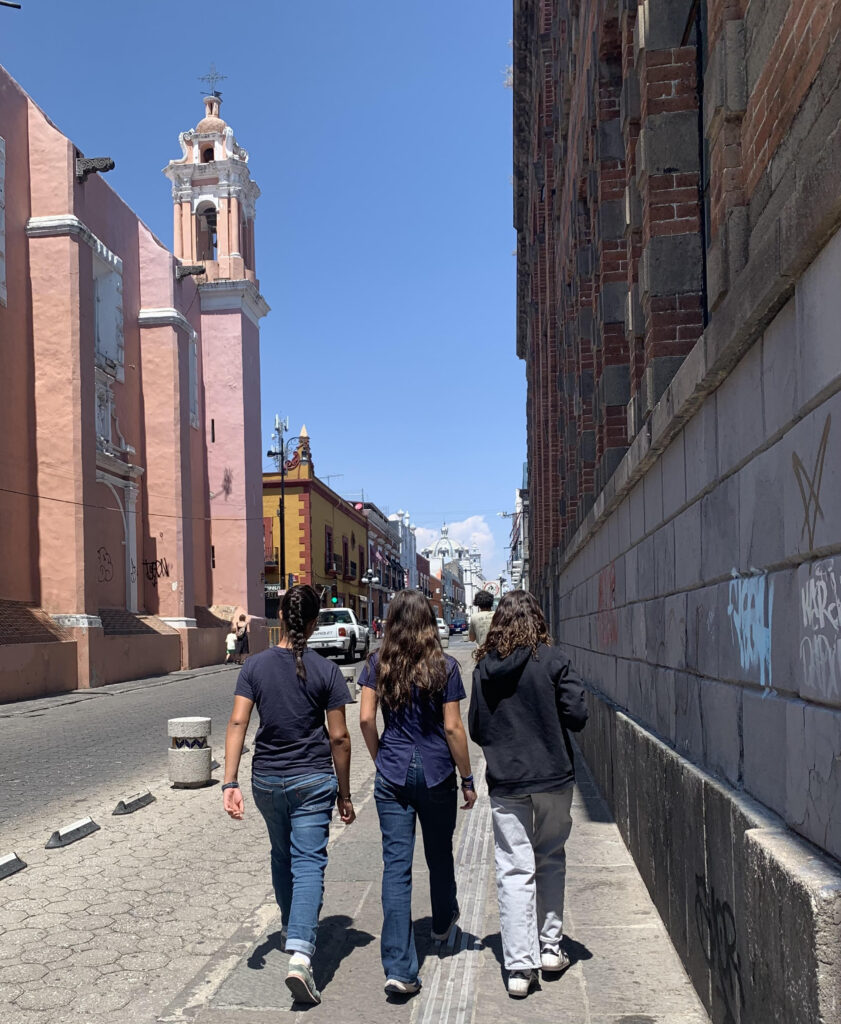
Not having a car. We walk miles in a day. Without a car, all the kids have to grocery shop with me so we can carry things home. We buy from stores near our house. Although we haven’t gotten to know much of this huge city or the outskirts, we know every piece of our square half mile.
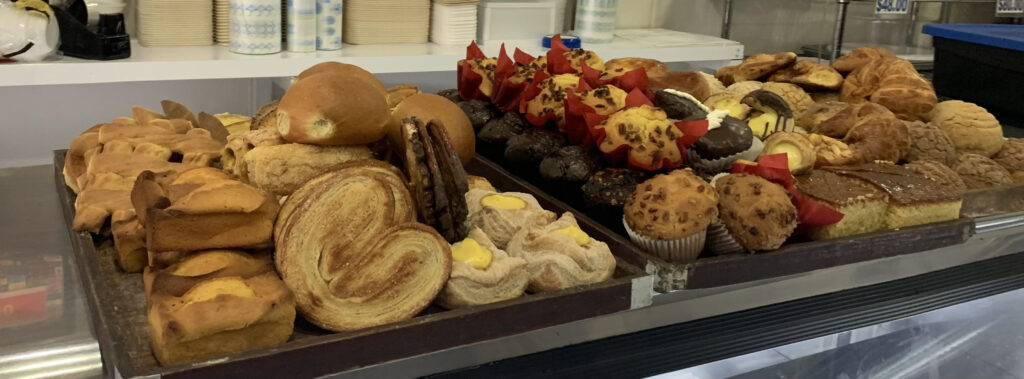
The bread. Our favorite panderia is Flor de Puebla. Simone and I walk there most Saturday mornings.
Streets near our homeBread at Flor de Puebla
Families walking around together. I love seeing mothers and daughters walking arm in arm, sweet little baby legs hanging near a mother’s chest or toddling rapidly to keep up with grandpa, or a young boy walking with grandma down the sidewalk.
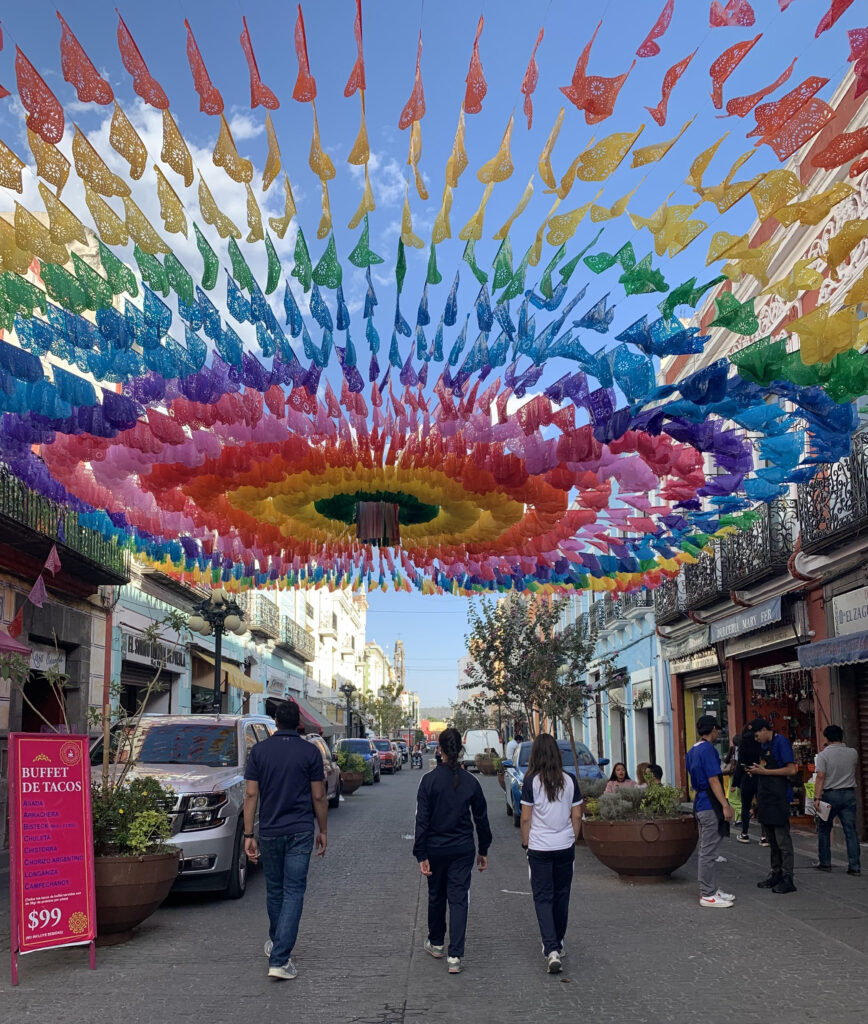
So many more things. Colorful streets, wooden doors, paletas, the weather, art in the Zocalo, flowers, free workshops at the Amparo Museum. . .
Colorful streets
Things we will not miss
Noise. We live near the center of Puebla, and it is always noisy. At night the bars thump music. Some nights, a small group of Aztec drummers plays in the plaza near our house; if that sounds charming, it is not. Even early in the morning, shops will sometimes play music as they open. Why so loud?
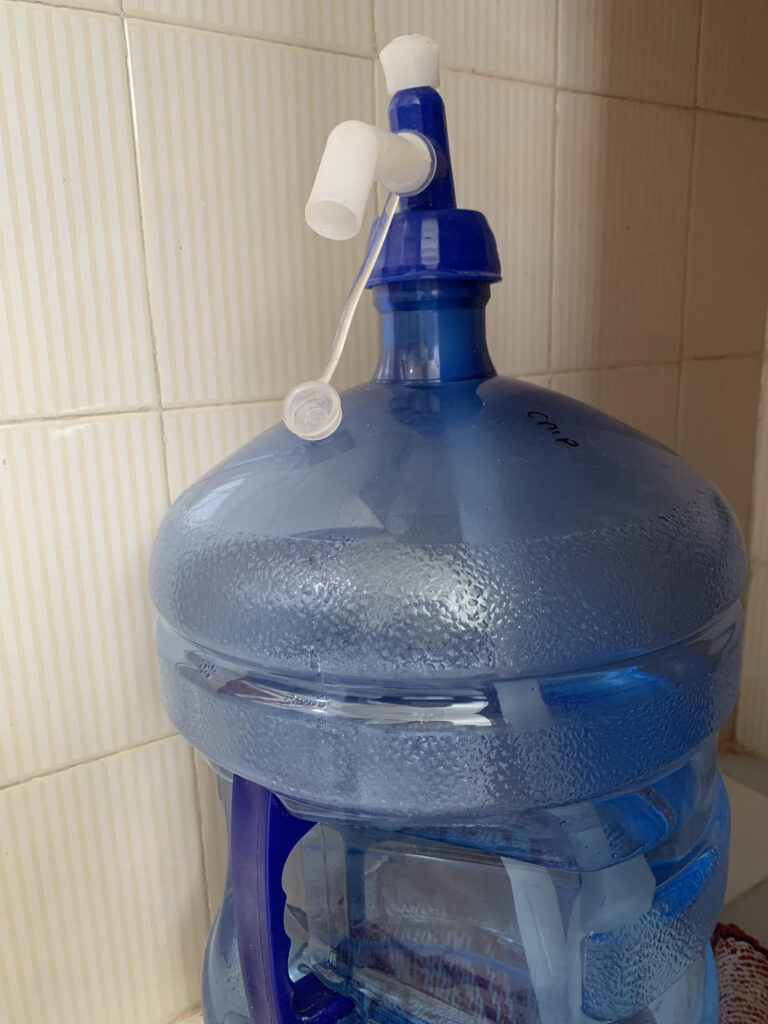
The water pump. We can’t drink the water here. It has to be delivered. Let’s say that I am in the middle of cooking and need water. One bottle of water is empty, so I must open a new bottle, tip out enough water so that it won’t overflow when I put the pump in, put in the pump, try to get water but the pump pops off, try again, and it pops off again. Now there is water on the floor. I try again to fasten the pump before going to get a rag.
I can’t wait to leave this water pump.
The kids’ complaining about school. The kids have learned a lot in school, lessons that they may not appreciate now, but I hope will later – kindness and cruelty, all kinds of words in Spanish, managing the fact that their lunch sometimes disappears from their backpacks, teachers not showing up, a blurring between break and class time, a frequently meandering approach to lessons. The story below is not representative of their experience but does illustrate some of the things they experienced. I asked Simone and Marie to retell the story of water day:
“We all brought water balloons and sponges for water day. We went out to the basketball courts and the teacher put out buckets of water and water guns. She said not to spray water into the computer lab and said to start. “’H’ ‘E’ ‘double-hocky sticks’ broke loose, and everyone went crazy. Valentina tackled Oswaldo. There were some pressure washer kind of water guns and people got sprayed in the face. Someone slid on the concrete. “The teacher was on a dating app the whole time. It was crazy and kind of fun to be in a water day with teachers watching or being like, ‘only throw water balloons below the waist.’ Or saying, ‘Be sure to get consent before hitting anyone with a water balloon.’”
Marie and Simone
Toilet paper in the waste basket.
Having to soak fruits and vegetables if we don’t peel them.
The noisy plaza
Things we are looking forward to:
Friends and family, especially Mark and our dog, Samson.
Walks with friends.
The Pima County Library.
Understanding all the conversations around us.
Our pots and pans designed to accommodate three teenage appetites.
There will be more that we will be happy to return to. For me, this transition feels like more of an end than a beginning. But transitions are always both. Mark arrives soon to help us move, and, once he does, it will probably be easier to see what is ahead rather than what is behind us.
If I don’t go now, I realized, I will never in my life see the BUAP Botanical Gardens. One semester is not very long. The end of our time here is barreling towards us.
And we are just getting adjusted.
BUAP (Benemérita Universidad Autónoma de Puebla) has campuses all across Puebla. In my first few months here, I would continually get lost and end up in the wrong place because Google Maps and Uber are not always reliable here (although there may have been an extremely slim possibility of user error in this situation).
“Kids! Walking will be much more fun,” I would say when we ended up in the wrong place.
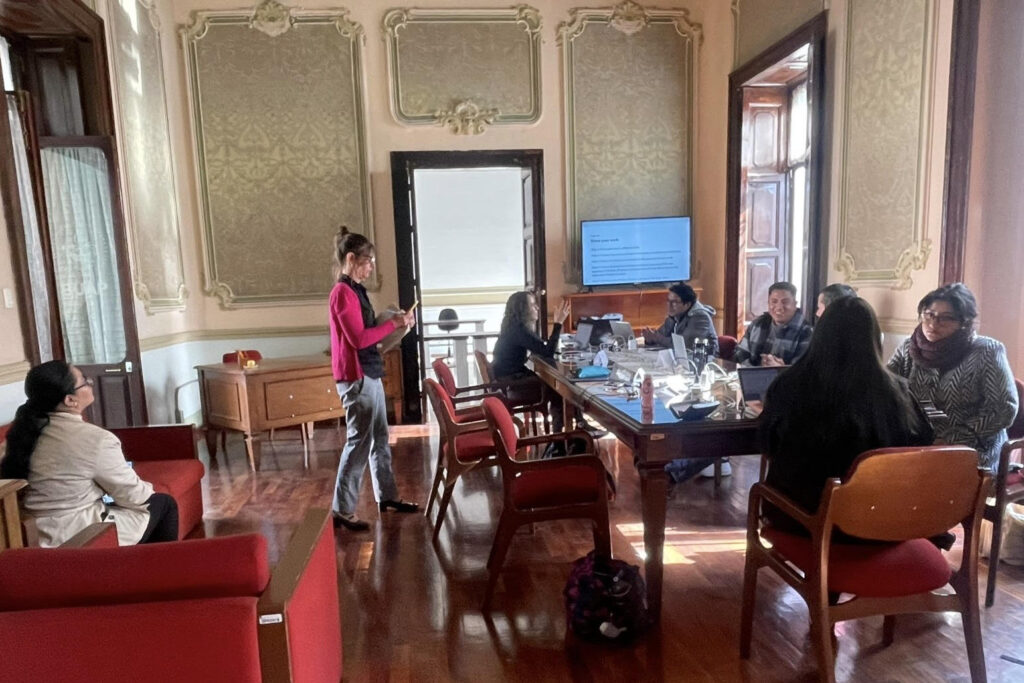
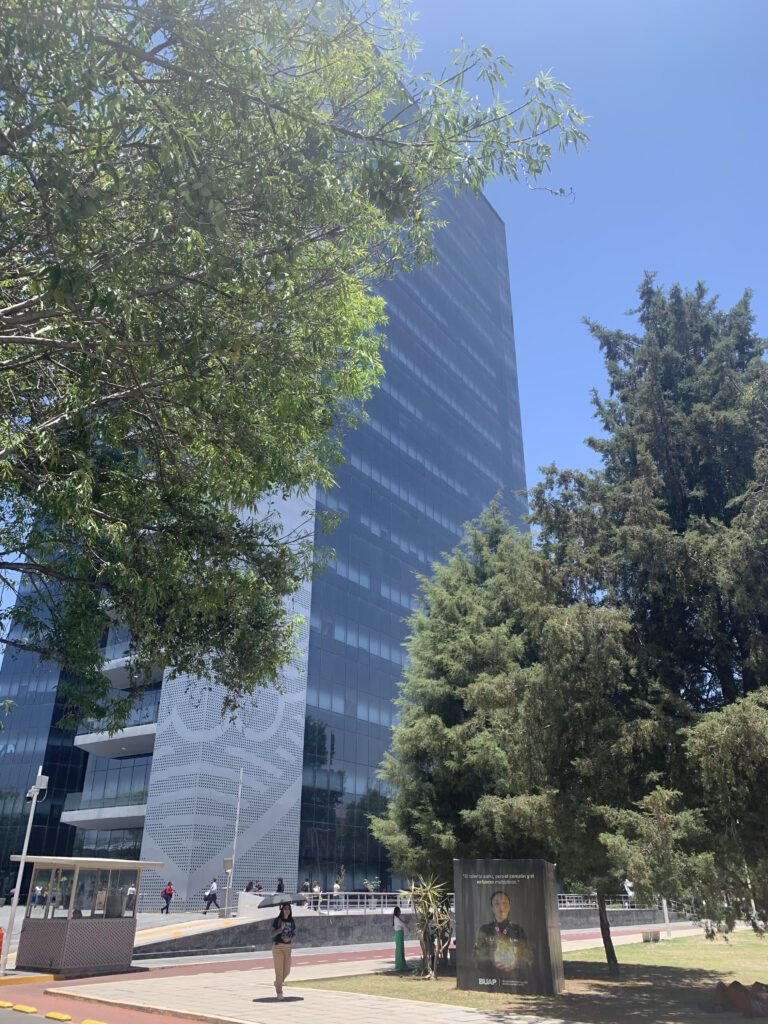
Last week, I held a workshop, “Managing Large Writing Projects,” for graduate students in the BUAP Ciudad Universitaria. I got to the campus with ease, found the Rector’s Tower without even asking for directions, and signed into go to the sixth floor.
BUAP Rector’s Tower
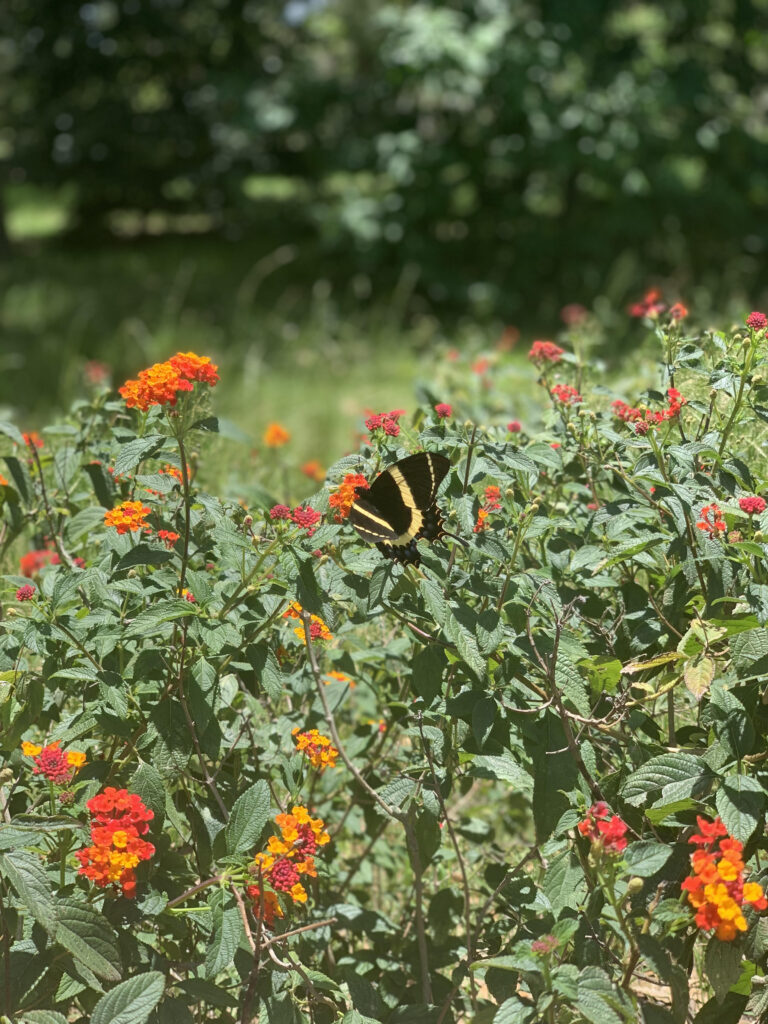
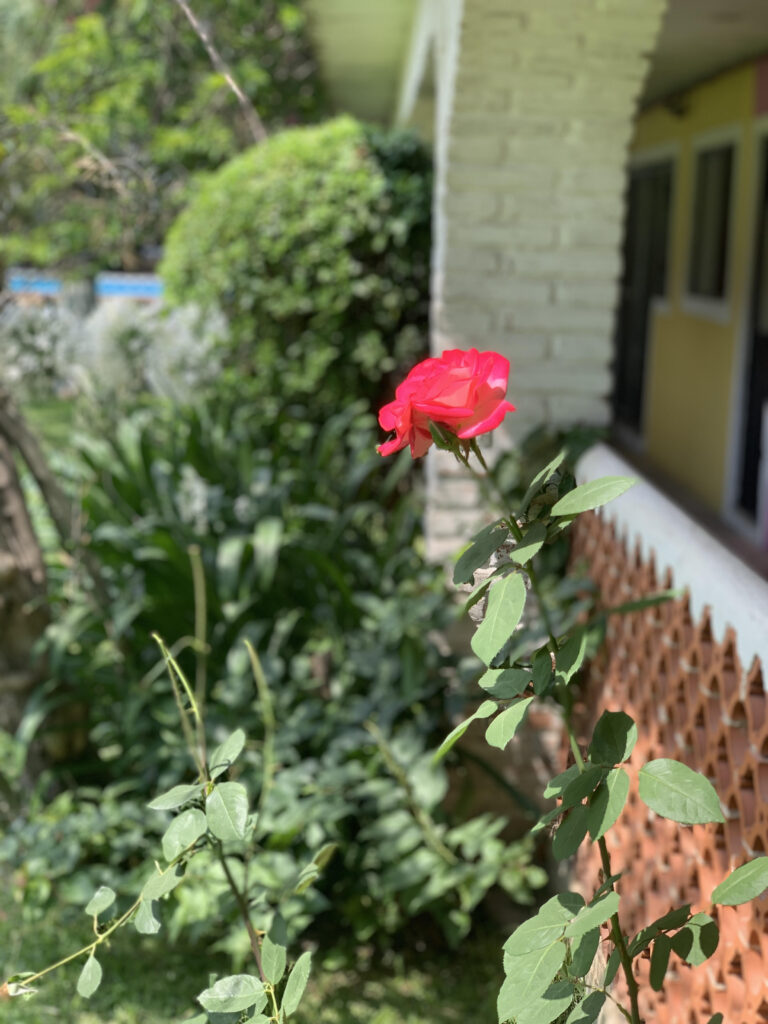
After a wonderful session with students from Political Science, Physical Education, Chemistry, and Accounting, I signed out of the building and set off towards the main entrance. On the way, I noticed the entrance to the BUAP Botanical Gardens. My first thought was that I didn’t have time to go in. But I did go in. And I am glad I stopped for a little 20-minute visit, although it was not the magic that the title of this post promises.
A butterfly in BUAP Botanical Gardens.
With less than a month left, I am realizing that we will not do all that we want to do. We will not make it to Veracruz. We will not make it to Oaxaca and possibly not even to the pyramids of Teotihuacan. Every moment this semester has been full. But a semester (and life) is short, and we can only do so many things. I feel so grateful to have this little life interlude.
For the record, the kids feel more mixed about our time in Mexico, but they also think they will live forever, so there is that.
Pueblos Mágicos
Mexico has over one hundred Pueblos Mágicos, towns that have significant cultural or historical significance. The program is, on one hand, a device to increase tourism, and, on the other hand, a way to bring attention to truly magical places. On my list of places to go is the pueblo mágico of Zacatlán, a mountain town covered in mist with cascading waterfalls, apple orchards, and a huge clock made of flowers. Also on my list is Cuetzalan, another mountain town with cobblestone streets, ancient ruins, and coffee plantations.
We will probably not make it to either Zacatlán or Cuetzalan.
Popocatépetl
But we did get to experience a magical town. Our wonderful landlords, Daniel and Celia, told us months ago that when it warms up, they will invite us to their house. Every day, Daniel and Celia drive about 30 minutes from their house to Puebla to their office just below our apartment. They are accountants and run the hostel across the courtyard from our apartment. For anything we have needed, they have been there for us.
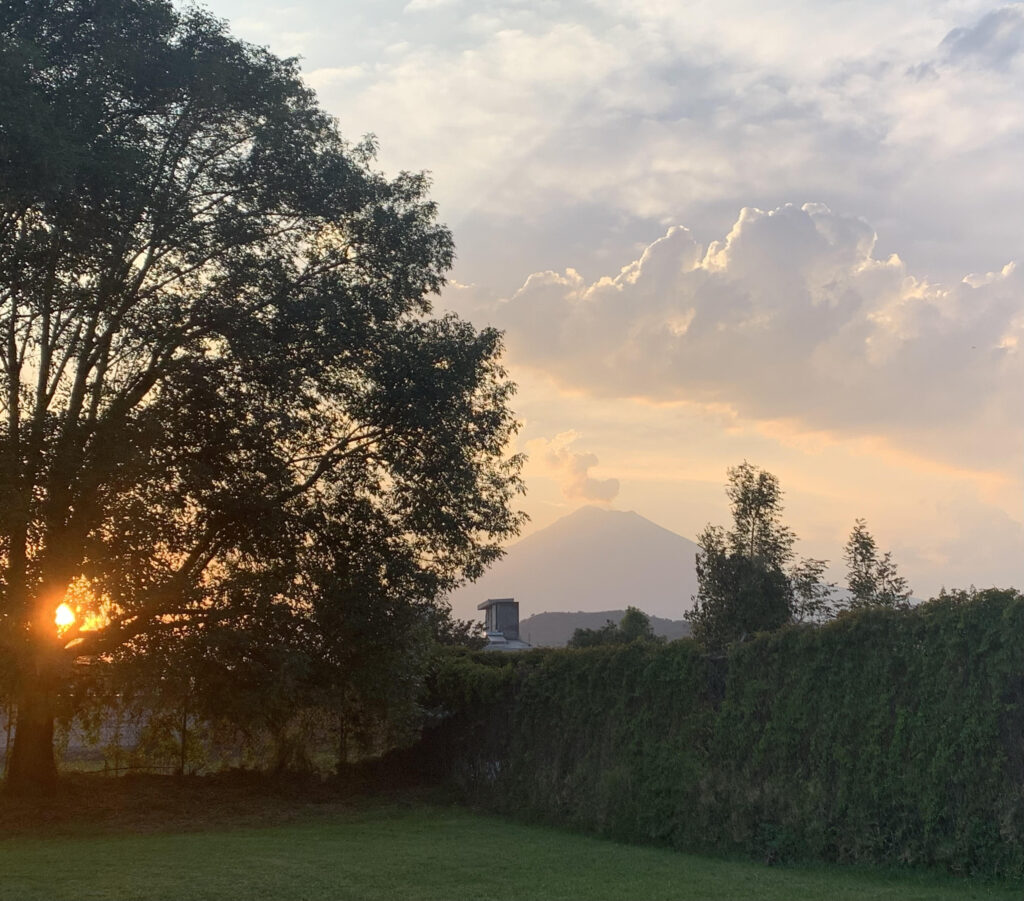
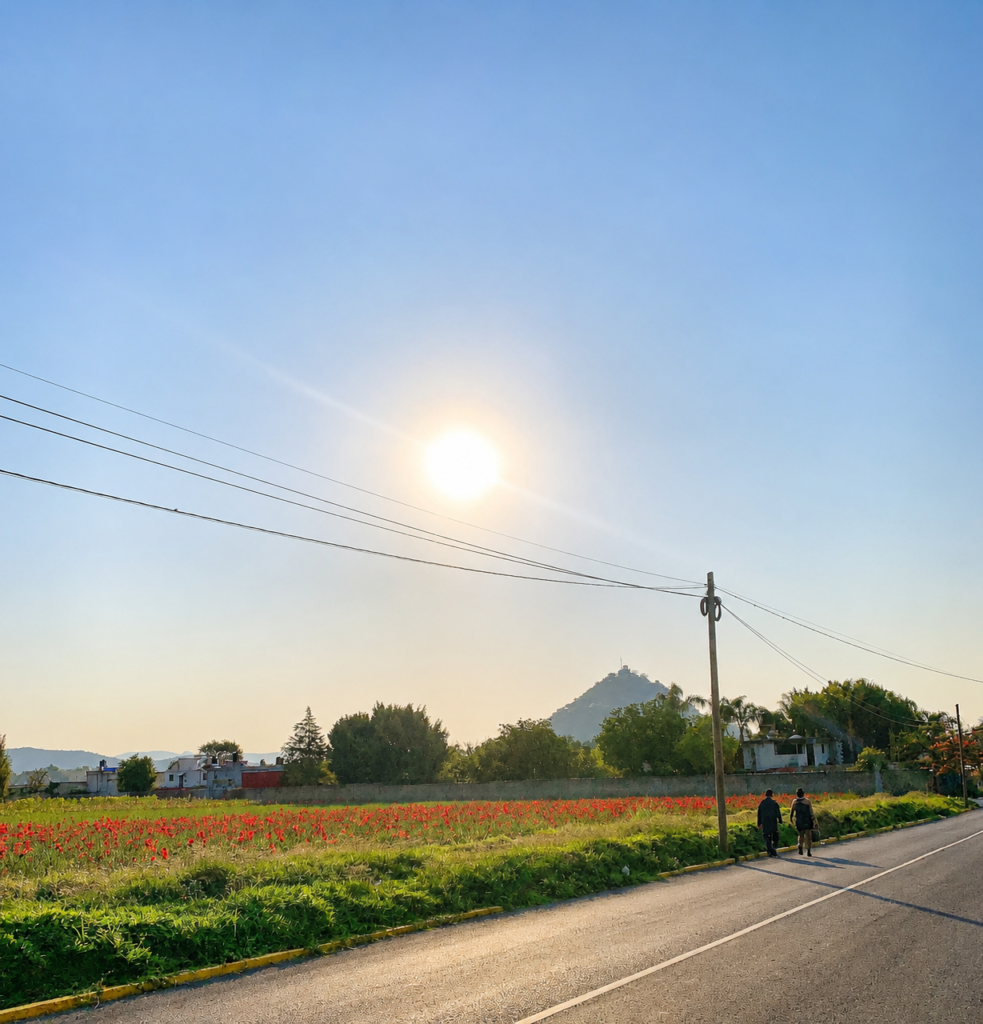
Celia and Daniel live in the pueblo mágico of Atlixco. Although Atlixco is only 30 minutes from Puebla, it is an entirely different world. The town sits at the base of the volcano Popocatépetl and is rich from the volcanic soil and steady stream of snow melt flowing down the mountain. Nurseries, full of roses, geraniums, calla lilies, surround the town. Streams of water flow down every possible crevasse. The air is fresh and green.
Fields of flowers and San Miguel Hill.
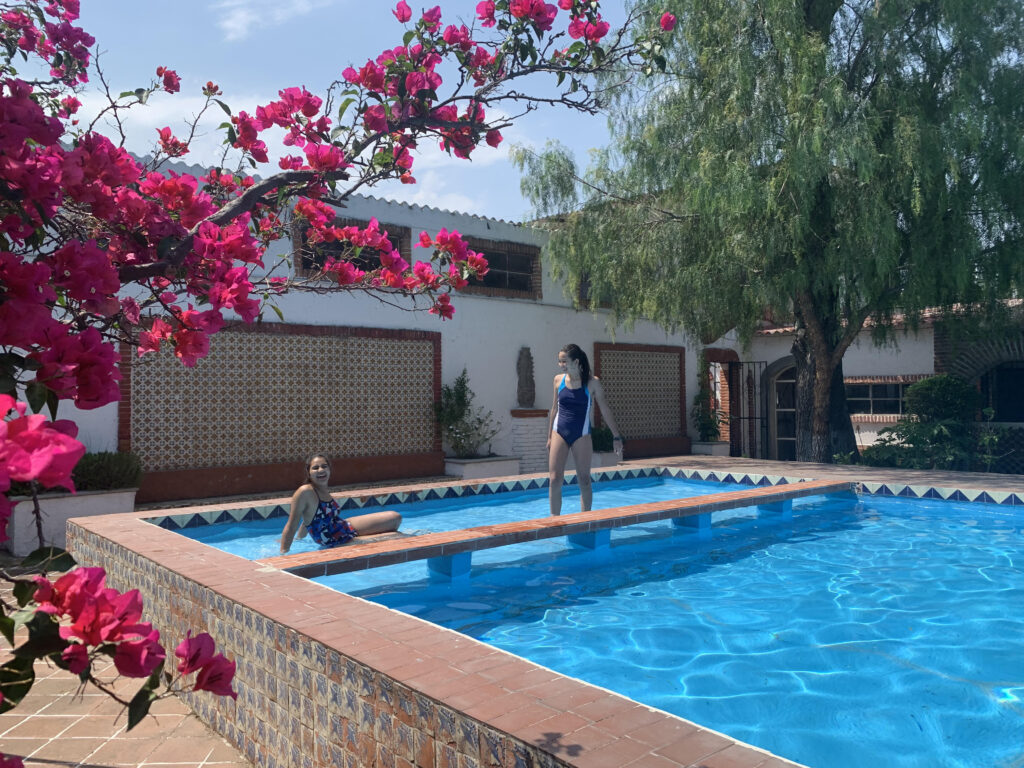
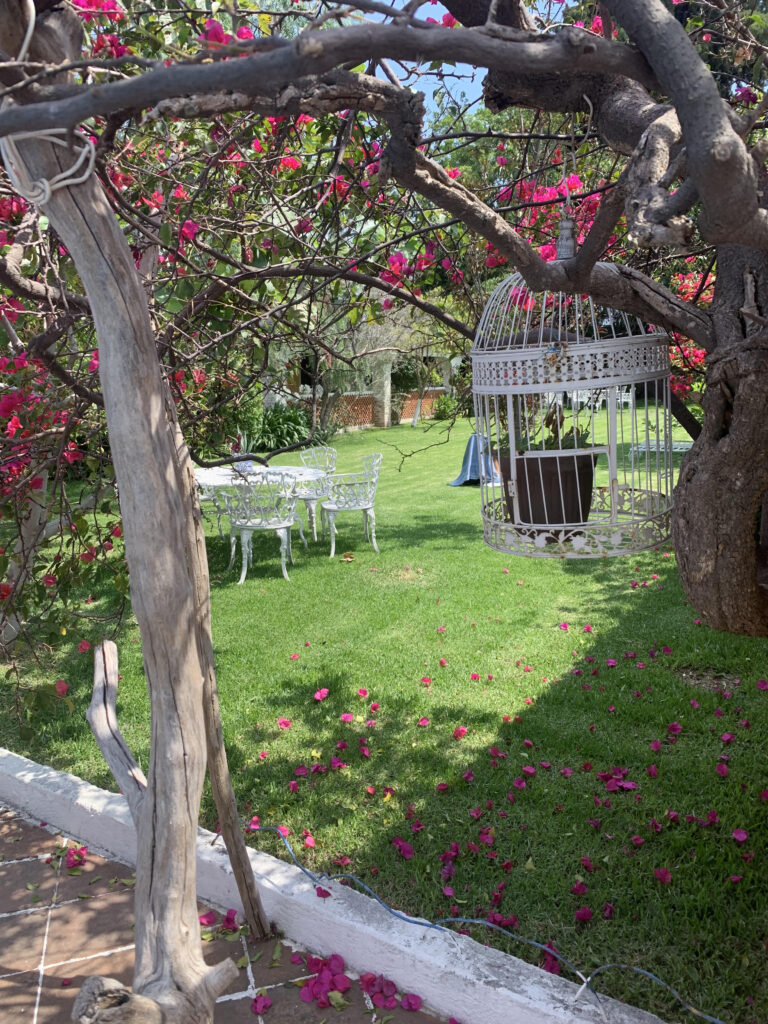
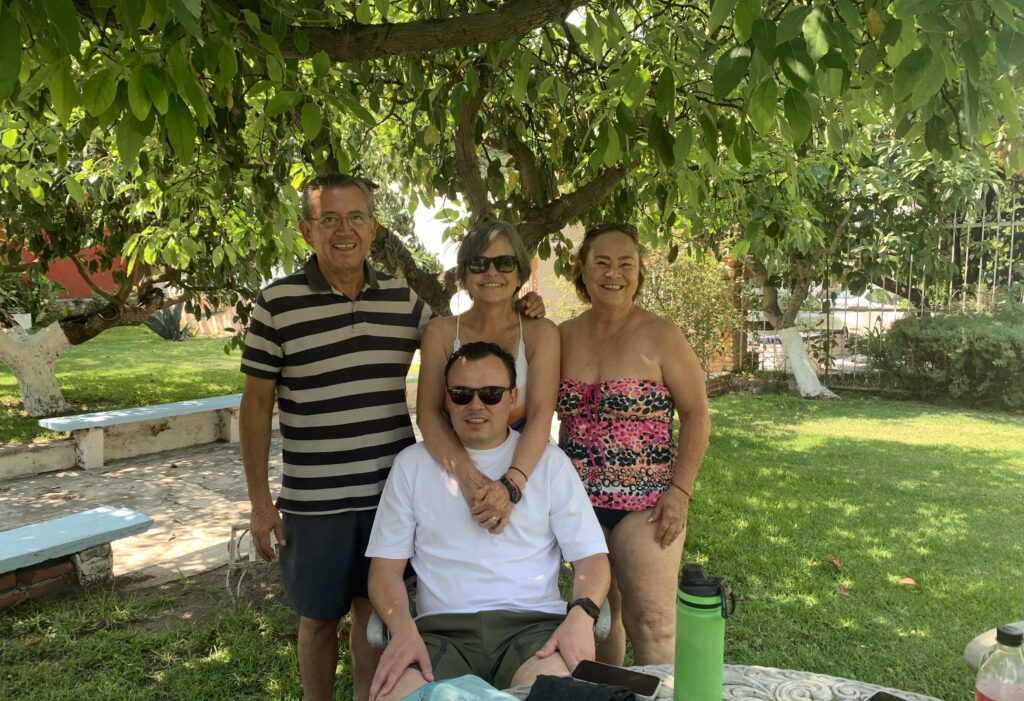
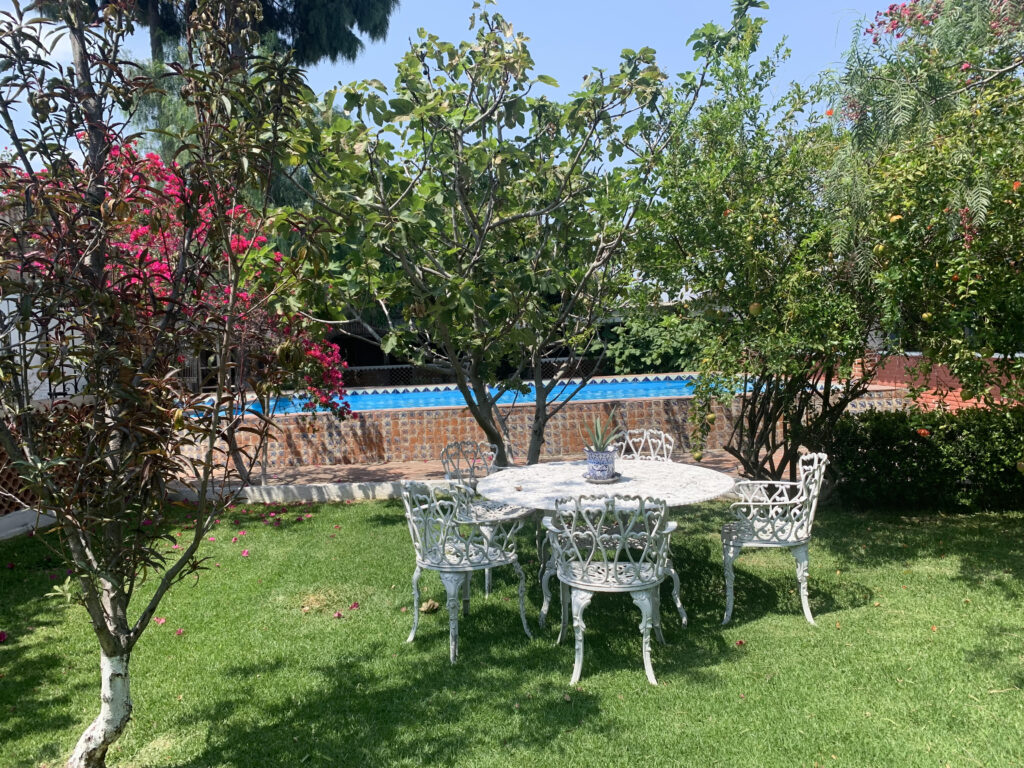
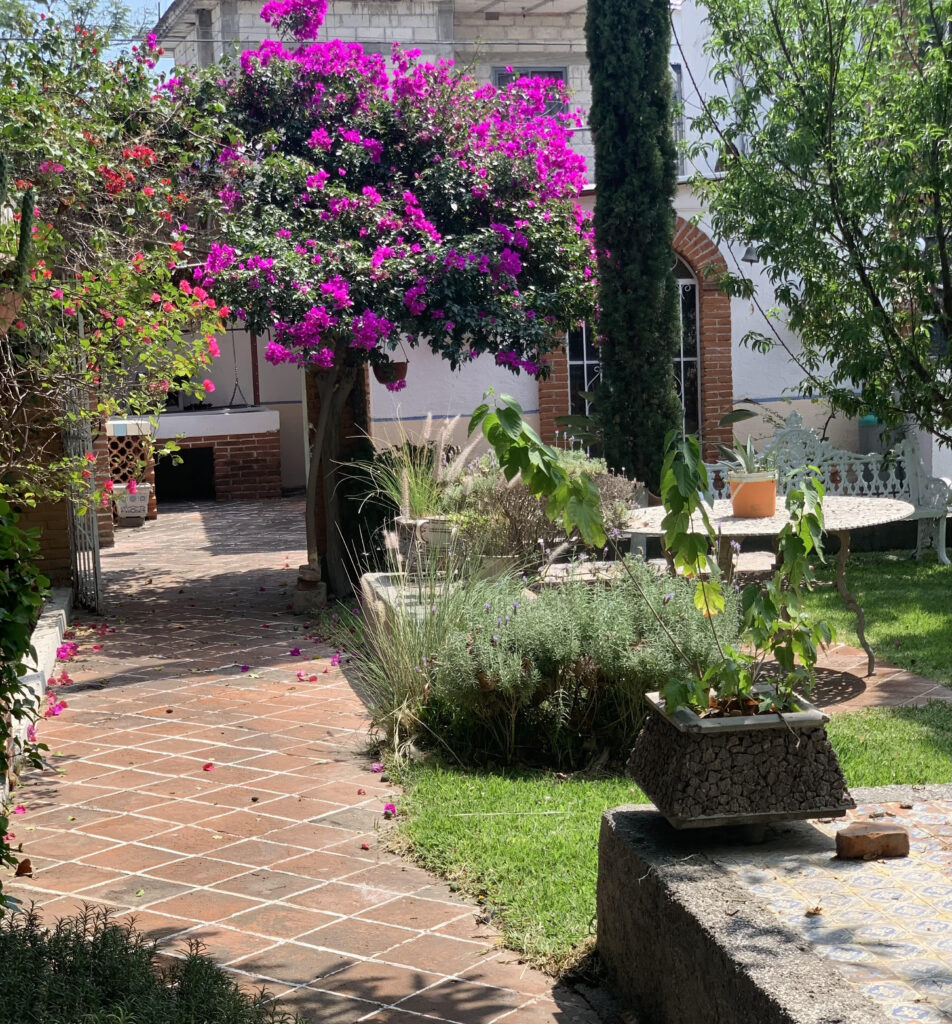
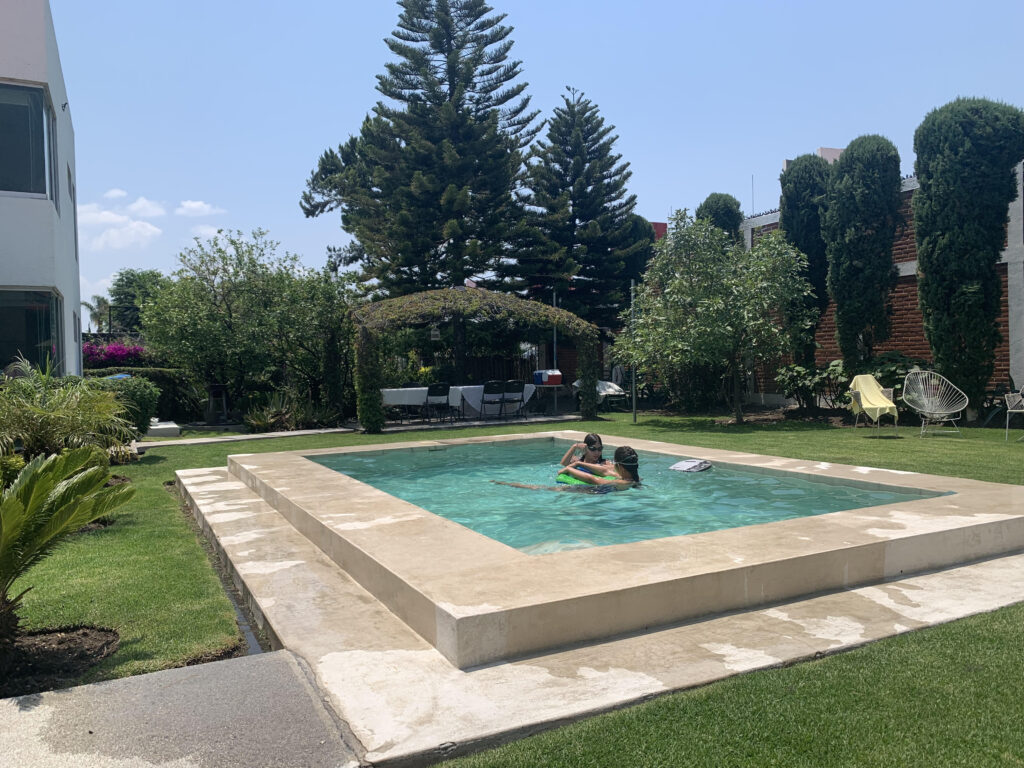
Celia picked us up mid-morning to take us to their family home, which has been in their family for over a century and is now shared by six siblings. Behind a large gate was an enchanted world. Between the old home and other buildings made out of brick and dark volcanic rock were flower gardens, lawns, avocado trees, fig trees, and citrus. After exploring and settling in, the kids and I jumped into one of the two swimming pools.
One of the swimming poolsA beautiful place to sit.
The water in the two swimming pools flows directly from the volcano to the pool and then is used to water the orchard and grass. Daniel and Celia’s son and an aunt joined us for an afternoon of swimming, eating pomegranates from the tree, and a long, delicious lunch. We heard stories about Saturday afternoons full of friends and family and about Celia and Daniel’s wedding. “Bring the family!” said Celia’s father, and more than 800 guests filled the gardens where we now sat.
Daniel and Celia with their son and Celia’s sister.
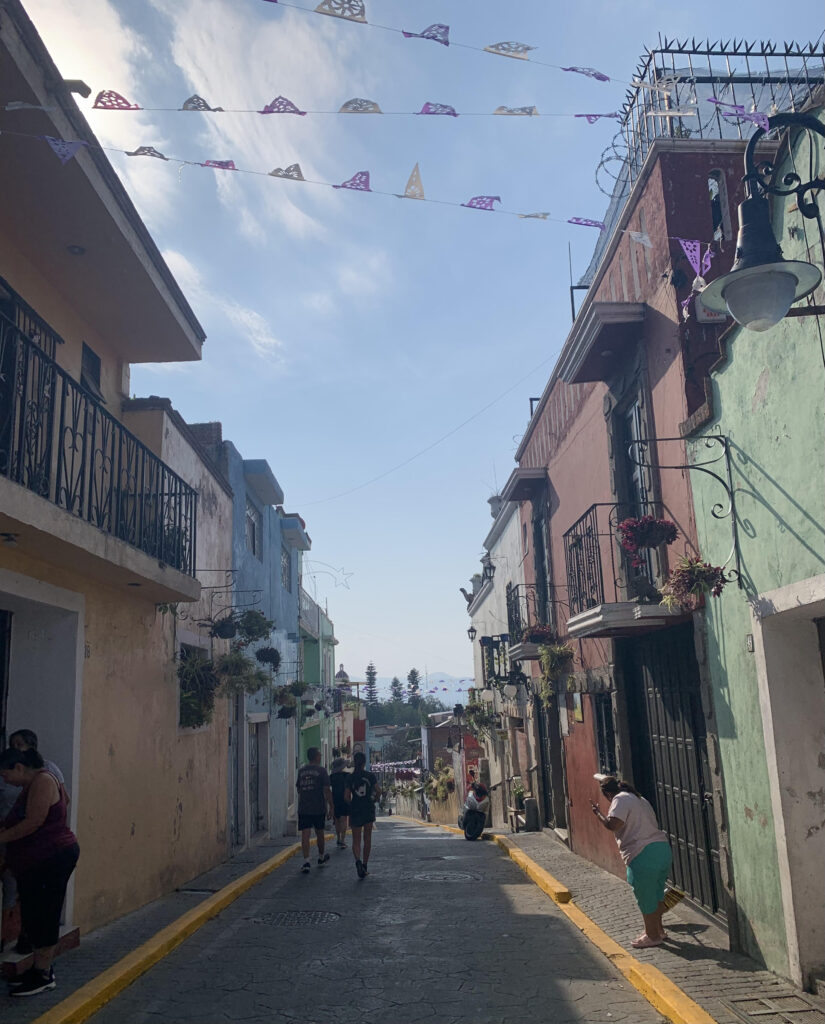
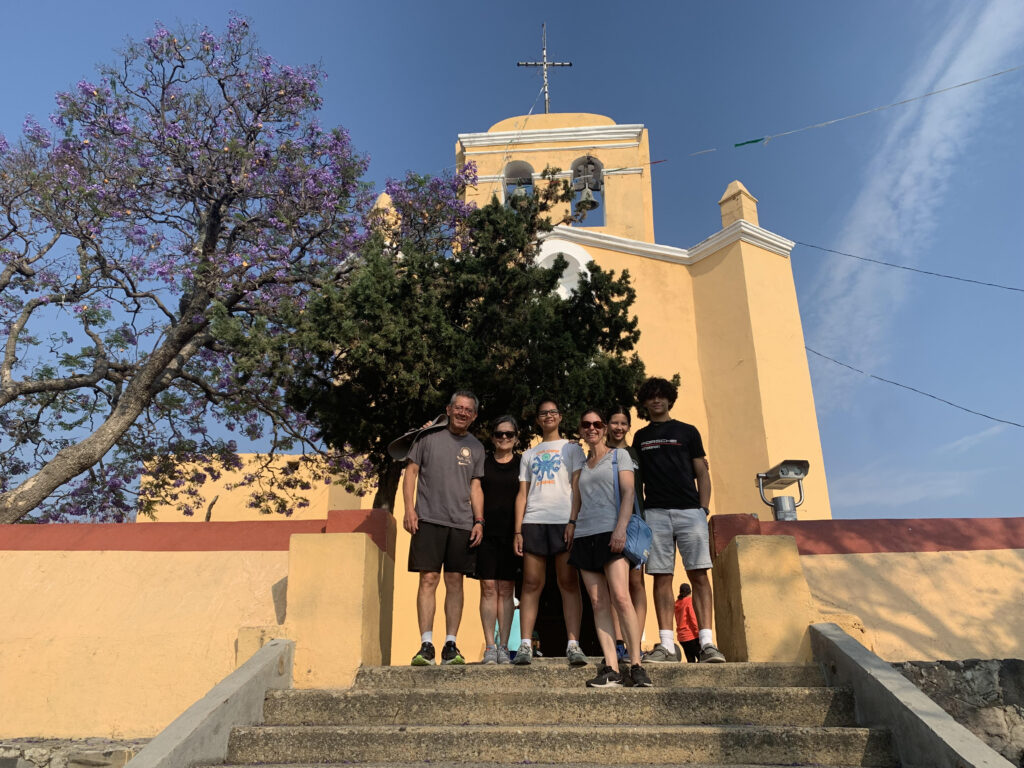
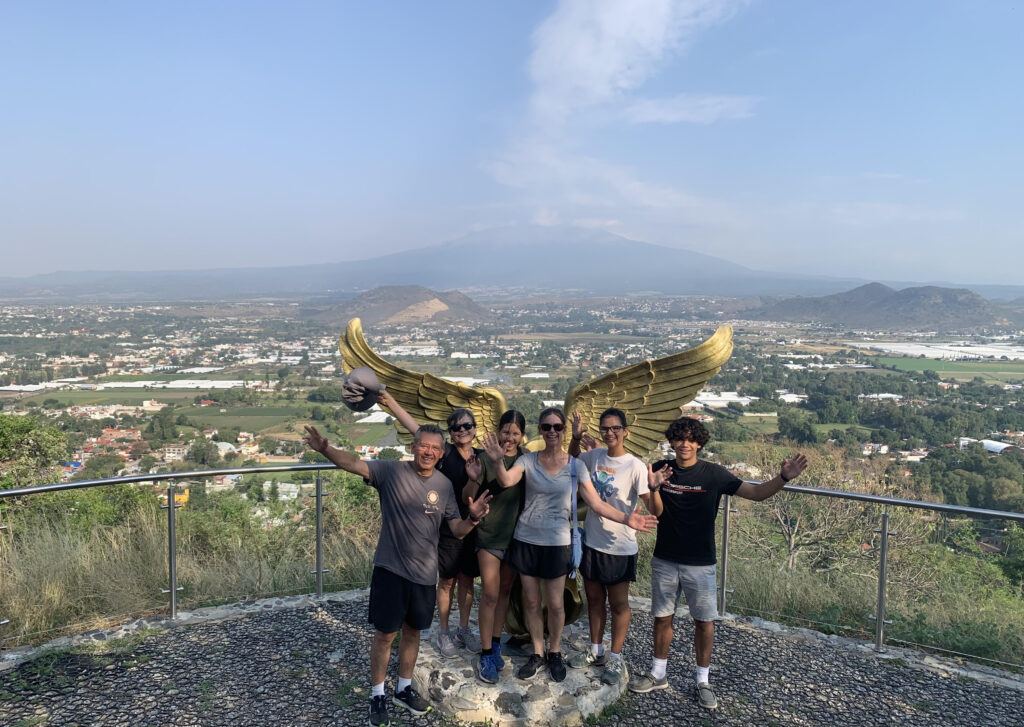
We woke up early the next morning to hike up San Miguel Hill, once a pyramid and now a steep hill with a church on the top. Leaving their house, we walked along streams and nurseries filled with flowers until we entered Atlixco’s narrow streets which are lined with hanging pots of flowers. Before ascending the hill, we stopped at a bakery with fresh bread from a stone oven. A dog yipped at a wheelbarrow as we wound up the narrow paths to the top of the mountain.
The streets of Atlixco. We made it to the top of San Miguel Hill!Pretending to be angels.
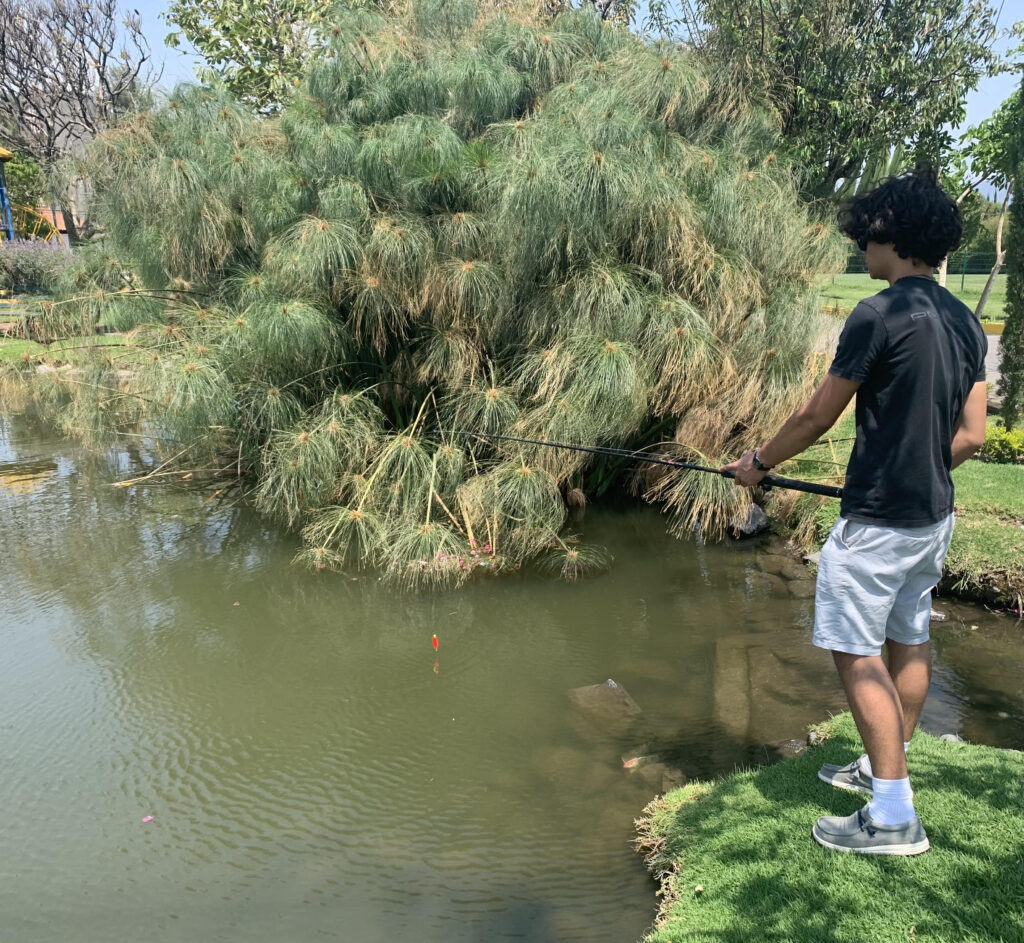
After our hike, we spent the day at Celia and Daniel’s beautiful home, swimming, BBQ-ing burgers, and talking. Like many people in Mexico, they are fed up with corruption in Mexico, the challenges of running a business in this country, and paying high taxes that seem to only line politician’s pockets; although they don’t like Trump’s methods, they do see him as someone who is making change happen. Langston got to fish in a little pond near their house. We played several games of Sequence and made up new phrases in Spanglish.
What a wonderful afternoon. Langston in his happy place.
As Celia said, we are no longer just friends, we are now “una gran familia.” We will not get to do everything we would like to do in Mexico, but if there is any pueblo con magica, because of Daniel and Celia, we have experienced it.