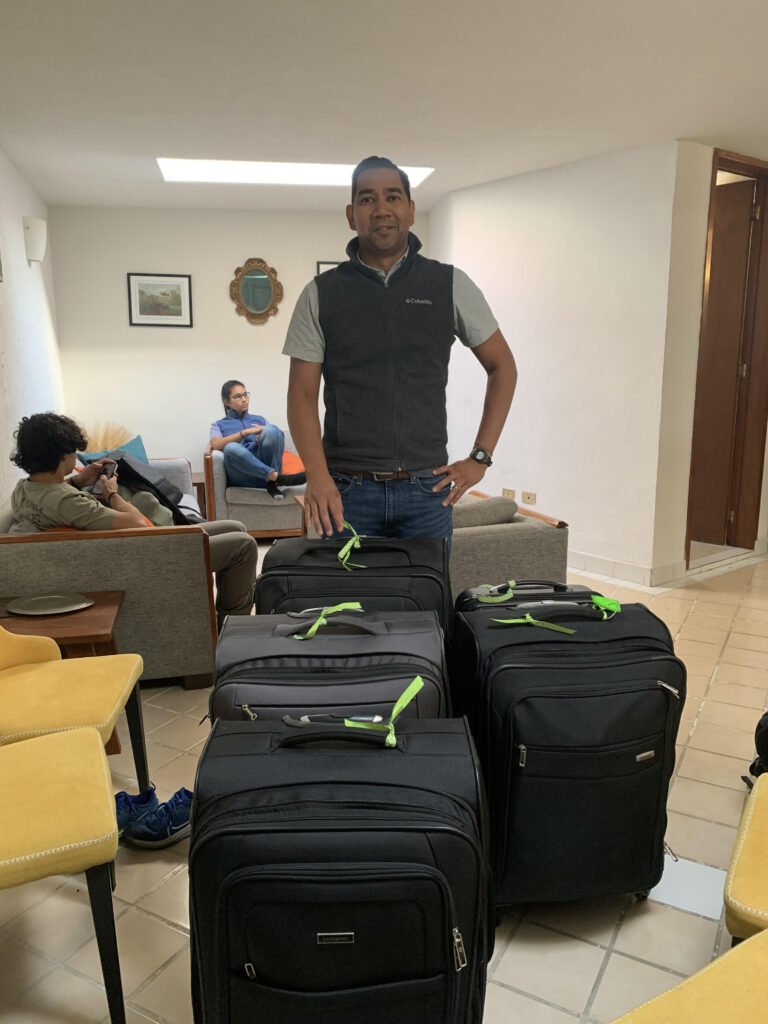
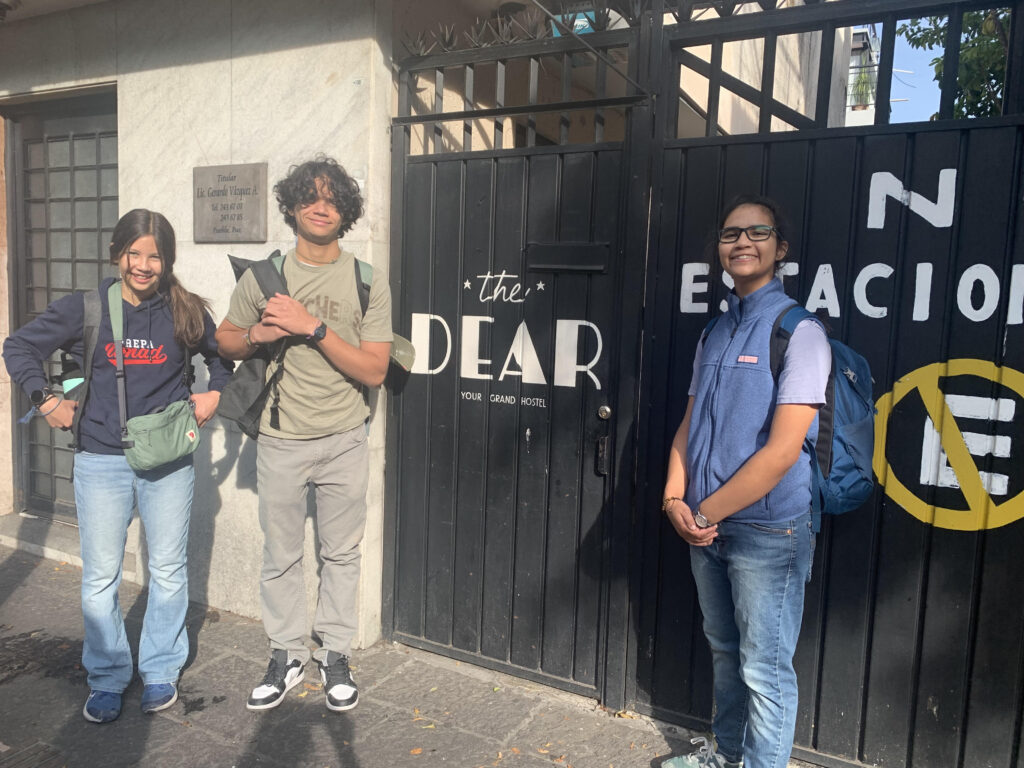
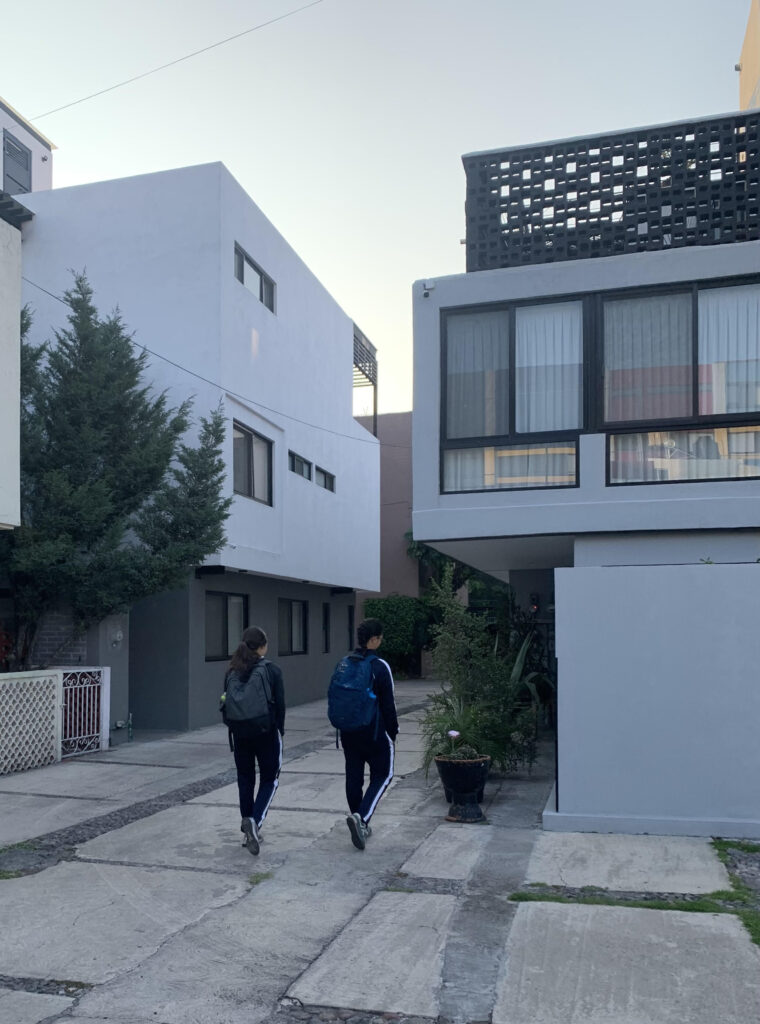
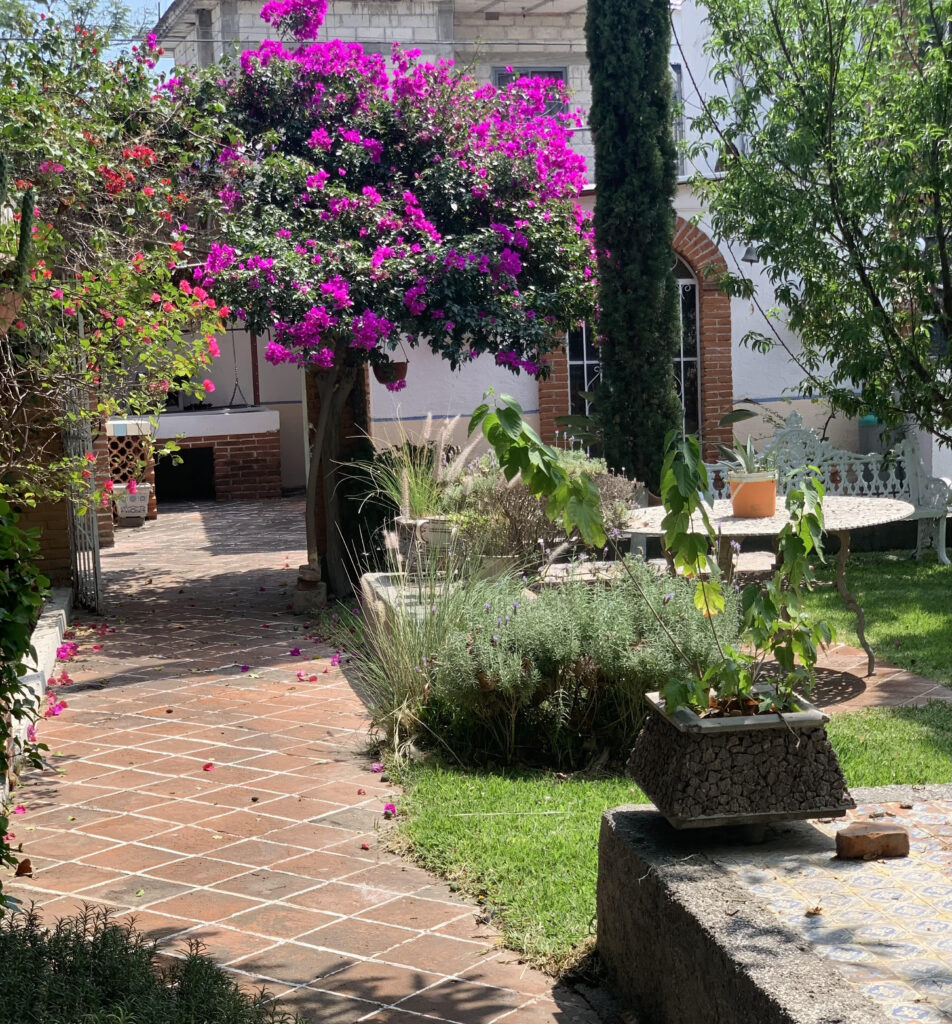
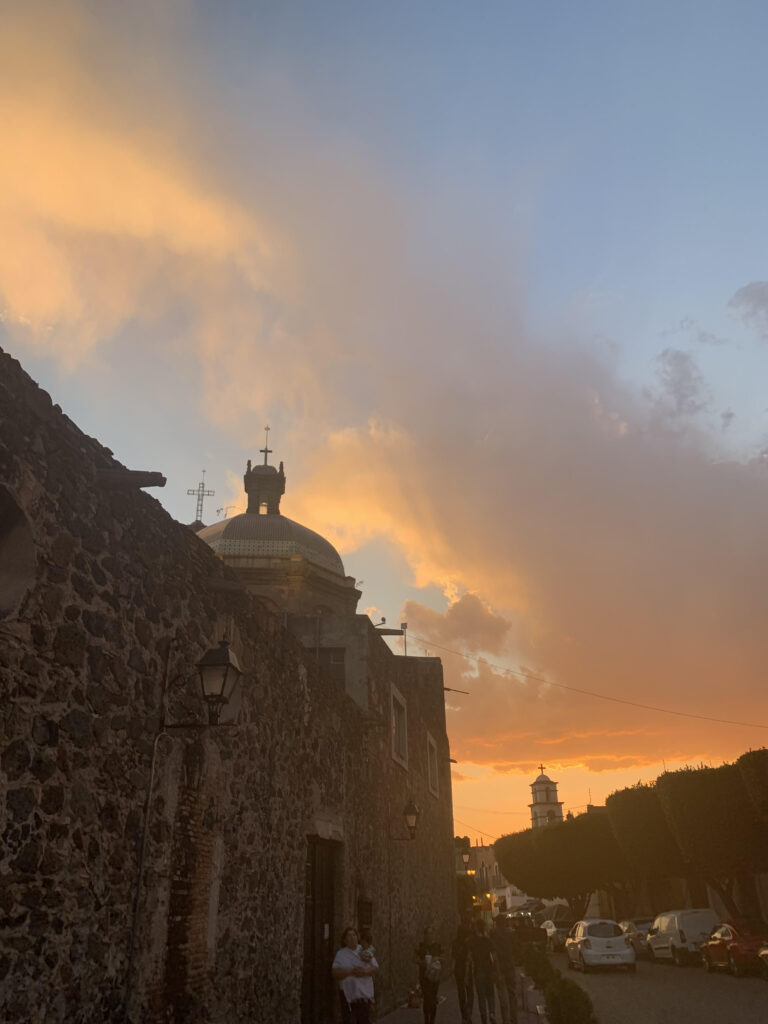
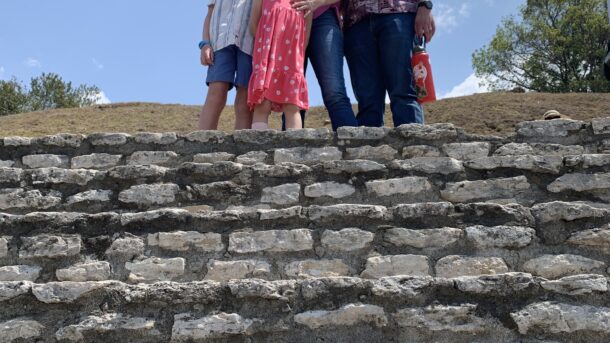
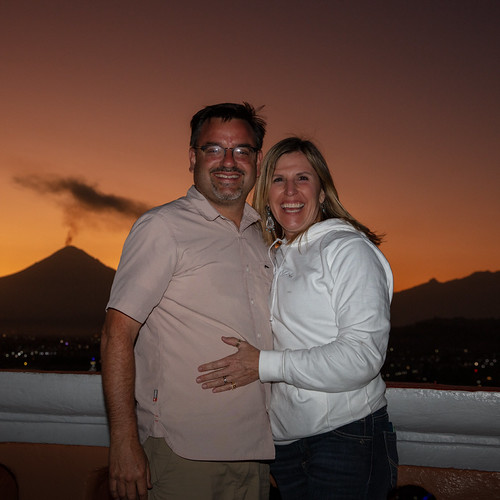
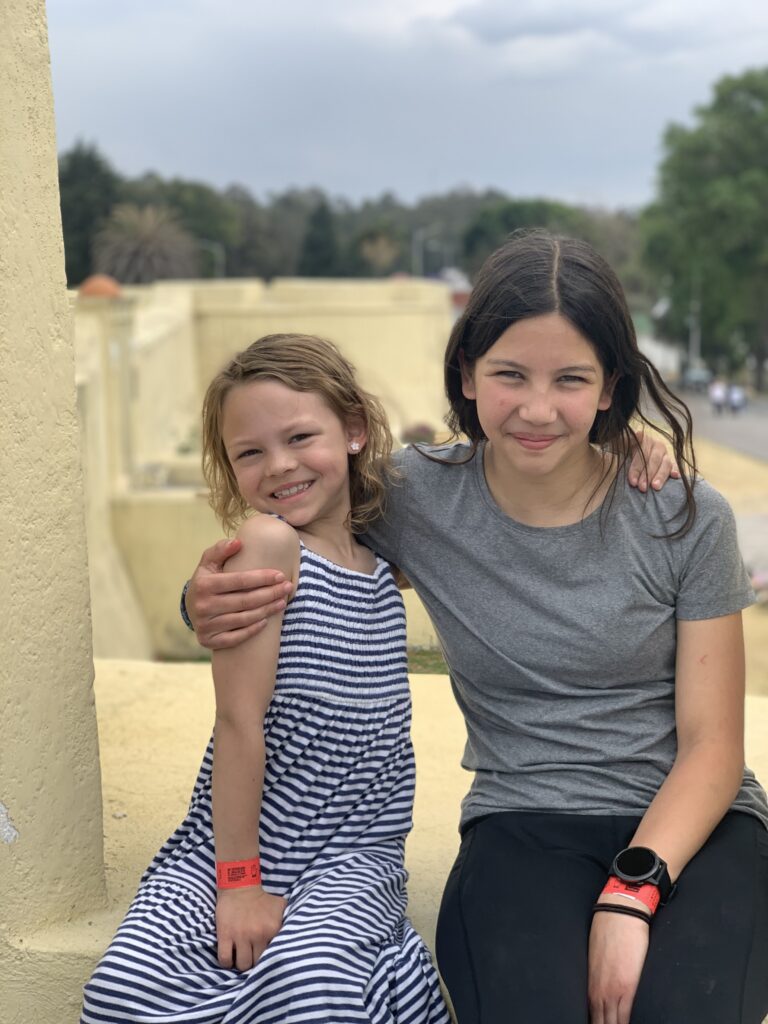
Thank you, dear friends, for coming along on our semester in Puebla. Mark got all our suitcases to just under the 50-pound limit, and we closed the gate for the last time at The Dear where Celia and Daniel hosted us for the semester.
Mark the master packerGoodbye The Dear!
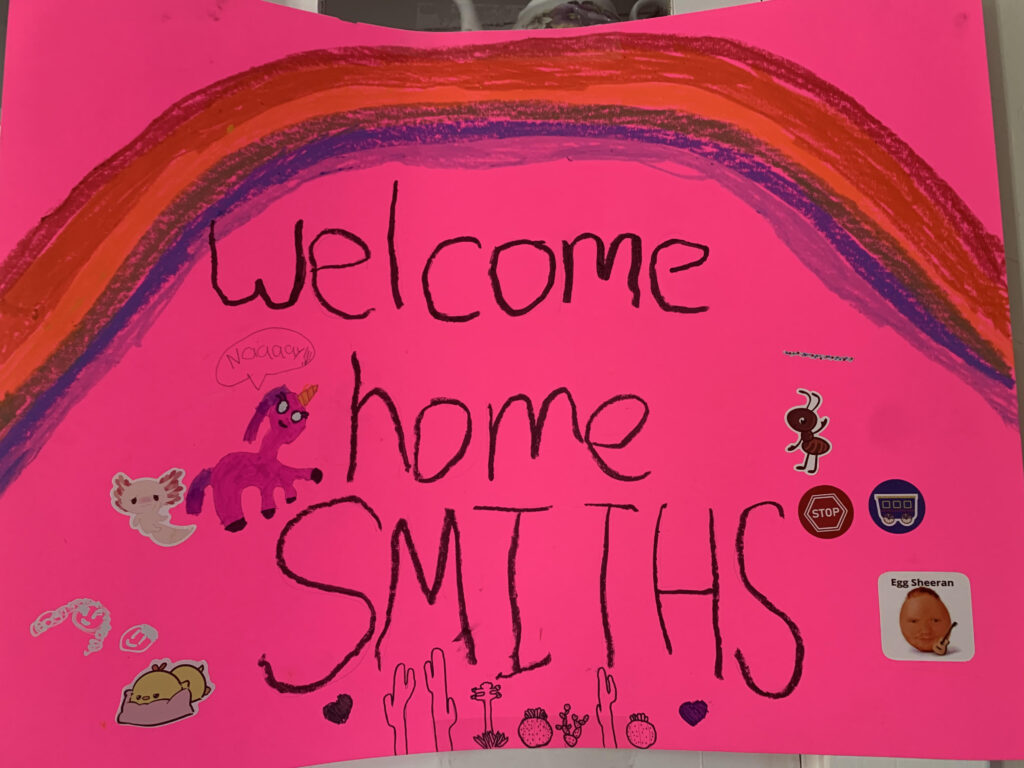
Despite the fact that we arrived well after their bedtime, my sister and brother-in-law met us at the airport in Tucson. We arrived home to find that our friends, Seth and Kristin, had left flowers, breakfast, several freezer meals, and welcome home signs.
It wasn’t that I wanted or expected to stay in Mexico, but I realized on the first day back that I had a little bit forgotten that we would return. The little stack of pesos on my bedside table now are worth nothing. Everything is strange in its familiarity. We are glad to be back, sorry to leave, and left gasping at the rapid swish of time.
Being in Mexico was such a joy and honor. We liked to play with Spanlish with Daniel and Celia. One of our favorite phases was muchas thank yous. Muchas thank yous for joining us for our time in Mexico.
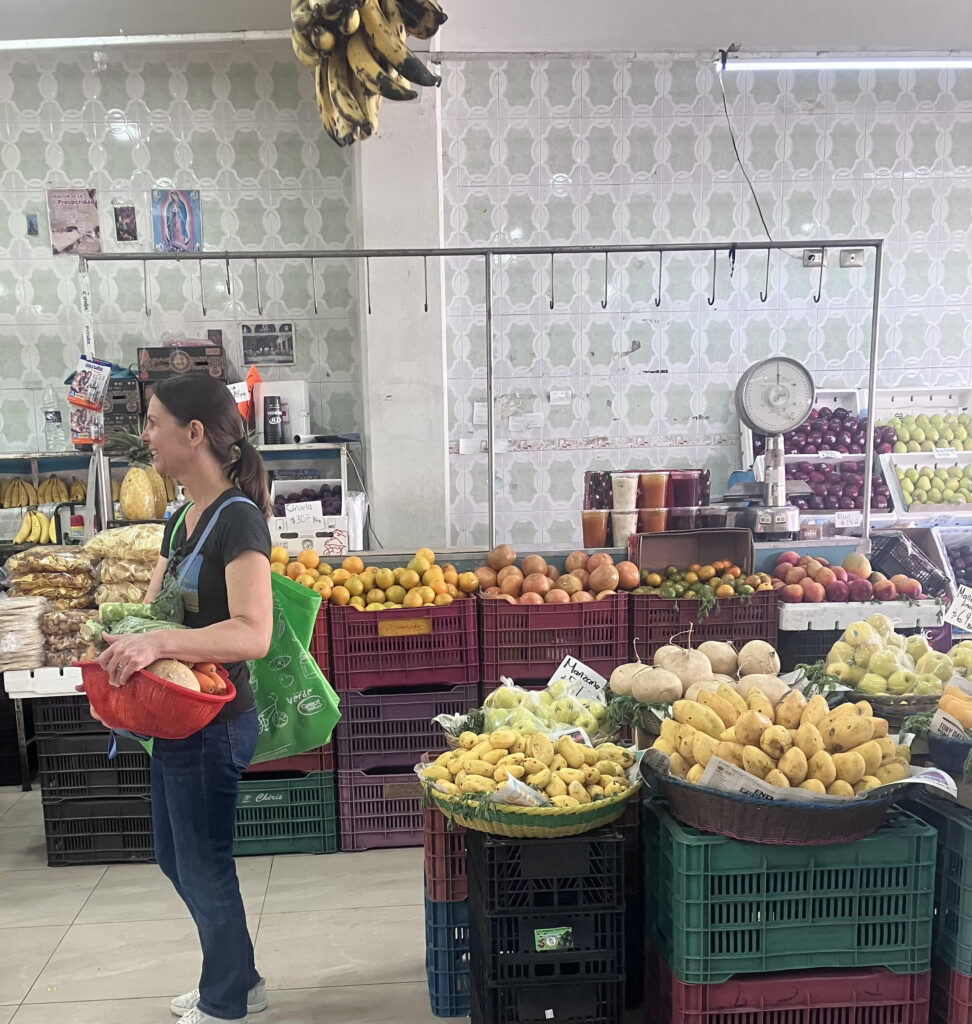
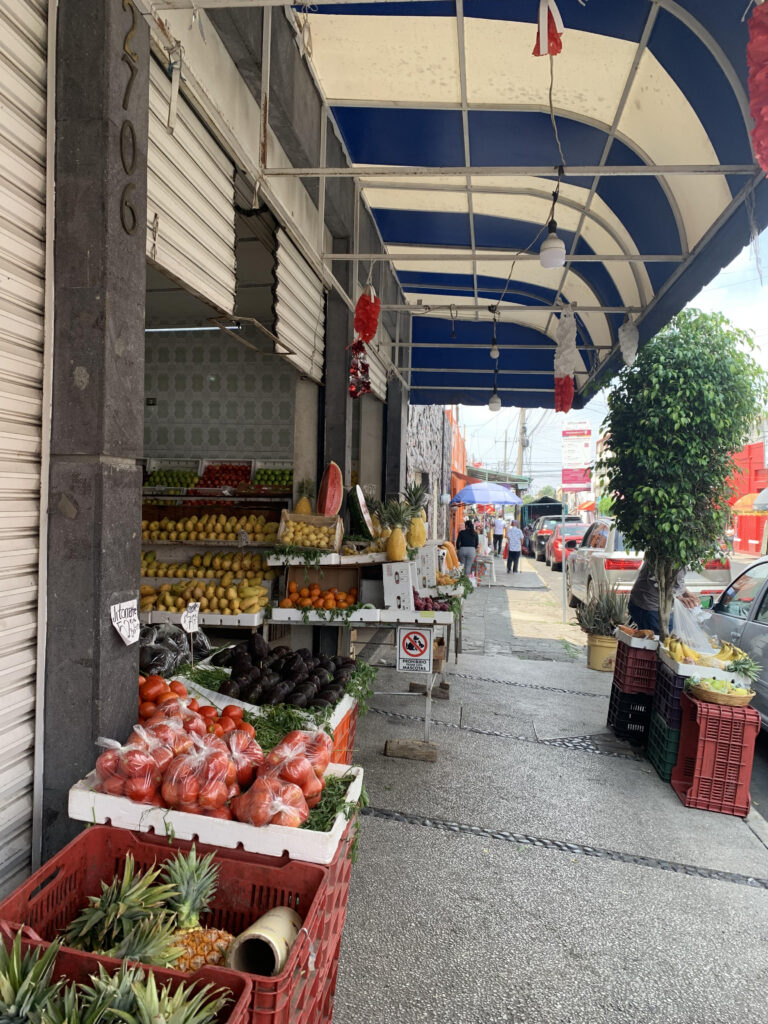
“When are you going to eat this?” asks the fruit seller holding up an avocado that I selected, “today or tomorrow?”
“Tomorrow,” I answer.
“Let me get you another one.” He selects one that is slightly less ripe than the one I chose and puts it in our bag.
Here I am with the wrong avocado.
“I am so happy to see you!” says Larissa as she greets me and then another woman participating in the exercise class. Larissa lived in New York City for twelve years. If ever I have a question or am confused in the class, she is there to help.
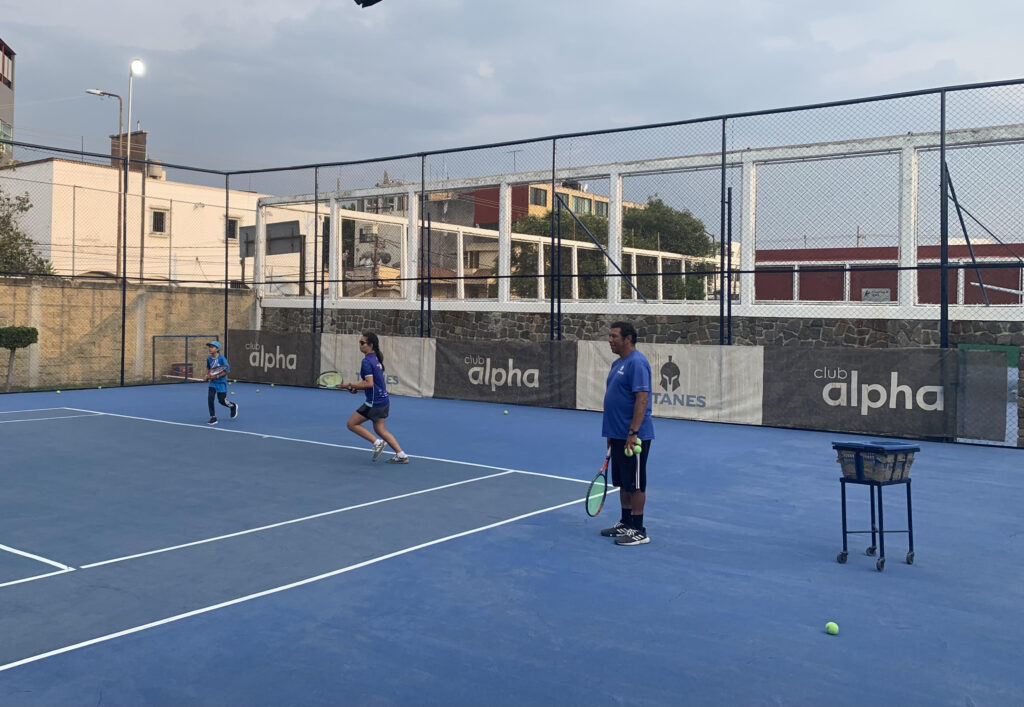
I exercise when Simone plays tennis.
“Los Juegos de Hambre!” exclaims the book seller, noticing the author of The Hunger Games. He has tables of used books outside the Facultad de Lenguas where I work, and I’ve brought him one of Suzanne Collins’ early books. Because the girls and I finished reading it, he can sell it to one of the students. He and I disfrutamos placticar, enjoy chatting, about books and authors.
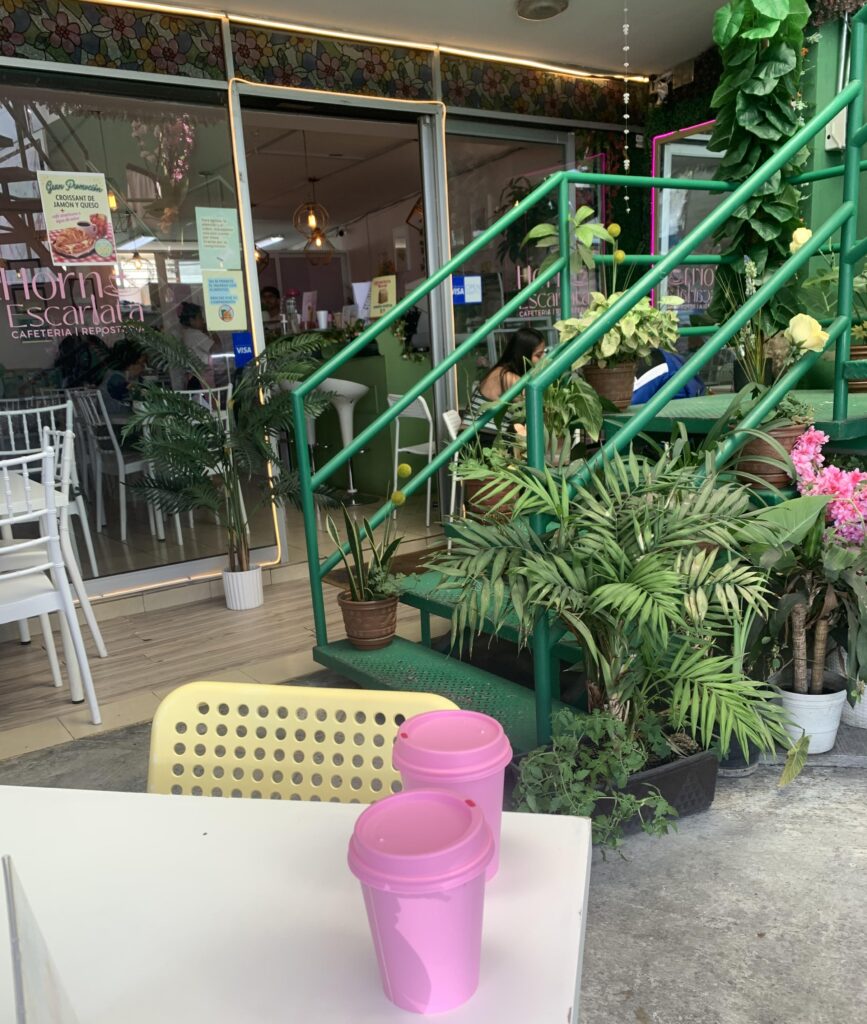
The cafe across from the book seller.
On their birthdays, I read the kids a blessing that is adapted from one of Cardinal Newman’s Meditations. “You are a link in a chain,” I remind them as they roll their eyes. “A bond of connections between persons.” (Apparently, being reminded of this is SO embarrassing.) “God has not created you for naught.”
Part of the reason that I applied to Mexico rather than another country is that it is close to Arizona. If, I reasoned, we are going to make connections, new links in the chain, then we’d be able to maintain them in the future. And we will. We will stay in touch with the people we have become closest to, and I hope to visit again. But leaving is weird.
And, I realize now, all the links are ephemeral.
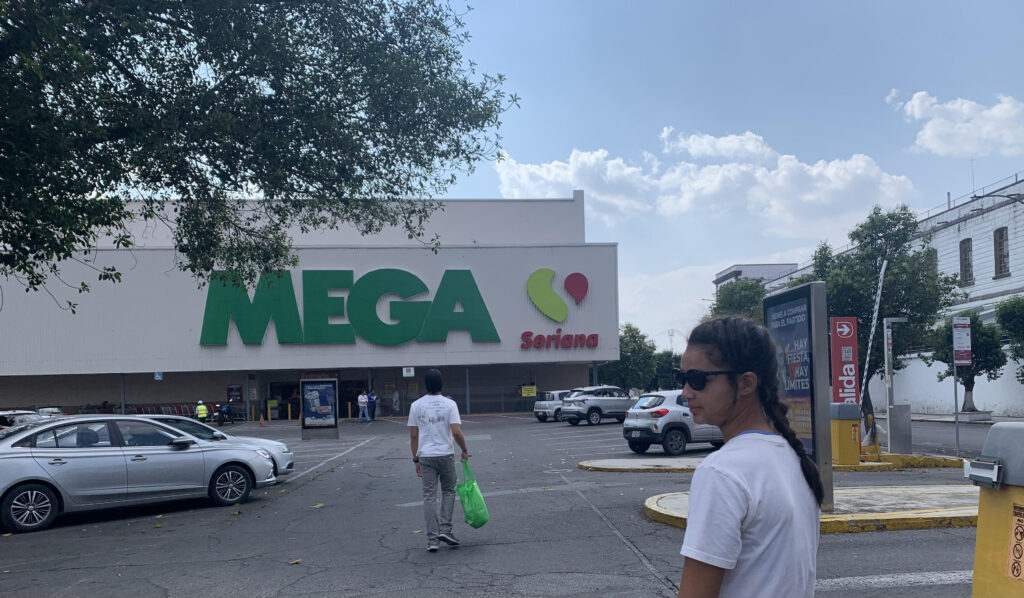
“Hola!” Simone and I wave at the toddler in the supermarket.
“Hello!” He crows back at us.
We all laugh together, he at his own cleverness, and we at the fact that this human who has been in the world for less than two years realizes that we speak English.
And that is our moment.
Our link in our chain.
He will never remember us, but we have had this moment together.
Heading into the grocery store to be outsmarted by a two year old.
I will likely never see the fruit seller, Larissa, or the book seller again. But we have had our moment.
In my middle age, I realize saying goodbye is a blessing. We so rarely realize that something is the last time.
Goodbye at the Facultad de Lenguas.
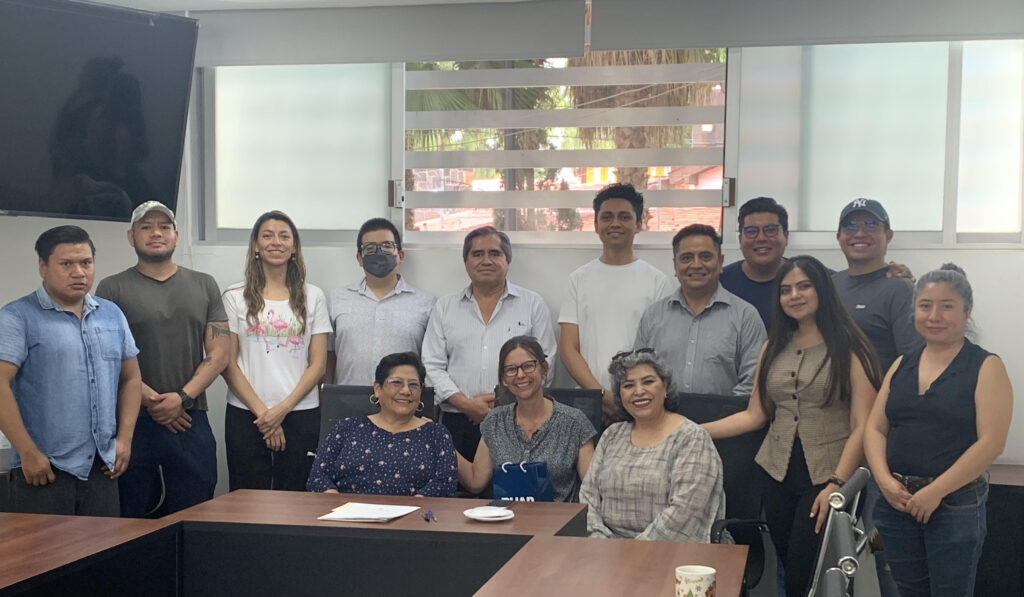
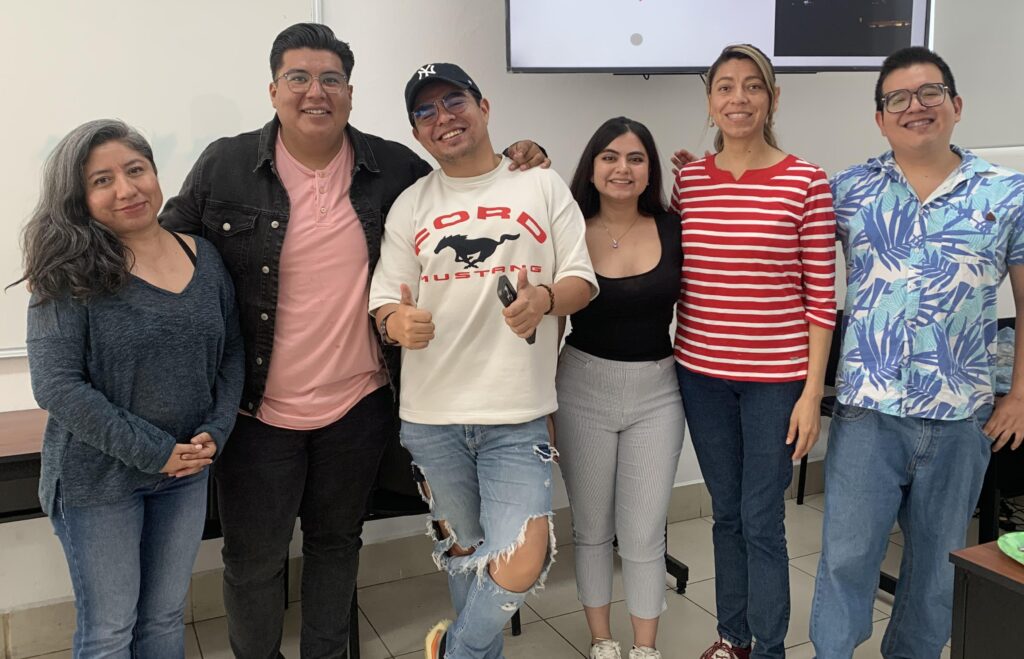
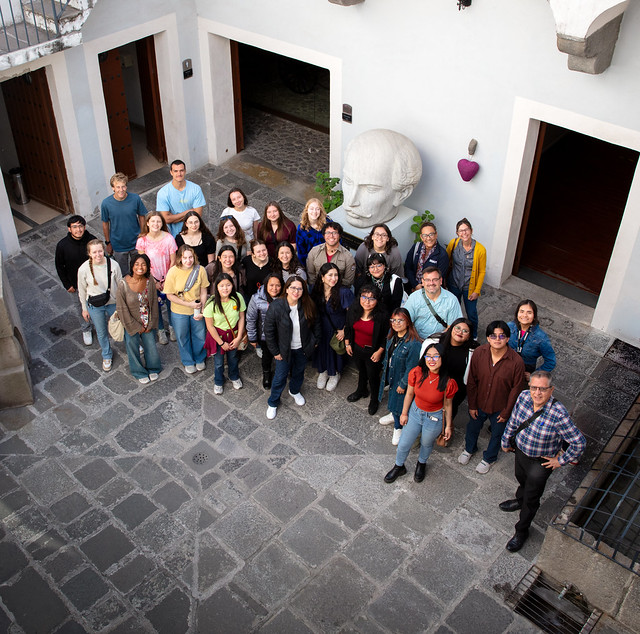
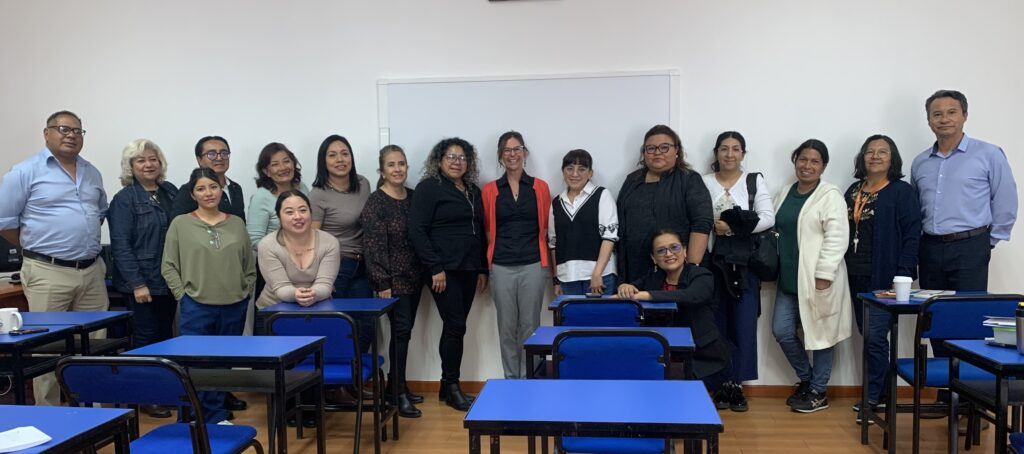
In preparing to say goodbye to my students, I have organized and shared my materials. Here are a few things to remember, I tell them. We stayed long after the last class, talking and taking photos.
Some of my wonderful M.A. students.
It is strange that saying goodbye is so sad when it is a normal and necessary part of life. That fact that saying goodbye feels somehow wrong does seem like a sort of evidence of deeper links to the humans around us, links of which we are not yet fully aware, a hint of the eternal and the life of the world to come.
We will be back in Tucson in less than two weeks. All four of us feel differently about this. We have been talking about things we will miss, things we will not miss, and things we are looking forward to. The list below is mostly my own.
Things we will miss
Our friends and colleagues. Veronica, Celia, Daniel, Erica, Letty. . . It will be so sad to say goodbye.
Work. The goal of my Fulbright project was to help strengthen the English teaching (specifically of writing) at the Benemérita Universidad Autónoma de Puebla. I have loved the work because the English teaching here is already strong, and the students are smart, motivated, and thoughtful. I’ve been teaching, creating materials, and working with individuals without the usual administrative work. I love it.
Teaching
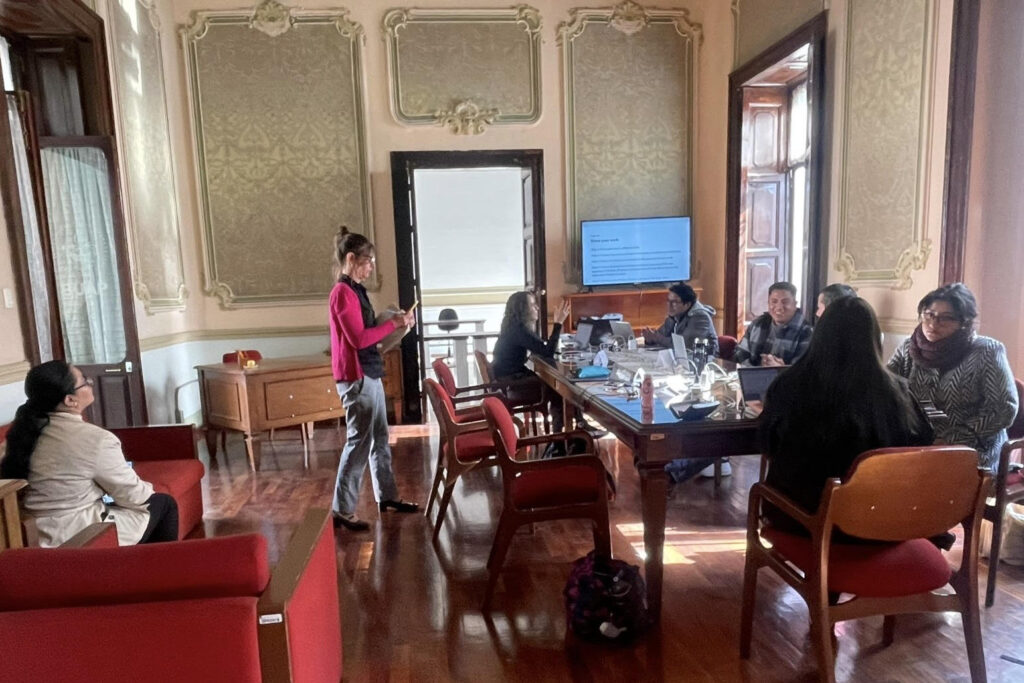
Colleagues not acting hurried. My colleagues at work publish, teach, advise students, work in national and international organizations. But they sit down and have coffee together. When I asked them why they never talked about being busy, they said, “that would be so rude! That would mean I didn’t have time for you.”
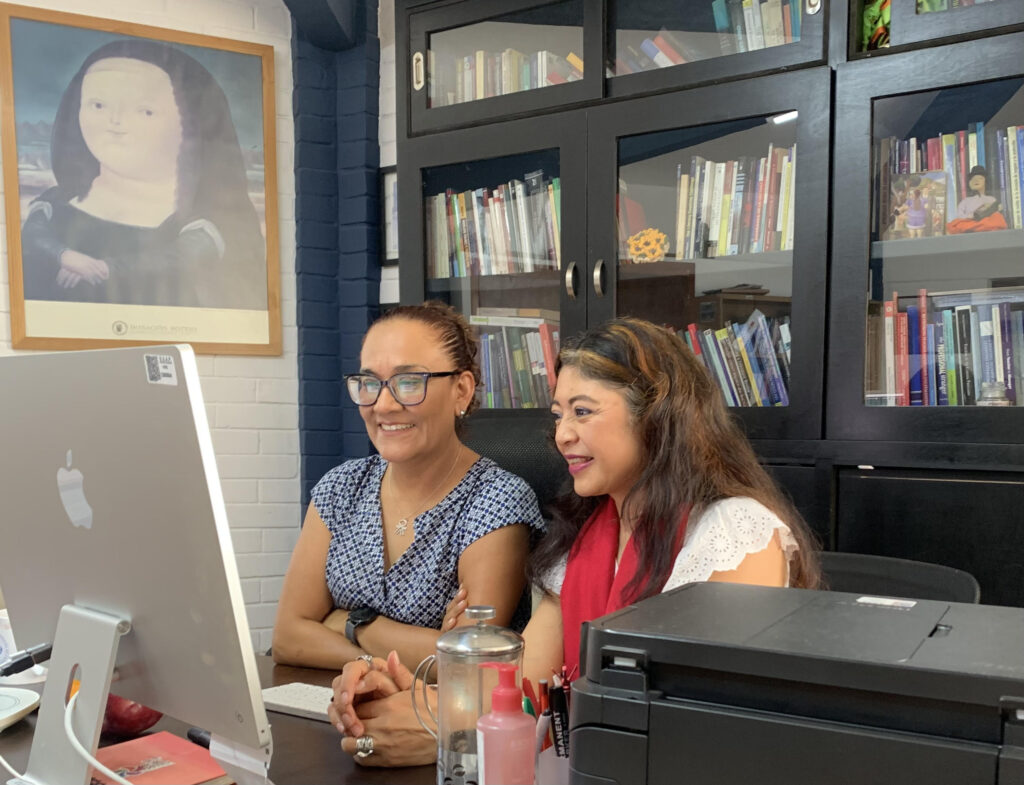
My dear colleagues working.
Social niceties. I will miss that everyone greets one another. At work, we give one another a hug and kiss on the cheek. Even at my exercise class, everyone greets one another, at least with a “good afternoon” or often a hug and kiss. After the exercise class, everyone claps and individually thanks the teacher. It is nice.
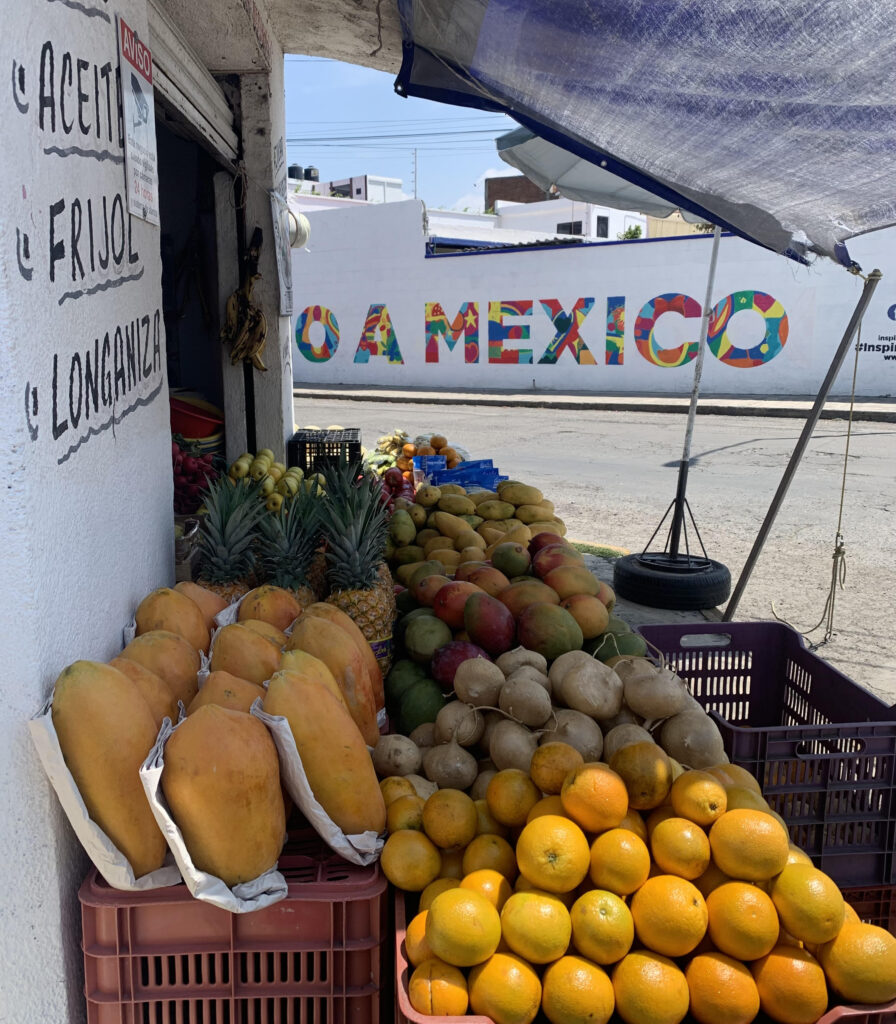
Fruit. Have I mentioned the pineapple? “Would you like me to take off the peel?” The fruit seller asks. The sweet, pungent smell wafts up from the bag as I bring it home. “Oh. Thanks for buying that, Mom!” Simone says, “do you want me to cut it up?” I do. And we sit down to enjoy it, the bright, yellow juice like music in our mouths.
Delicious pineapple
“Where are you from?” conversations. While I am looking forward to returning to familiarity, I love the inroads that being a foreigner provides. “¿De dónde nos visitas?” a shopkeeper asks. “Los Estados Unidos,” I respond. She answers in a familiar litany that leads us to a new place, a new connection, and a surprising, although brief, intimacy.
Walking the kids to school. We walk a quarter of a mile to school together in the cool mornings. We say good morning to the juice man. A used paper bag flies in the breeze under a purple bougainvillea.
“It is just,” Marie continues her conversation about one of her classmates, “we don’t like each other. Common misconceptions about teenage girls, they like everyone.”
Simone chuckles, “Common misconceptions about teenage girls,” she repeats. “They know their mother is always right.”
That was one morning. Another morning one child was angry that we weren’t walking fast enough, and another child was furious that we always walk way too fast.
Heading to school
Not having a car. We walk miles in a day. Without a car, all the kids have to grocery shop with me so we can carry things home. We buy from stores near our house. Although we haven’t gotten to know much of this huge city or the outskirts, we know every piece of our square half mile.
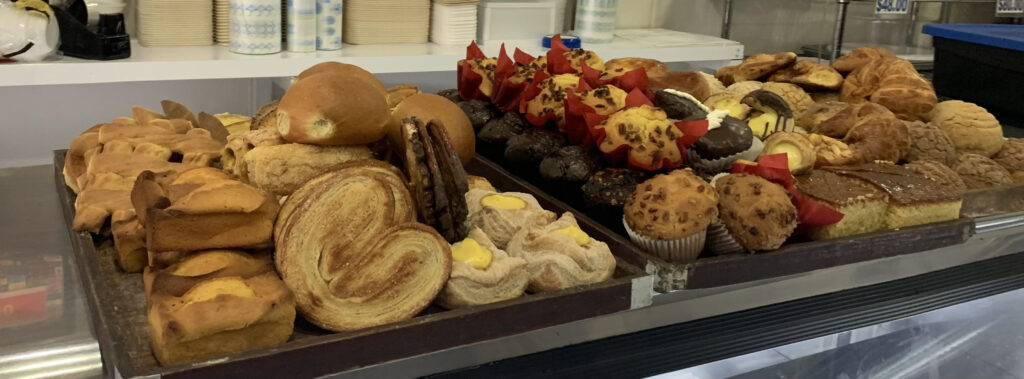
The bread. Our favorite panderia is Flor de Puebla. Simone and I walk there most Saturday mornings.
Streets near our homeBread at Flor de Puebla
Families walking around together. I love seeing mothers and daughters walking arm in arm, sweet little baby legs hanging near a mother’s chest or toddling rapidly to keep up with grandpa, or a young boy walking with grandma down the sidewalk.
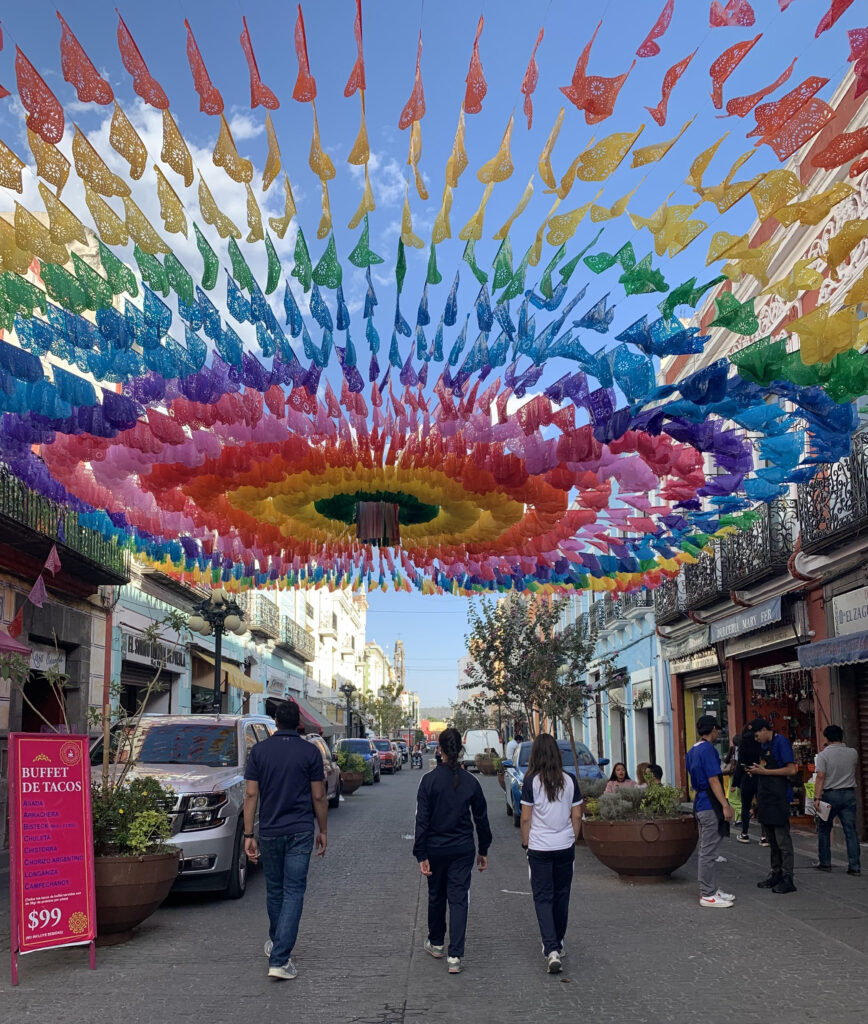
So many more things. Colorful streets, wooden doors, paletas, the weather, art in the Zocalo, flowers, free workshops at the Amparo Museum. . .
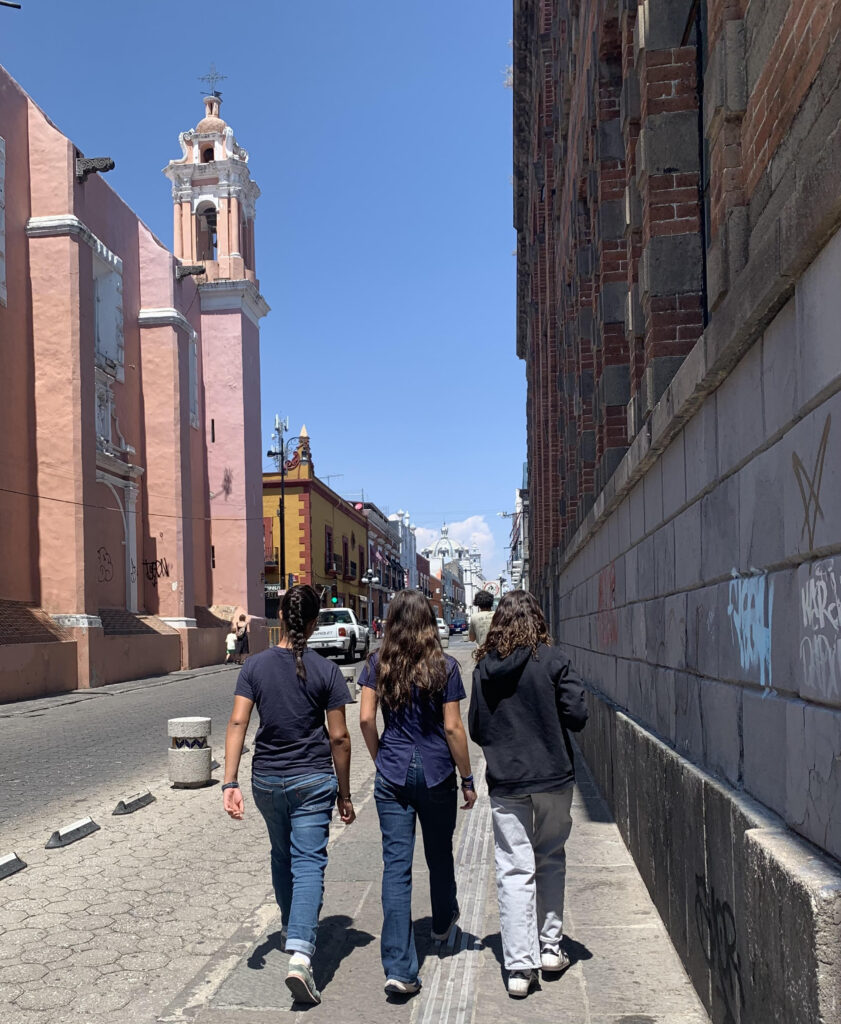
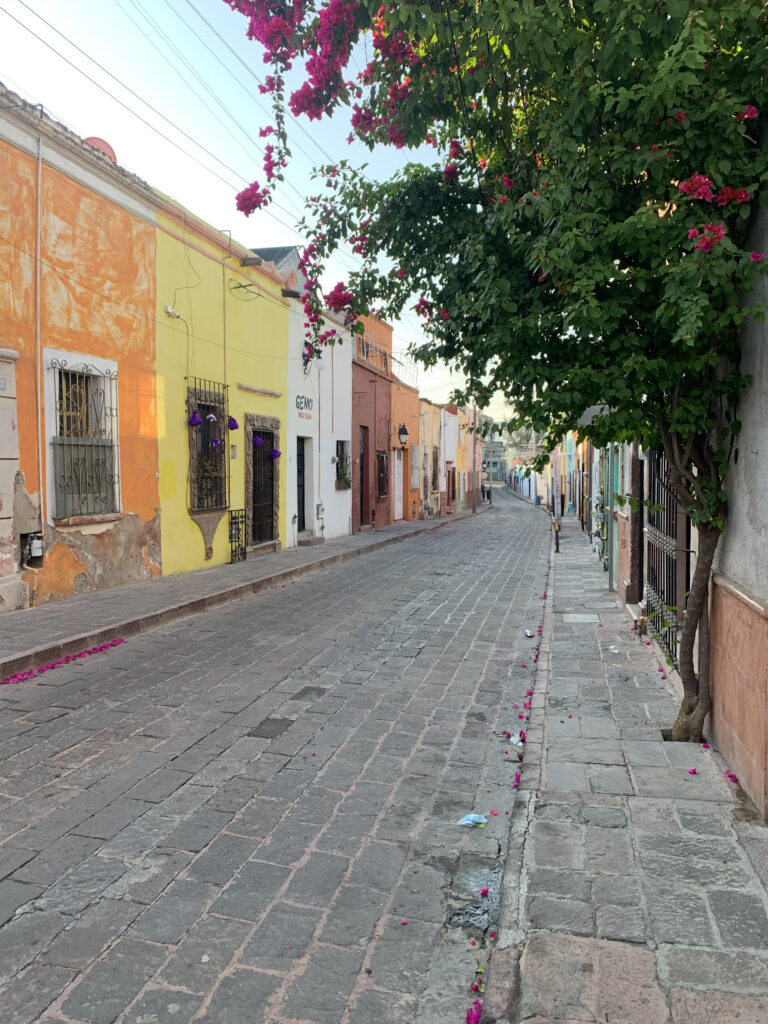
Colorful streets
Things we will not miss
Noise. We live near the center of Puebla, and it is always noisy. At night the bars thump music. Some nights, a small group of Aztec drummers plays in the plaza near our house; if that sounds charming, it is not. Even early in the morning, shops will sometimes play music as they open. Why so loud?
The water pump. We can’t drink the water here. It has to be delivered. Let’s say that I am in the middle of cooking and need water. One bottle of water is empty, so I must open a new bottle, tip out enough water so that it won’t overflow when I put the pump in, put in the pump, try to get water but the pump pops off, try again, and it pops off again. Now there is water on the floor. I try again to fasten the pump before going to get a rag.
I can’t wait to leave this water pump.
The kids’ complaining about school. The kids have learned a lot in school, lessons that they may not appreciate now, but I hope will later – kindness and cruelty, all kinds of words in Spanish, managing the fact that their lunch sometimes disappears from their backpacks, teachers not showing up, a blurring between break and class time, a frequently meandering approach to lessons. The story below is not representative of their experience but does illustrate some of the things they experienced. I asked Simone and Marie to retell the story of water day:
“We all brought water balloons and sponges for water day. We went out to the basketball courts and the teacher put out buckets of water and water guns. She said not to spray water into the computer lab and said to start. “’H’ ‘E’ ‘double-hocky sticks’ broke loose, and everyone went crazy. Valentina tackled Oswaldo. There were some pressure washer kind of water guns and people got sprayed in the face. Someone slid on the concrete. “The teacher was on a dating app the whole time. It was crazy and kind of fun to be in a water day with teachers watching or being like, ‘only throw water balloons below the waist.’ Or saying, ‘Be sure to get consent before hitting anyone with a water balloon.’”
Marie and Simone
Toilet paper in the waste basket.
Having to soak fruits and vegetables if we don’t peel them.
The noisy plaza
Things we are looking forward to:
Friends and family, especially Mark and our dog, Samson.
Walks with friends.
The Pima County Library.
Understanding all the conversations around us.
Our pots and pans designed to accommodate three teenage appetites.
There will be more that we will be happy to return to. For me, this transition feels like more of an end than a beginning. But transitions are always both. Mark arrives soon to help us move, and, once he does, it will probably be easier to see what is ahead rather than what is behind us.
If I don’t go now, I realized, I will never in my life see the BUAP Botanical Gardens. One semester is not very long. The end of our time here is barreling towards us.
And we are just getting adjusted.
BUAP (Benemérita Universidad Autónoma de Puebla) has campuses all across Puebla. In my first few months here, I would continually get lost and end up in the wrong place because Google Maps and Uber are not always reliable here (although there may have been an extremely slim possibility of user error in this situation).
“Kids! Walking will be much more fun,” I would say when we ended up in the wrong place.
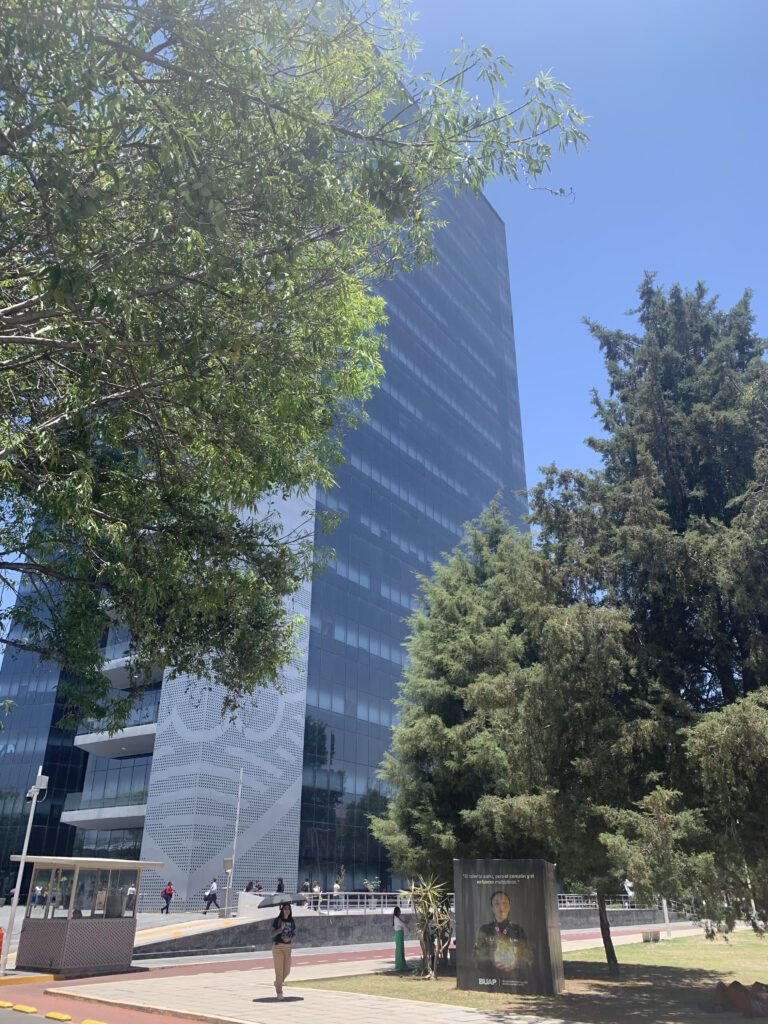
Last week, I held a workshop, “Managing Large Writing Projects,” for graduate students in the BUAP Ciudad Universitaria. I got to the campus with ease, found the Rector’s Tower without even asking for directions, and signed into go to the sixth floor.
BUAP Rector’s Tower
After a wonderful session with students from Political Science, Physical Education, Chemistry, and Accounting, I signed out of the building and set off towards the main entrance. On the way, I noticed the entrance to the BUAP Botanical Gardens. My first thought was that I didn’t have time to go in. But I did go in. And I am glad I stopped for a little 20-minute visit, although it was not the magic that the title of this post promises.
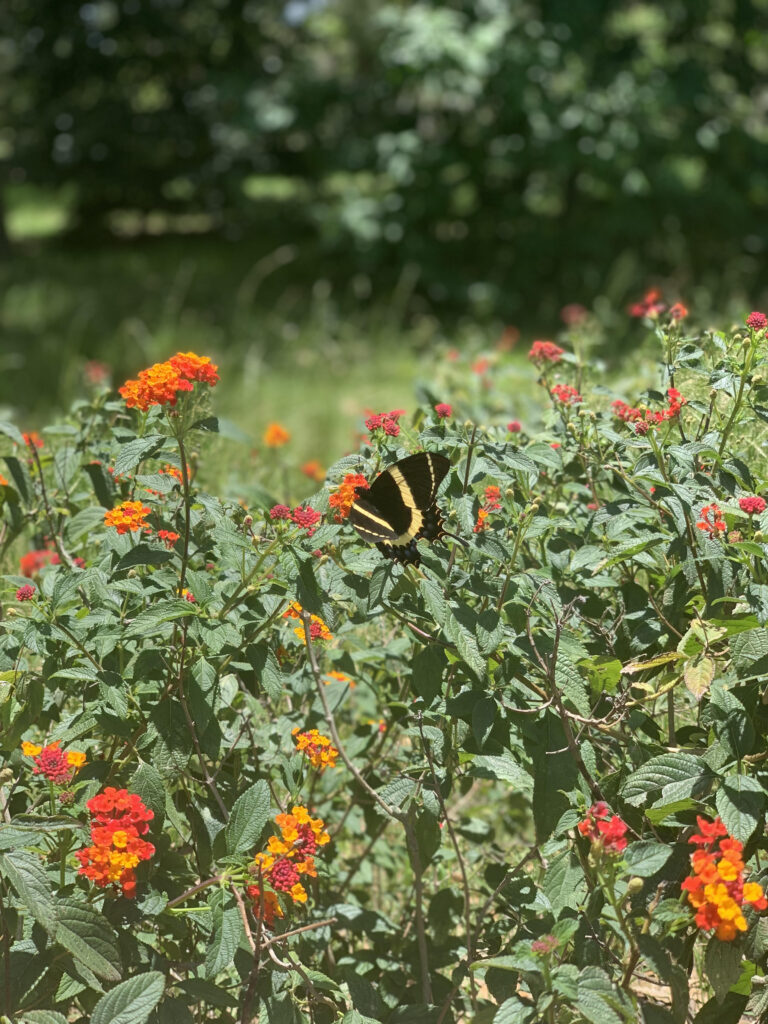
A butterfly in BUAP Botanical Gardens.
With less than a month left, I am realizing that we will not do all that we want to do. We will not make it to Veracruz. We will not make it to Oaxaca and possibly not even to the pyramids of Teotihuacan. Every moment this semester has been full. But a semester (and life) is short, and we can only do so many things. I feel so grateful to have this little life interlude.
For the record, the kids feel more mixed about our time in Mexico, but they also think they will live forever, so there is that.
Pueblos Mágicos
Mexico has over one hundred Pueblos Mágicos, towns that have significant cultural or historical significance. The program is, on one hand, a device to increase tourism, and, on the other hand, a way to bring attention to truly magical places. On my list of places to go is the pueblo mágico of Zacatlán, a mountain town covered in mist with cascading waterfalls, apple orchards, and a huge clock made of flowers. Also on my list is Cuetzalan, another mountain town with cobblestone streets, ancient ruins, and coffee plantations.
We will probably not make it to either Zacatlán or Cuetzalan.
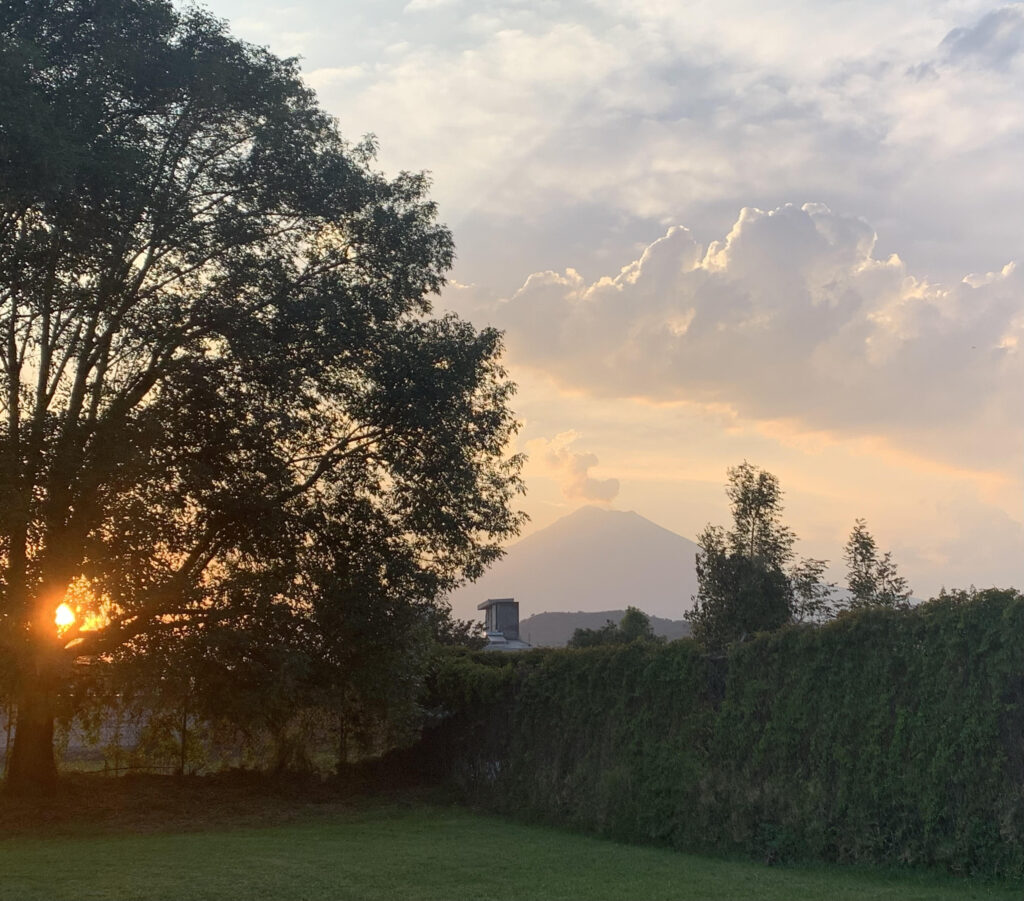
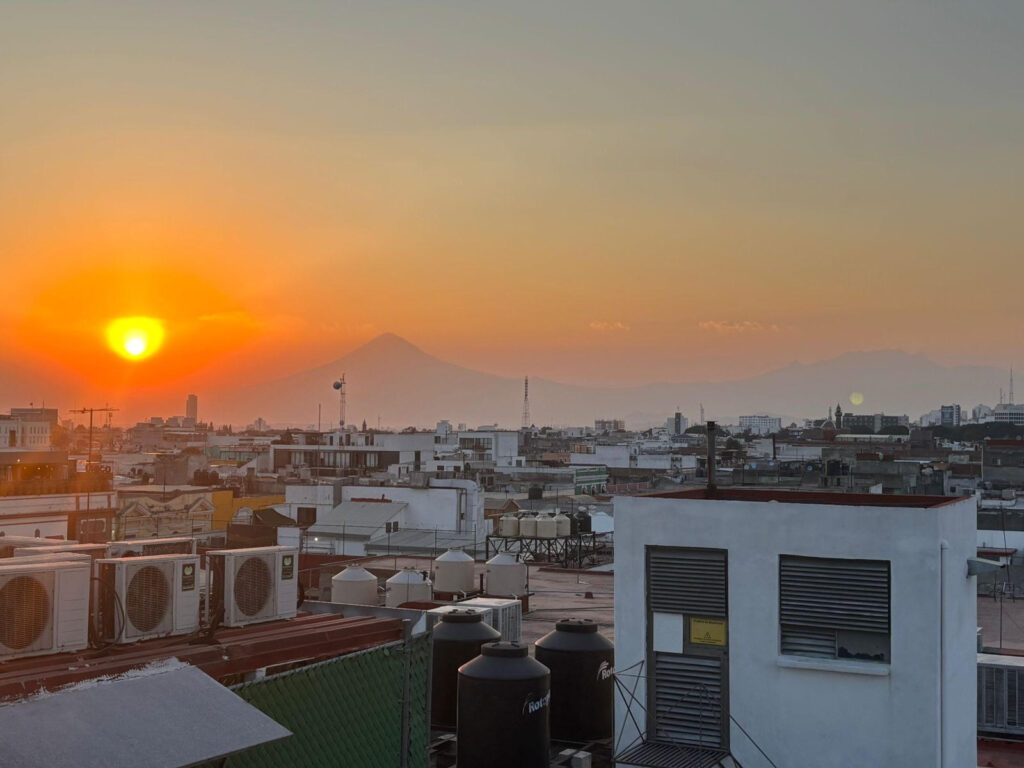
Popocatépetl
But we did get to experience a magical town. Our wonderful landlords, Daniel and Celia, told us months ago that when it warms up, they will invite us to their house. Every day, Daniel and Celia drive about 30 minutes from their house to Puebla to their office just below our apartment. They are accountants and run the hostel across the courtyard from our apartment. For anything we have needed, they have been there for us.
Celia and Daniel live in the pueblo mágico of Atlixco. Although Atlixco is only 30 minutes from Puebla, it is an entirely different world. The town sits at the base of the volcano Popocatépetl and is rich from the volcanic soil and steady stream of snow melt flowing down the mountain. Nurseries, full of roses, geraniums, calla lilies, surround the town. Streams of water flow down every possible crevasse. The air is fresh and green.
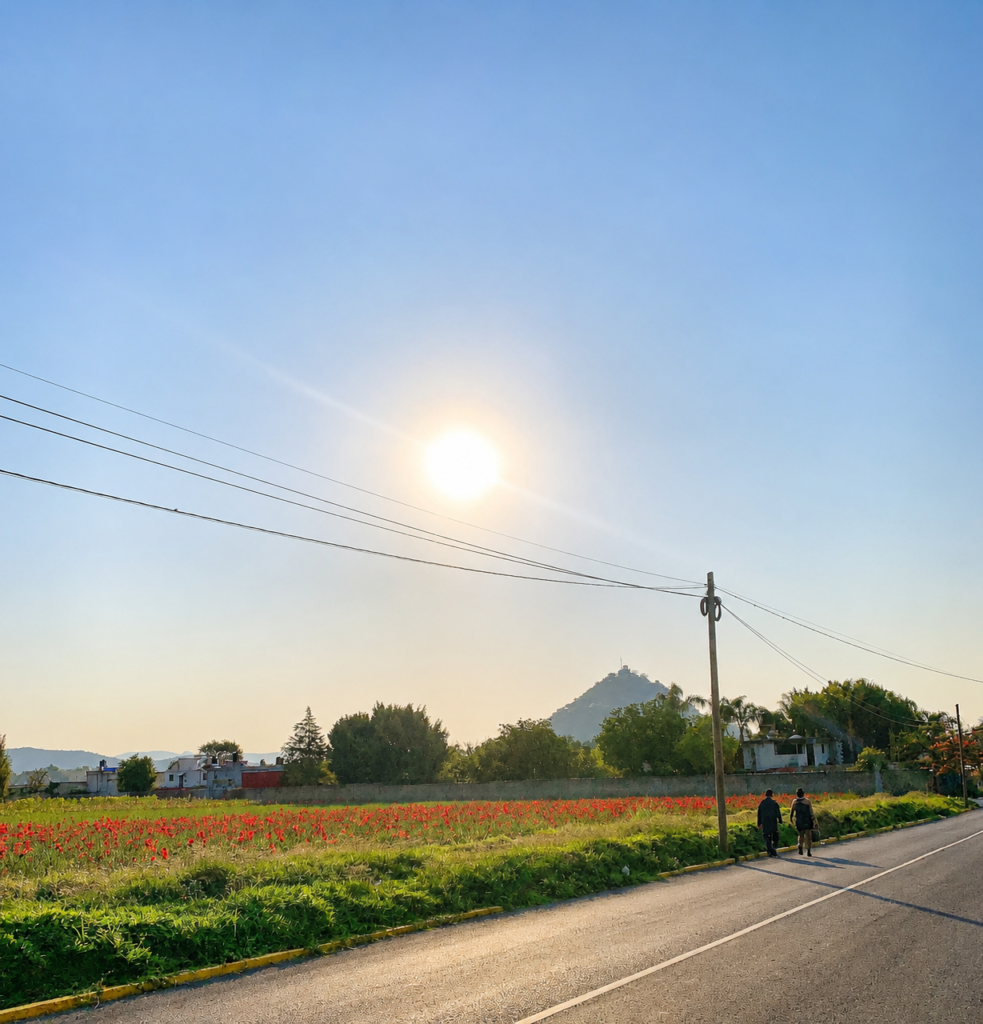
Fields of flowers and San Miguel Hill.
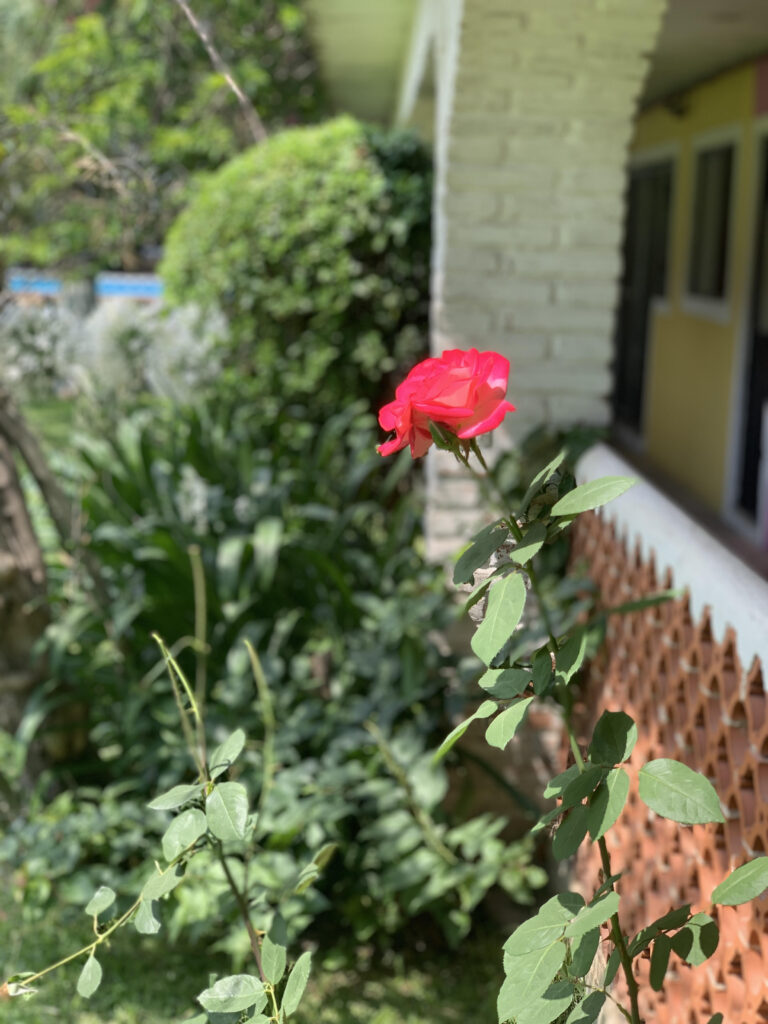
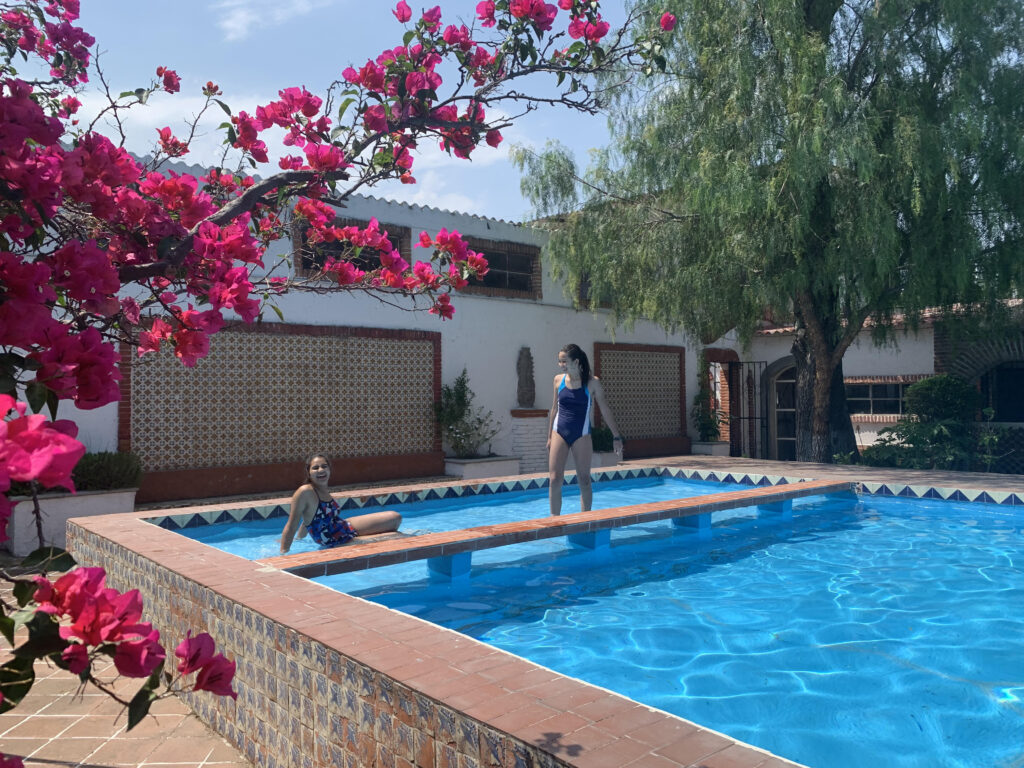
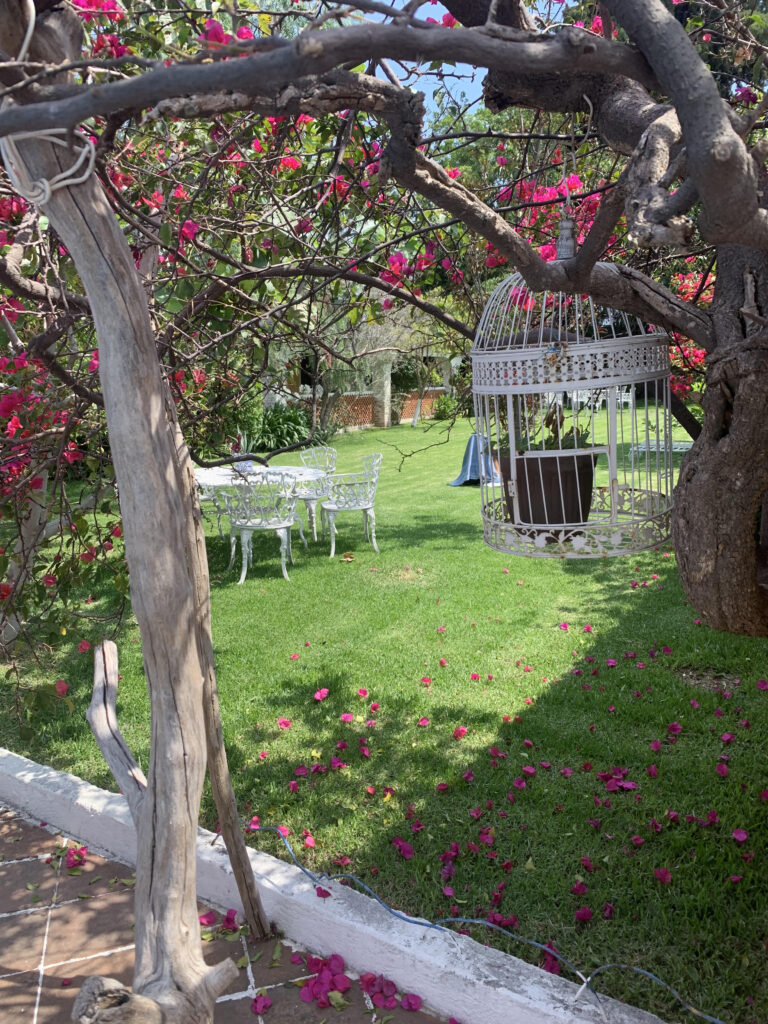
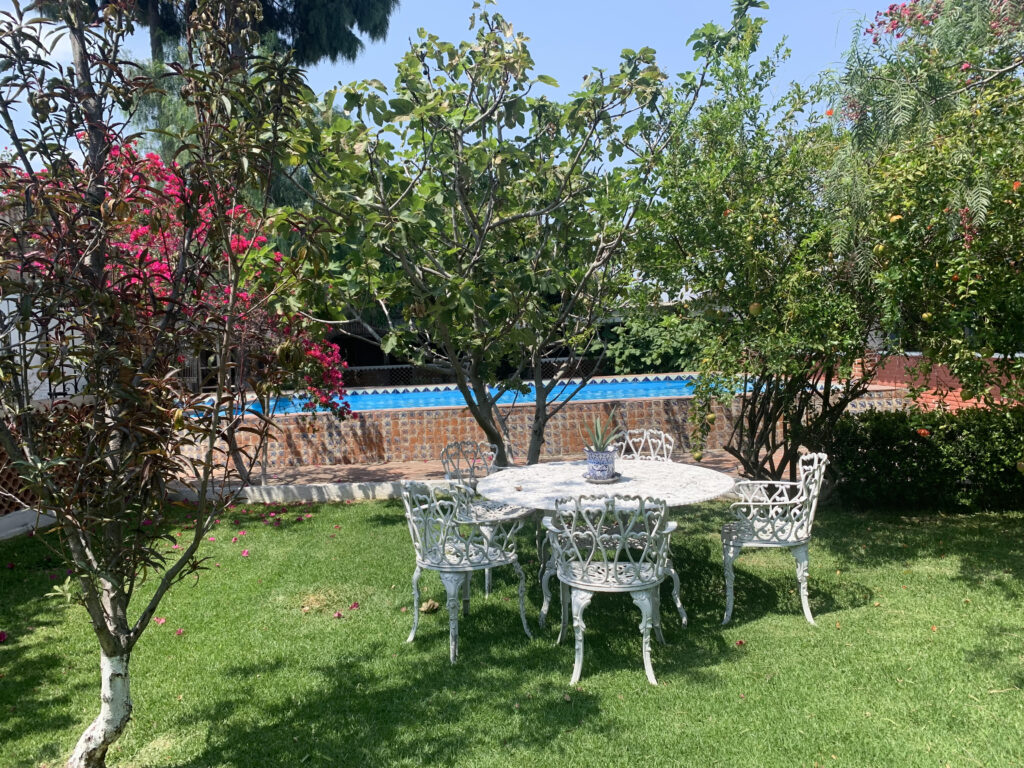
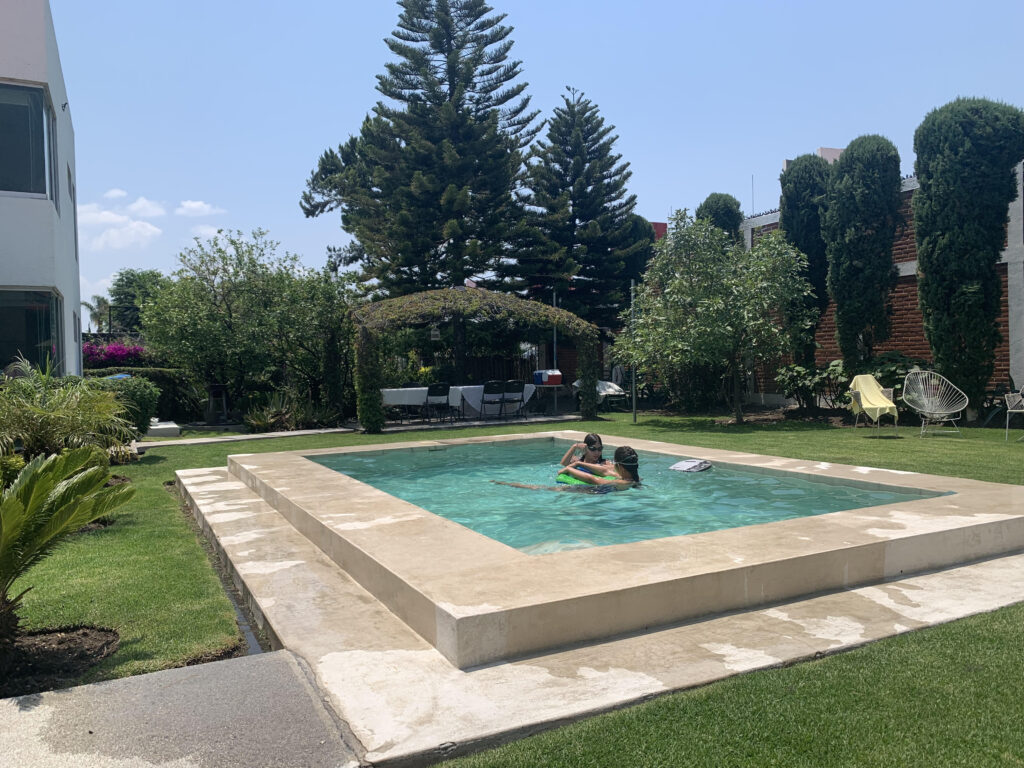
Celia picked us up mid-morning to take us to their family home, which has been in their family for over a century and is now shared by six siblings. Behind a large gate was an enchanted world. Between the old home and other buildings made out of brick and dark volcanic rock were flower gardens, lawns, avocado trees, fig trees, and citrus. After exploring and settling in, the kids and I jumped into one of the two swimming pools.
One of the swimming poolsA beautiful place to sit.
The water in the two swimming pools flows directly from the volcano to the pool and then is used to water the orchard and grass. Daniel and Celia’s son and an aunt joined us for an afternoon of swimming, eating pomegranates from the tree, and a long, delicious lunch. We heard stories about Saturday afternoons full of friends and family and about Celia and Daniel’s wedding. “Bring the family!” said Celia’s father, and more than 800 guests filled the gardens where we now sat.
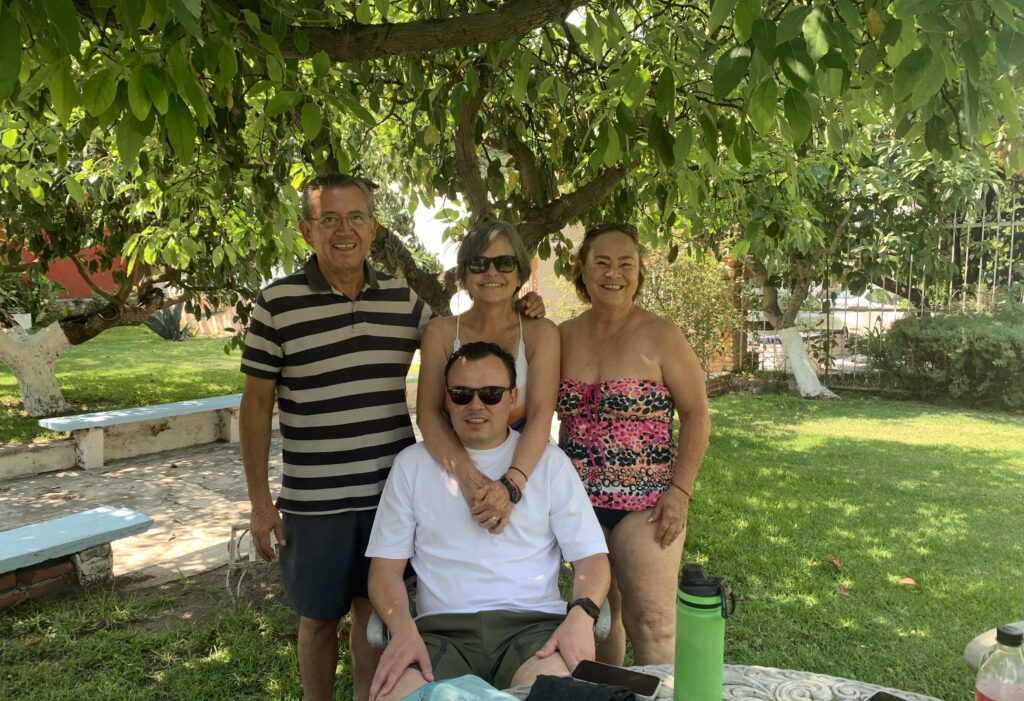
Daniel and Celia with their son and Celia’s sister.
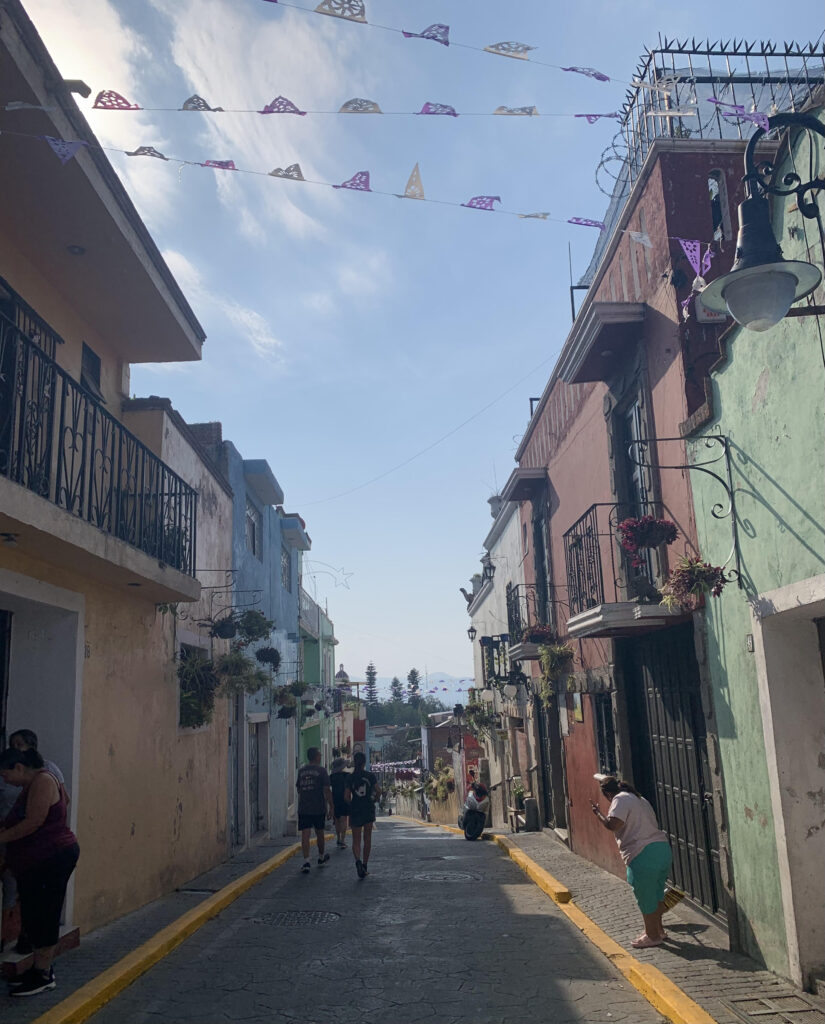
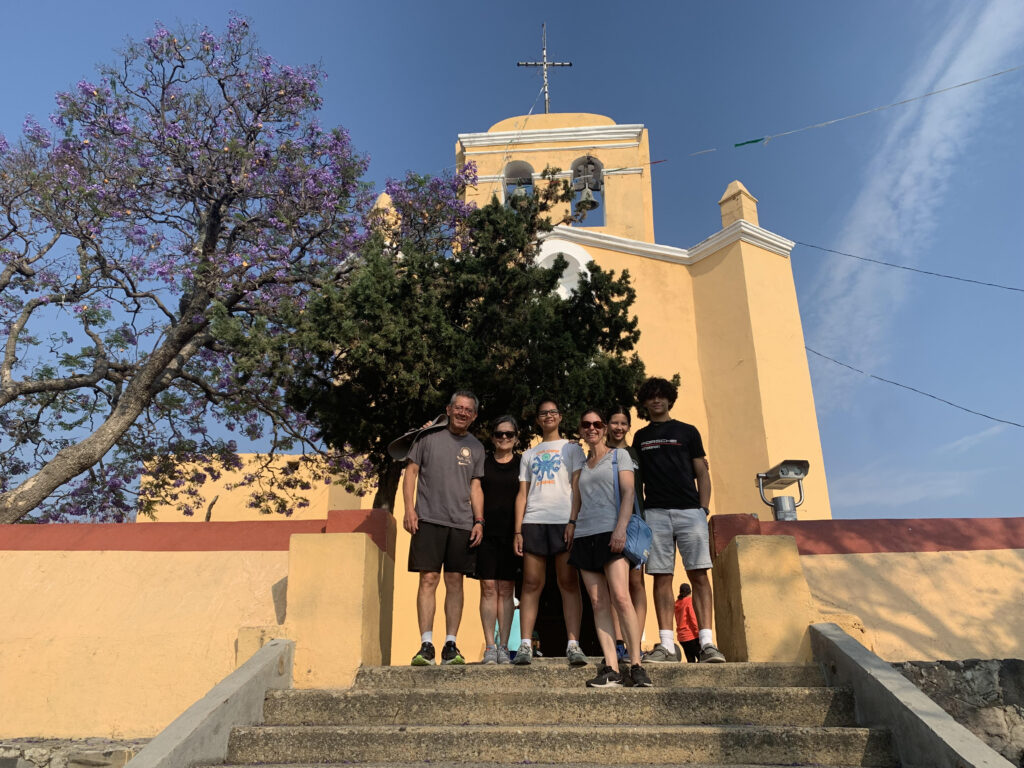
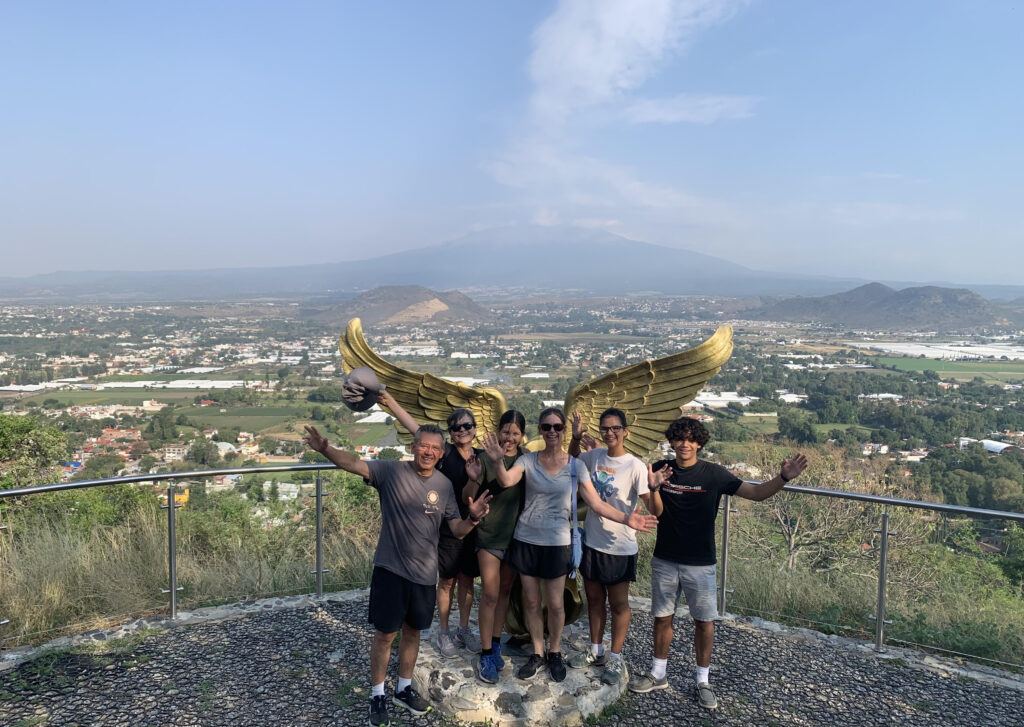
We woke up early the next morning to hike up San Miguel Hill, once a pyramid and now a steep hill with a church on the top. Leaving their house, we walked along streams and nurseries filled with flowers until we entered Atlixco’s narrow streets which are lined with hanging pots of flowers. Before ascending the hill, we stopped at a bakery with fresh bread from a stone oven. A dog yipped at a wheelbarrow as we wound up the narrow paths to the top of the mountain.
The streets of Atlixco. We made it to the top of San Miguel Hill!Pretending to be angels.
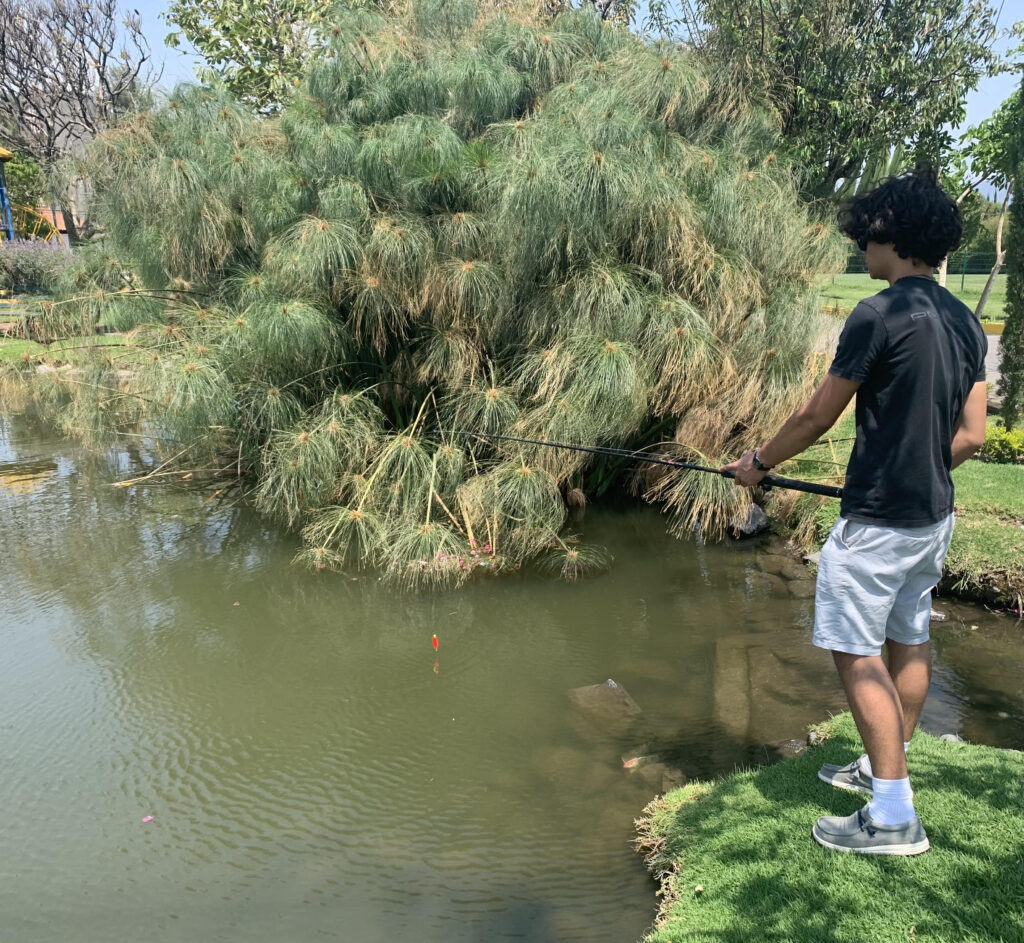
After our hike, we spent the day at Celia and Daniel’s beautiful home, swimming, BBQ-ing burgers, and talking. Like many people in Mexico, they are fed up with corruption in Mexico, the challenges of running a business in this country, and paying high taxes that seem to only line politician’s pockets; although they don’t like Trump’s methods, they do see him as someone who is making change happen. Langston got to fish in a little pond near their house. We played several games of Sequence and made up new phrases in Spanglish.
What a wonderful afternoon. Langston in his happy place.
As Celia said, we are no longer just friends, we are now “una gran familia.” We will not get to do everything we would like to do in Mexico, but if there is any pueblo con magica, because of Daniel and Celia, we have experienced it.
If a third blog entry about Holy Weeks seems like a lot, imagine being a teenager attending all the events. My brother-in-law, Tim, was an enthusiastic guide. I was an enthusiastic participant, but I knew it was a lot for the kids. So, I (mostly) let the kids choose which events they wanted to attend. And they were terrific, participating in most of the events. I don’t know how we will return to Easter bunnies and thin plastic eggs next year.
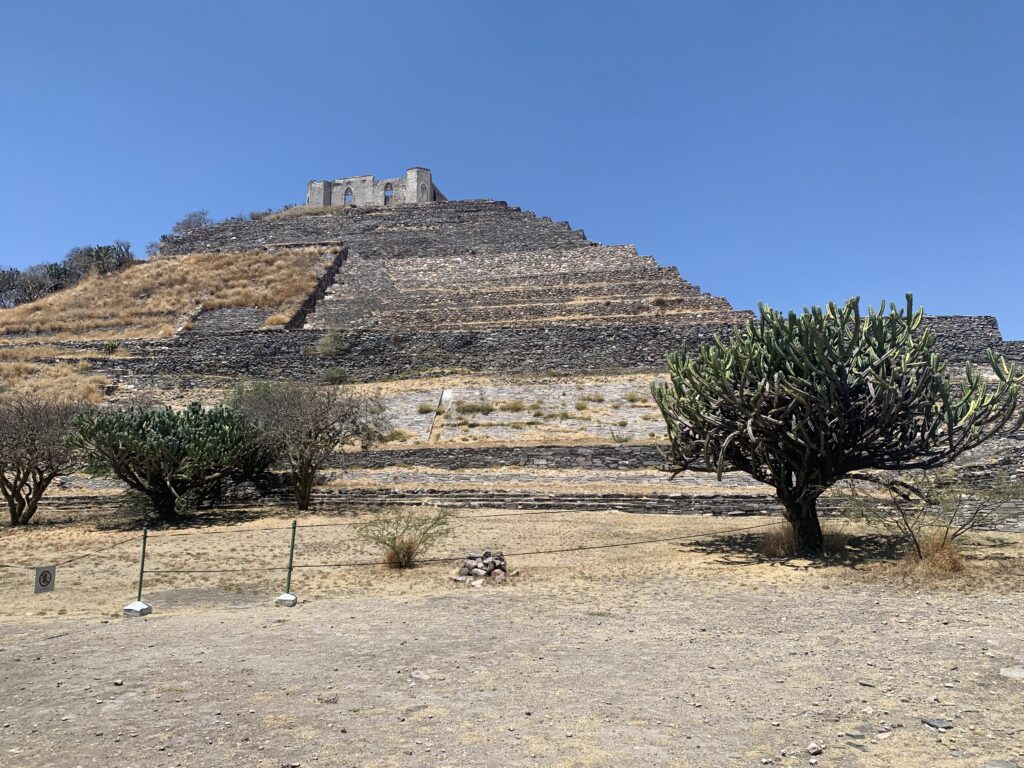
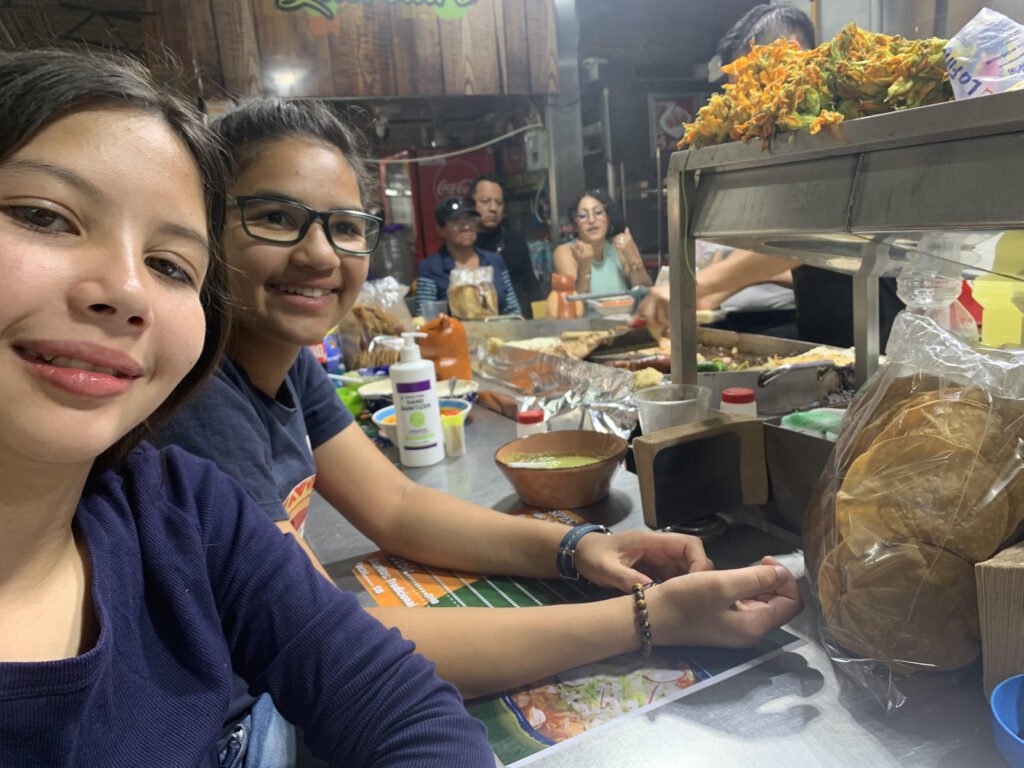
Between the Holy Week celebrations we ate paletas, visited a pyramid, had tacos in a market, and toured the beautiful city of Querétaro
The pyramid “El Cerrito.” Tacos in the market.
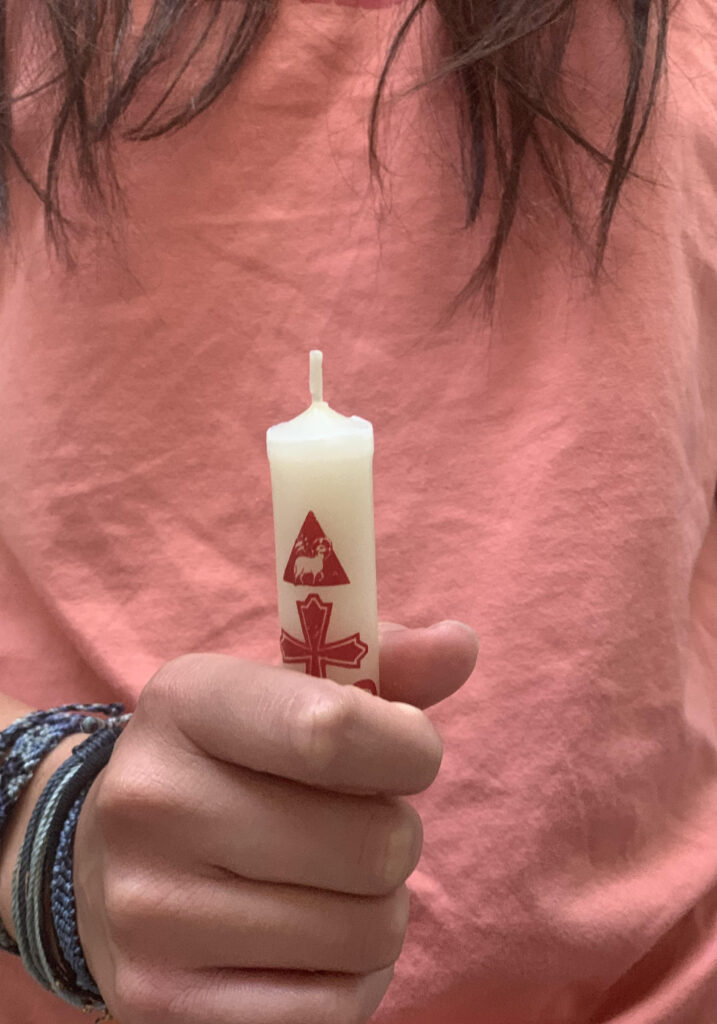
After the Visit to the Seven Churches, the Stations of the Cross, and the Procession of Silence, the time for the Easter Vigil had arrived. I didn’t take photos at the time, so these photos are from earlier or from other churches. Tim knew that the Temple of San Francisco would be crowded, so we arrived forty minutes early for the service. Outside of the church, people were selling Easter candles. We got a one-dollar candle for each of us.
Small Pascua candle.
Forty minutes early was not early enough. The church, which was entirely dark, was packed, and some people already had their camping stools set up along the aisles. We navigated the darkness into a little chapel off the side of the main sanctuary and found a pew with enough room for us and one of Tim’s students. We waited in the darkness and the kids, who had been incredible for all the events, began to fight in whispers. I threatened them and they began to argue with me. I refused to whisper back. A car backfired. A baby tested out his lung capacity with bellows.
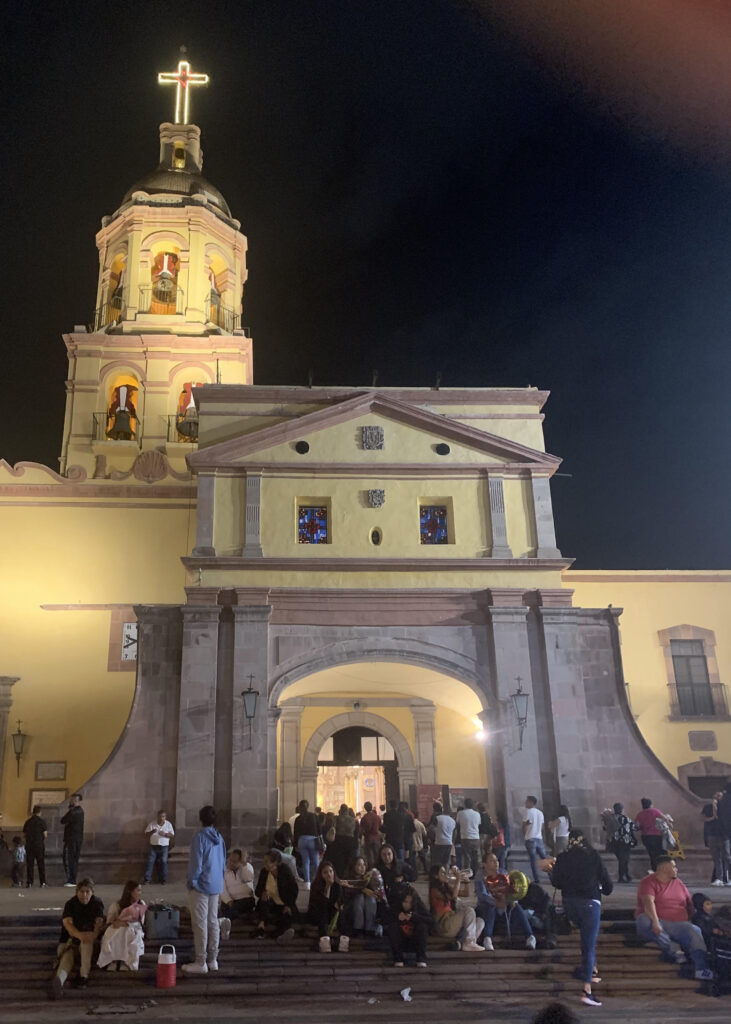
Outside San Franciso.
In the darkness, a clear voice rang out, “Dear brother and sisters.” We quieted. In the chapel, we could not see the lighting of the Easter candle, but we heard the beautiful words:
Christ yesterday and today
the Beginning and the End
the Alpha
and the Omega
All time belongs to him
and all the ages
To him be glory and power
through every age and for ever.
Amen.
There was more rustling and quiet. The voice announced:
May the light of Christ rising in glory
dispel the darkness of our hearts and minds.
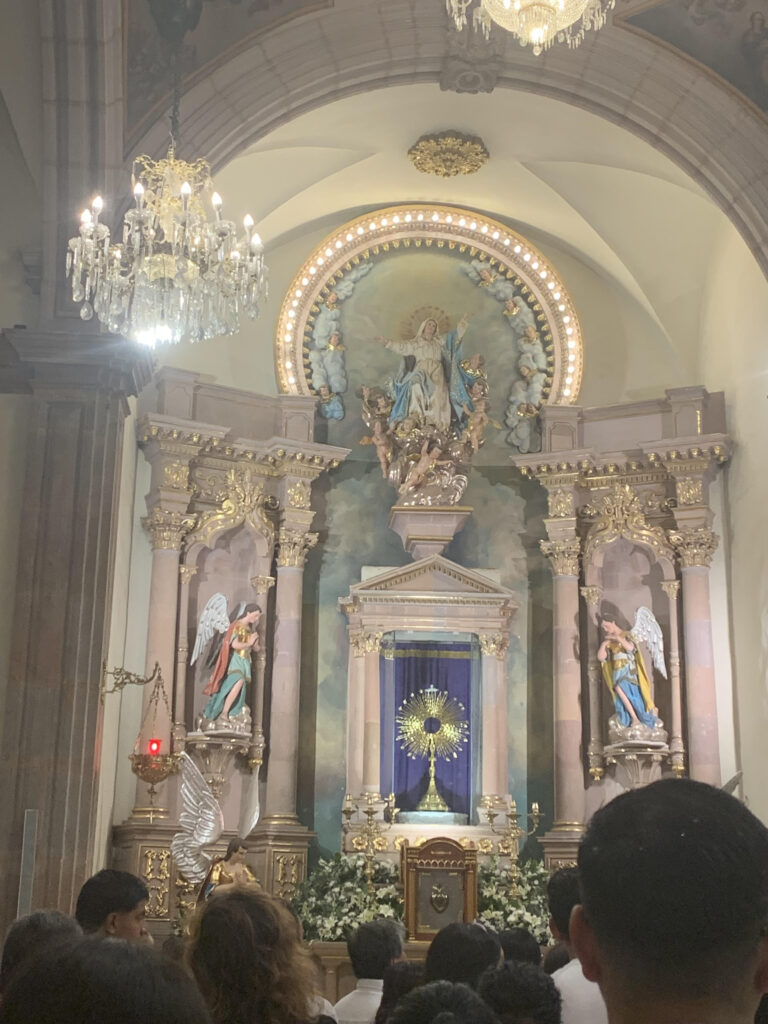
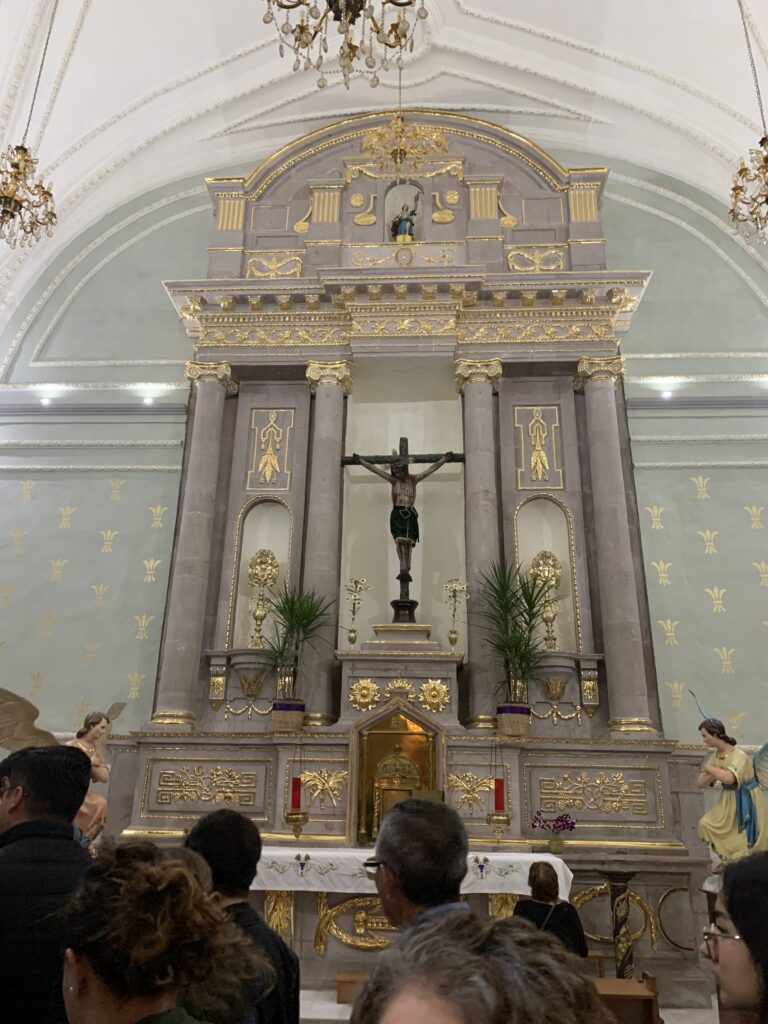
Slowly, we could see a glow spread through the main sanctuary as people lit their candles. Finally, the light spread to us, surprisingly bright in the cavernous space, illuminating the angels in golden robes at the front of the side chapel.
Angels in the chapel.
The kids and I struggled with our melting candles, too thin to handle the heat of the flame, as the priest prayed a long and beautiful prayer.
Simone winced as wax hit her finger. The priest reminded us in Spanish that this was the night that restores innocence to the fallen, and joy to mourners, drives out hatred, fosters concord, and brings down the mighty. Marie used her face mask (brought as thin protection from incense) to hold her candle. Wax dripped onto my shoe.
Finally, the priest proclaimed that Christ, coming back from death’s domain, has shed his peaceful light on humanity, and lives and reigns for ever and ever. And we blew out our candles.
In complete darkness, the nuns and priests led us through creation, the weird story of Abraham being asked to sacrifice his son, the Israelites rescue from the Egyptians, God’s promise to Ezekeil to take our hearts of stone and give us hearts of flesh, and through singing several psalms. We sat and stood, sang and prayed.
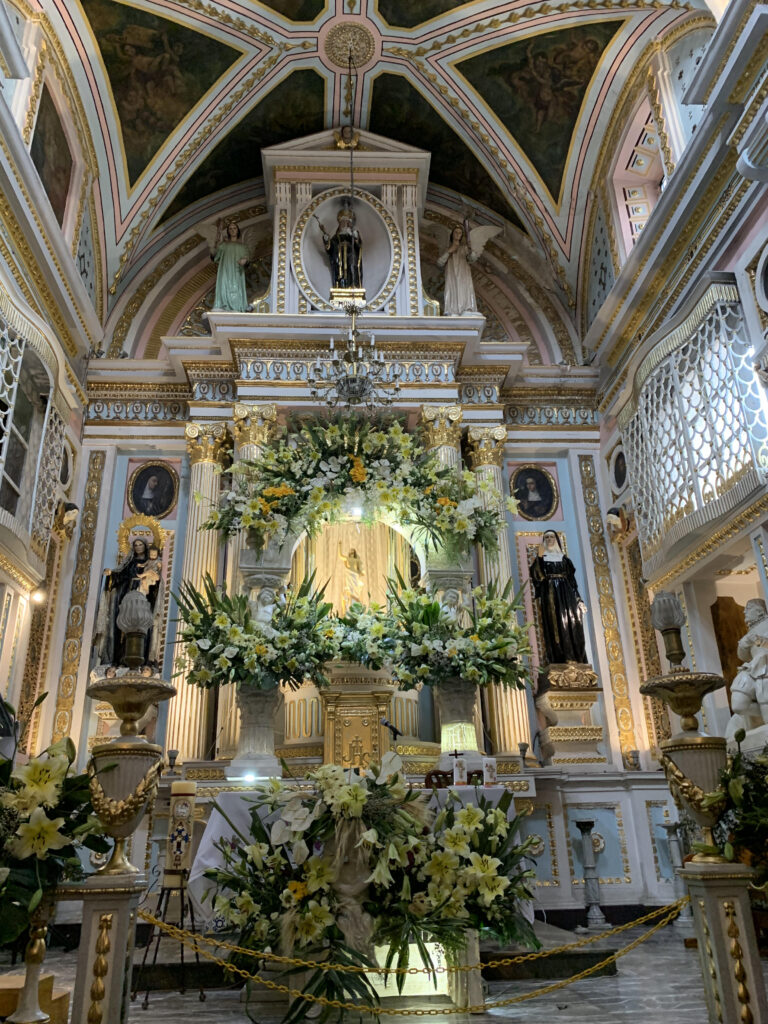
Finally, bells rang out. Voices sang, Glory to God in the Highest. After sitting in darkness for about two hours, the light appeared. Flowers, angels, and gold appeared around us. The bells continued ringing.
Image of the risen Lord with flowers.
I’ll just say. Our Spanish is not great. I could basically follow along with the service, but the kids less so. It was almost 10 p.m., and the service would continue with baptisms and Eucharist. I decided that the point was to experience the resurrection, and people would appreciate our seats. We wound out of the sanctuary through families, couples, grandparents, out the grand wooden doors, and through more people.
Leaving the Temple of San Francisco after the Easter Vigil.
Easter Day
On Sunday morning, before we returned to Puebla, we attended an Easter morning service at the Baptist church that Tim attends. After the simple service, church members served tamales and atole de elote (a sweet, warm drink of corn) to everyone.
Tim sat next to an older woman that he had not met before. After a brief conversation, Tim realized that he was friends with one of her family members who lives in Chicago. Langston discovered a person sitting near him was an engineer and began asking about his career. This is the resurrection, the triumph of life over death in these day-to-day moments.
The light shines in the darkness, but we were quickly reminded that all that is illuminated is still a bit grimy. I had bought four seats next to each other on the bus, and none of the kids wanted to sit next to each other. Then, on the way home, I got a text on how the politics of the larger Methodist church had reached into my own sweet home church in Arizona. I thought of the Easter Vigil, how our Spanish is not quite good enough for the words and the candle was not strong enough for the light.
Our third event of Holy Week on Good Friday, after the Visit to the Seven Churches and the Stations of the Cross, was unlike anything I have experienced before.
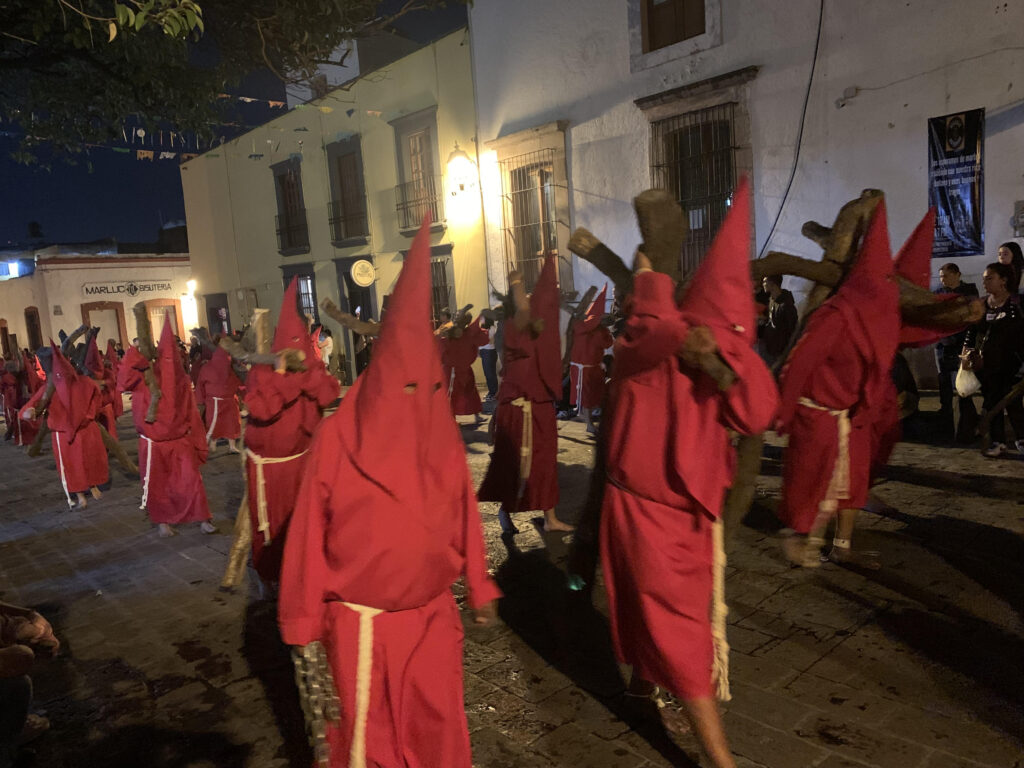
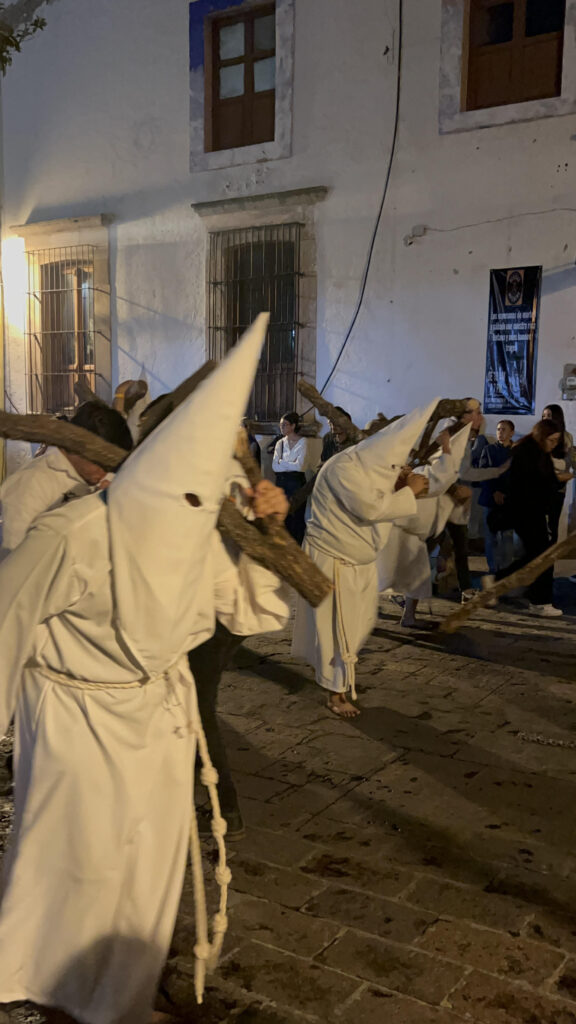
I’ve known that Lent is the time of preparation for baptism in the Catholic Church, and that people are baptized at Easter. I have not known about the tradition of penitents, or nazarenos, undertaking a walk of repentance and gratitude. The penitents take classes together to prepare for the day and select a cross to carry in the procession. On Good Friday, they completely cover themselves in a habit representing the color of their parish; their penitence is between themselves and God, not for others to see. The habits have been worn since medieval times in Spain where this tradition originates.
The habits worn in the Procession of Silence.
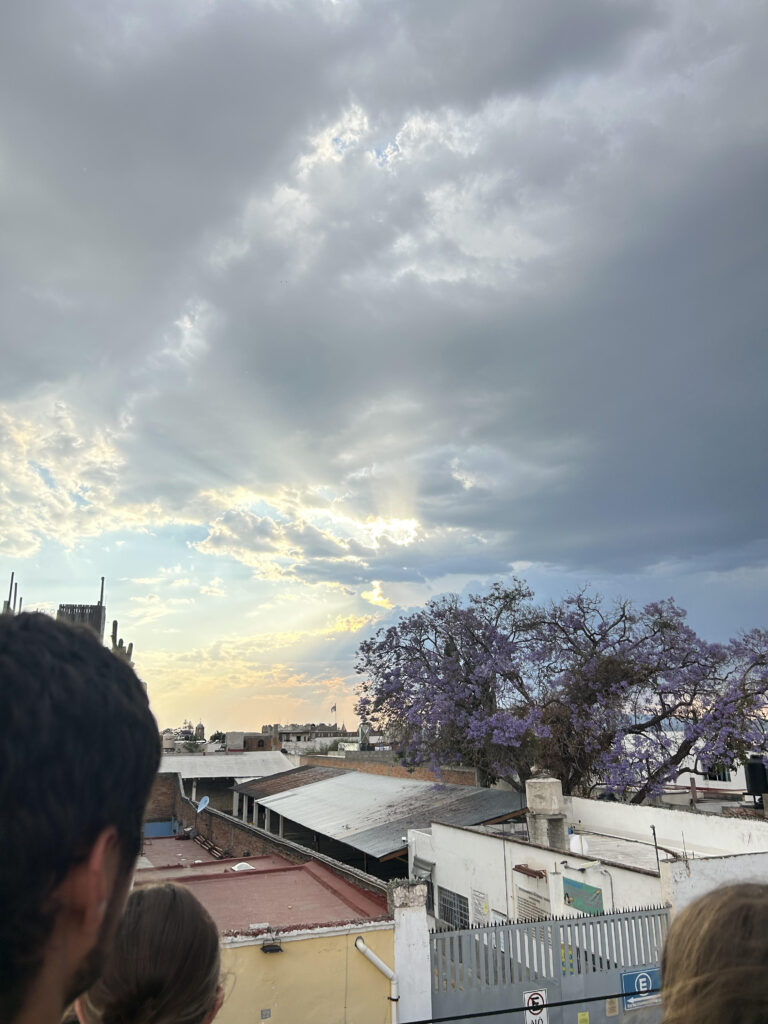
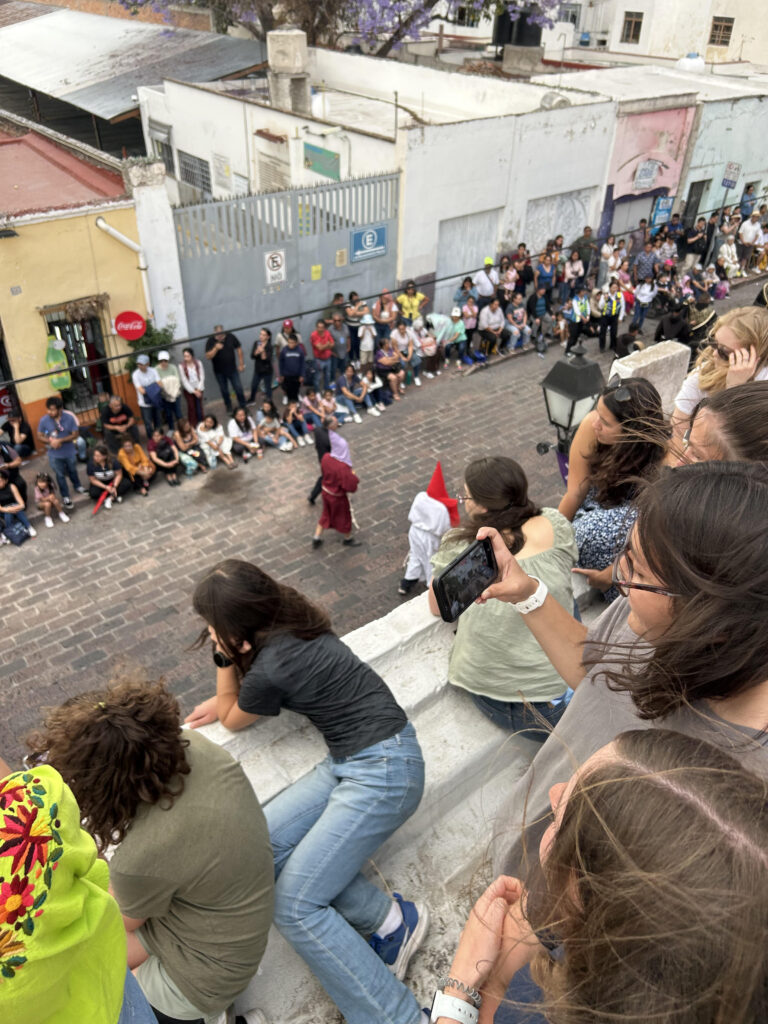
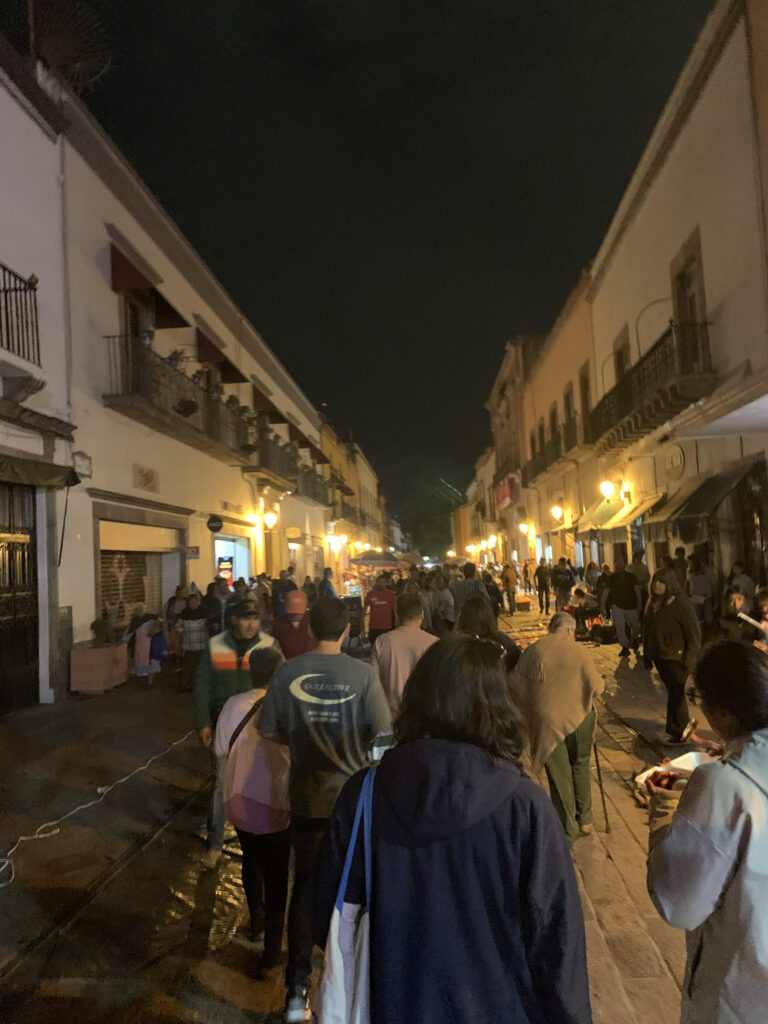
Around 4:30 in the afternoon, the streets near the Temple of San Francisco, where we had participated in the Stations of the Cross, began to fill again. Fortunately for us, Tim has keys to a building a few blocks from the temple. We climbed to the roof and were soon joined by Wheaton College students who are participating in the semester in Mexico. Below us vendors sold potato chips and drinks to the people gathered on the sidewalks. Clouds gathered above us and thunder rumbled in the distance.
Clouds gathering.The view from above.
Finally, a bugle sounded from the temple. The crowds fell silent. Drums beat in the darkening sky. We watched from above as a liter carrying the figure of Jesus, his back bleeding from whip lashes, bent under a cross, was carried past by figures in white followed by women carrying the symbols of the cross and barefoot figures covered in white.
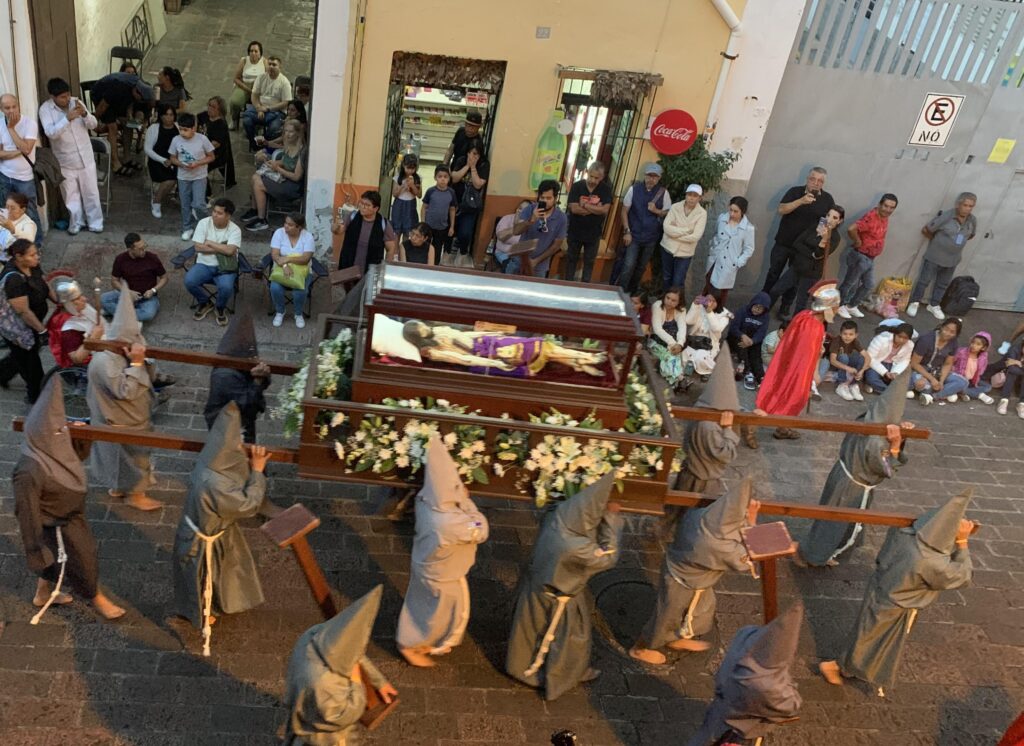
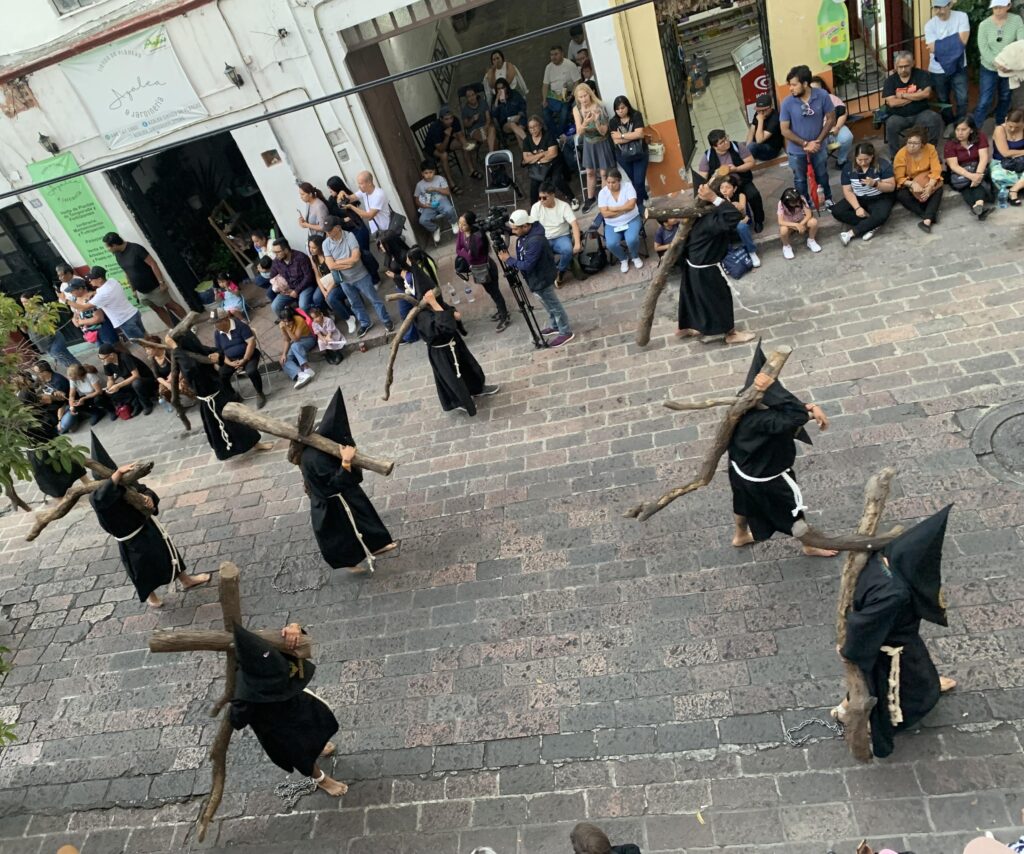
Next, a group in grey carried a figure of Jesus’ body in the tomb. They were followed by penitents in grey carrying crosses. The sound of the chains shackled to their feet echoed down the street.
Figure of Jesus being carried by penitents in grey habits. Penitents in black habits carrying crosses.
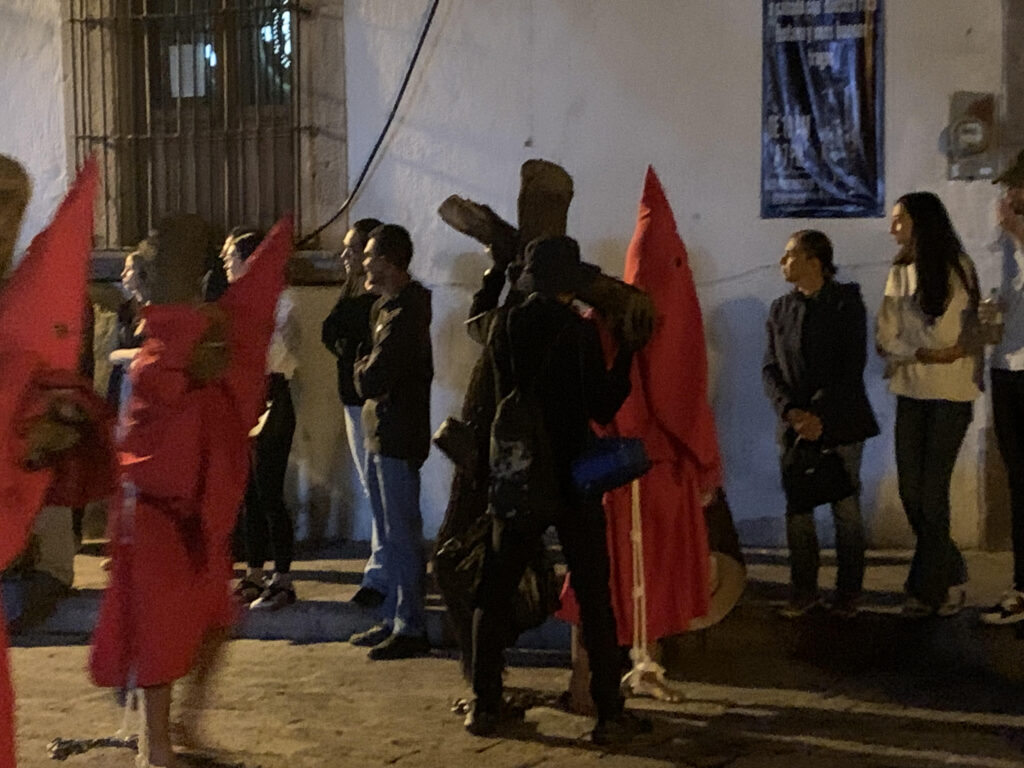
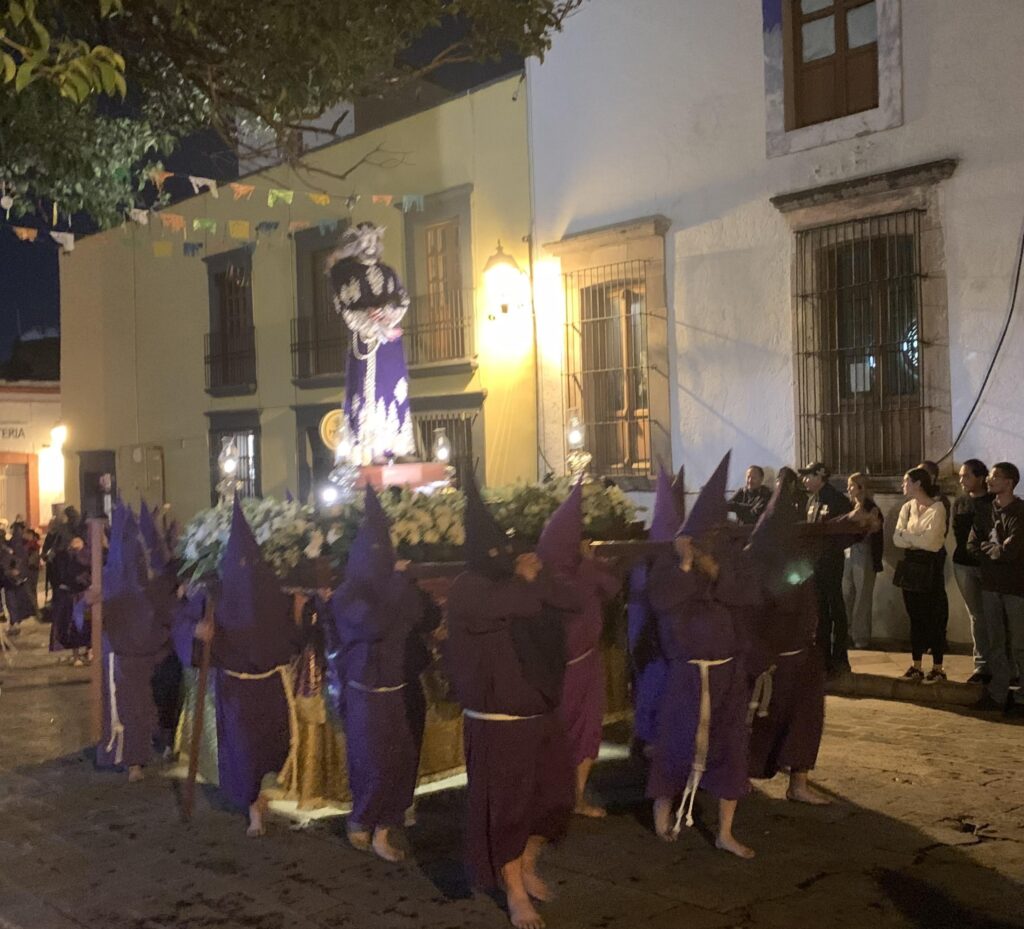
We watched a figure of Mary followed by penitents in purple habits. The drums sounded and a group of figures in red slowly processed past us. This is the first time I’ve tried to include a video, but this experience seems worth trying to share.
The silence, the sound of the chains, the toiling of the penitents was all deeply profound, but what brought tears to my eyes was watching the ways in which the penitents were cared for. Men and women in black or in the color of their parish but without a cross, walked among the penitents, giving them juice, making sure that they avoided any potholes, helping one person adjust his cross. One helper pushed a penitent in a wheelchair.
I watched one helper carry someone’s cross for a few moments.
A helper holding a penitent’s cross.
As I watched, I thought of an incredible graduate student who had defended her dissertation shortly before I left. Her meticulous anthropological research explores how people live with Borderline Personality Disorder. In her defense as she described the continual forgiveness, love, and care that it takes for people who suffer from Borderline Personality Disorder to live a healthy life, I wondered, how could anyone provide that level of care for a person? As I watched the Procession of Silence, I remembered her defense and felt like I was seeing an enactment of how that type of care appears.
Carrying the figure of Jesus.
Hundreds of people carried their crosses in the street below us. It was 9:00 by the time the procession had passed. But when Tim asked us if we wanted to circle around to see the conclusion of the procession, we agreed that we did. Watching the barefoot penitents dragging their chains and crosses was deeply riveting. A helper put his hand on a penitent’s shoulder, “You are almost there. Take it slow.” He encouraged him.
Penitents in white carrying crosses.
Finally, I said we should go. It was late, and we pulled ourselves away. A few houses away from the procession, we could see a man inside his house watching the television. “He is less than a block away!” Simone wondered at the fact that the man was inside when something so tremendous was almost literally at his doorstep. “Maybe he watched earlier,” Marie reasoned. And it occurred to me that we are all like that man most of the time. Paraphrasing Jane Hirshfield, immensity taps at the window.
What can I say about Holy Week? It was extraordinary.
It was also a lot. Too much for even my most devoted readers (hi, Mom and Dad). Simone told me I should break the description of the week into sections, so I’m taking her advice. To my less devoted readers, apologies in advance for the multiple posts; feel free to skim the photos.
My sister’s husband, Tim, has developed and run the Wheaton College in Mexico program and has been living there on and off with the family since 2014. Even though Querétaro has been a big part of Leslie, Tim, and their kids’ lives, this was our first chance to visit the city. Like Puebla, Querétaro is a historic city with many buildings dating back to the 16th century. And, like Puebla, the city has developed rapidly in the past few decades with suburbs and industries continually pushing out the edges of the city.
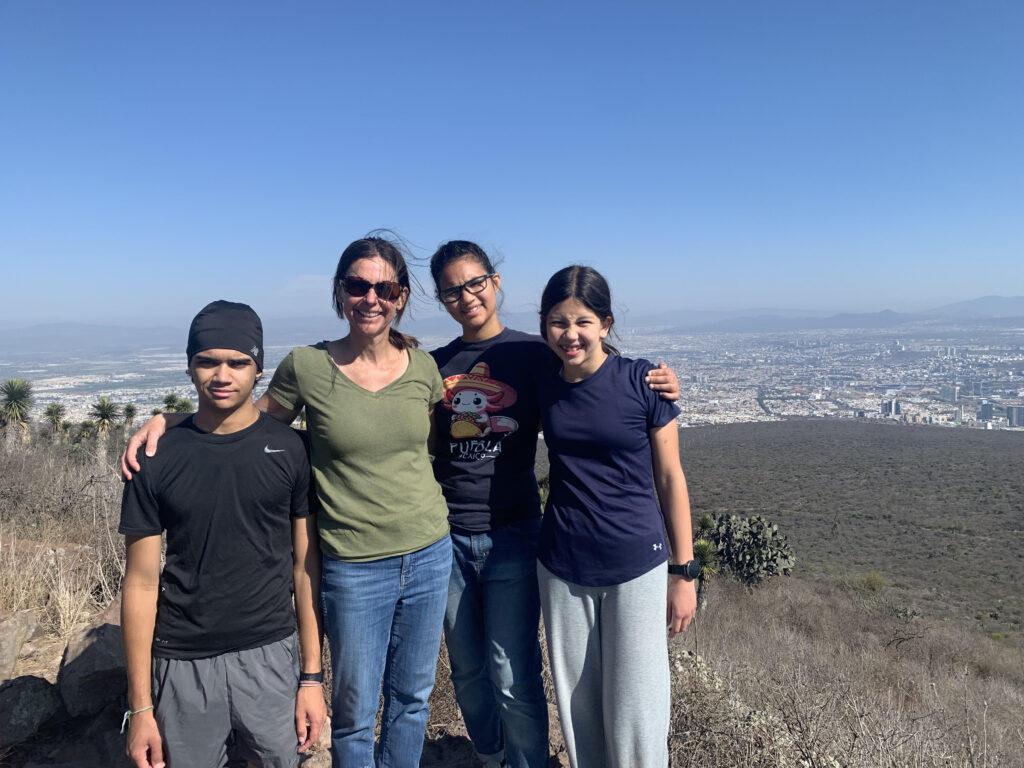
Querétaro in the background. Tim took us on a hike to the top of a hill where we could see the city.The beautiful, historic streets of Querétaro.
We arrived in Querétaro after a four-hour bus ride, and Tim had a delicious meal prepared for us. Tim’s doctorate is in history and was both an incredible host who is willing to feed teenagers and an amazing guide who could explain all that we were experiencing. Any mistakes I make in the descriptions of the week, I attribute entirely to him. (Just kidding, Tim.)
Tim (host extraordinaire) with the kids.
Thursday – La Visita de las Siete Casas (Visit to the Seven Houses)
During dinner, Tim explained that visiting seven churches is a way to remember Jesus’ journey from the Passover supper to Calvery with each stop a step in his journey. We waited out a rainstorm and then walked a few blocks to a church. The narrow streets were filled with people on the same journey.
Streets filled with people visiting churches. (At least many of them were.)
We walked a few blocks to our first church. As we got closer to the historic center, the streets filled with people also visiting churches. In front of a church, a man sold little booklets for about 50 cents telling us which scripture to read first.
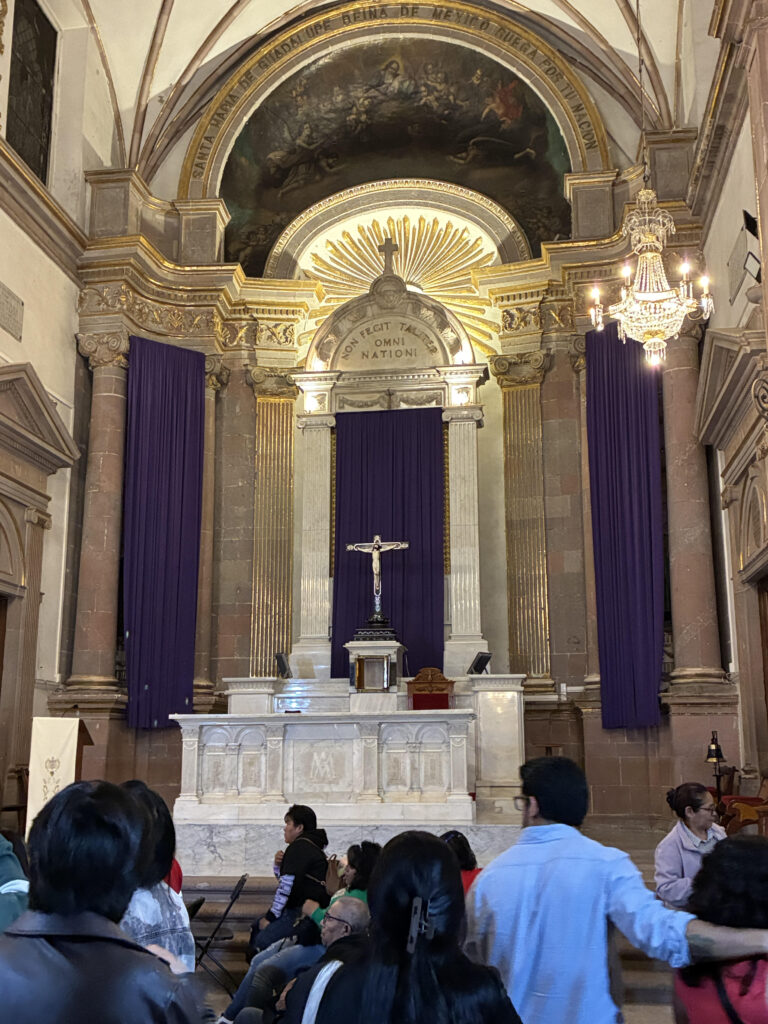
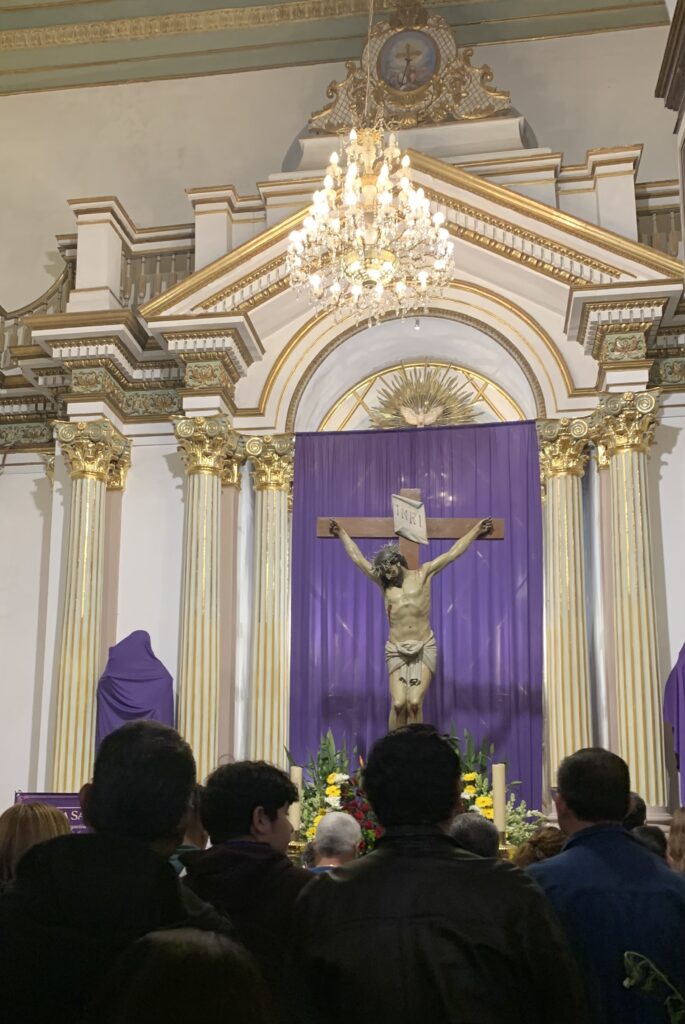
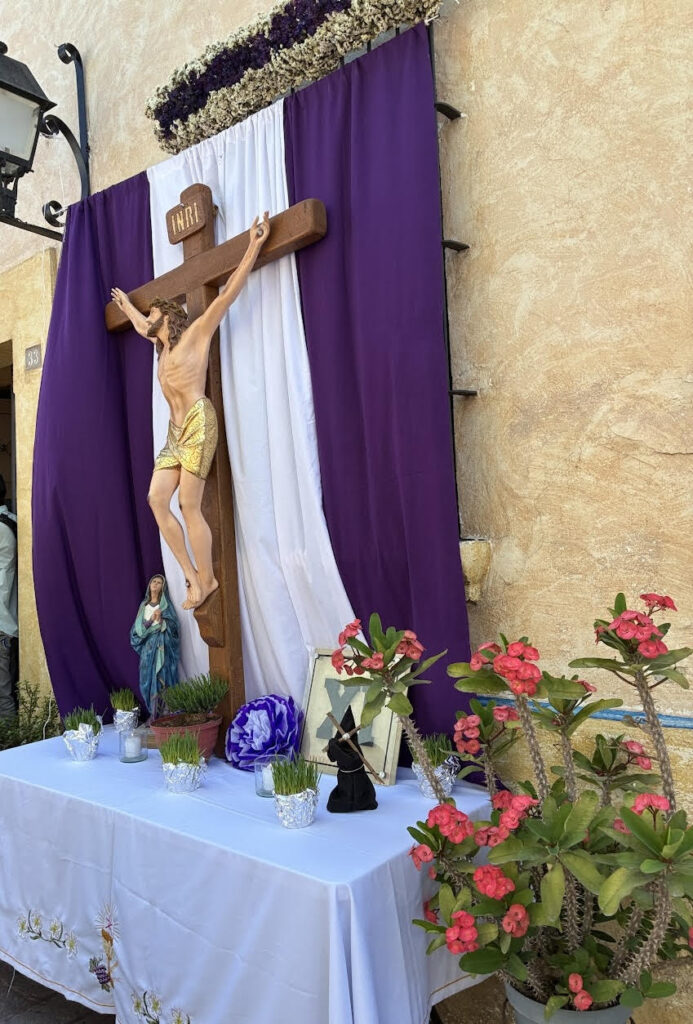
I read the first scripture about Jesus in the Garden of Gethsemane to Tim and the kids, and we entered the church. At the front, women gave out bread rolls symbolizing Jesus as the bread of life and bunches of fresh chamomile representing the healing Christ brings. A silent parade of people streamed through the church. Much of the church was shrouded in purple cloth with crucifixes uncovered so that we could focus on this moment in Jesus’ journey. We sat in the pews to contemplate Jesus’ prayers in the garden and then joined the families funneling down the aisle and out a side chapel.
All the figures except for the crucifixes covered in purple at el templo de la Congregación de Guadalupe.Another crucifix as we exited the templo de la Congregación de Guadalupe.
Before we entered the next church, Langston led the next reading about the high priest questioning Jesus. A priest greeted people and Simone commented that it felt a bit like Halloween, going from house to house, although in this case we were getting bread and chamomile flowers rather than candy. The churches in Querétaro are stunning and being welcomed and fed at each one was a beautiful experience.
The crucifix at el templo de San Francisco.
Friday Morning – Viacrucis (The Way of the Cross)
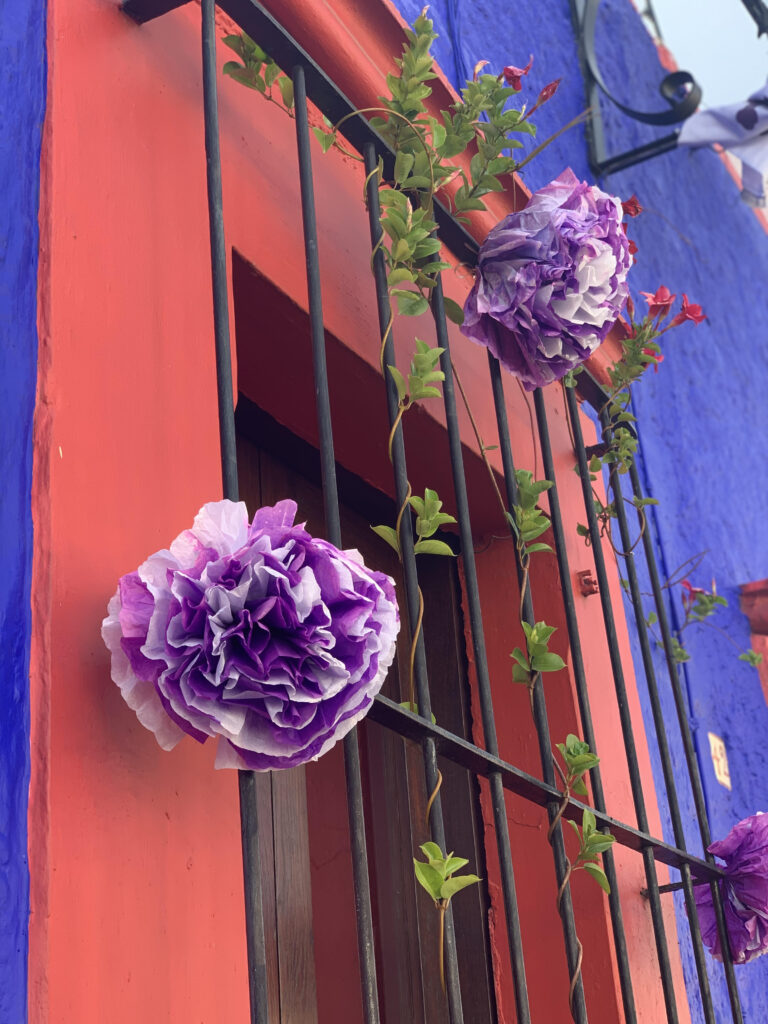
When Simone and I went to buy bread on Friday morning, we noticed people adorning their front doors and windows with purple flowers and ribbons. A man we passed was setting up an altar.
Good Friday decorations.
I have done the Stations of the Cross in the past, pausing at paintings or other works of art to read scripture and remember the path from Christ’s condemnation to his burial. So, when Tim asked if we wanted to join him in the Stations of the Cross, I was not prepared for what was to come.
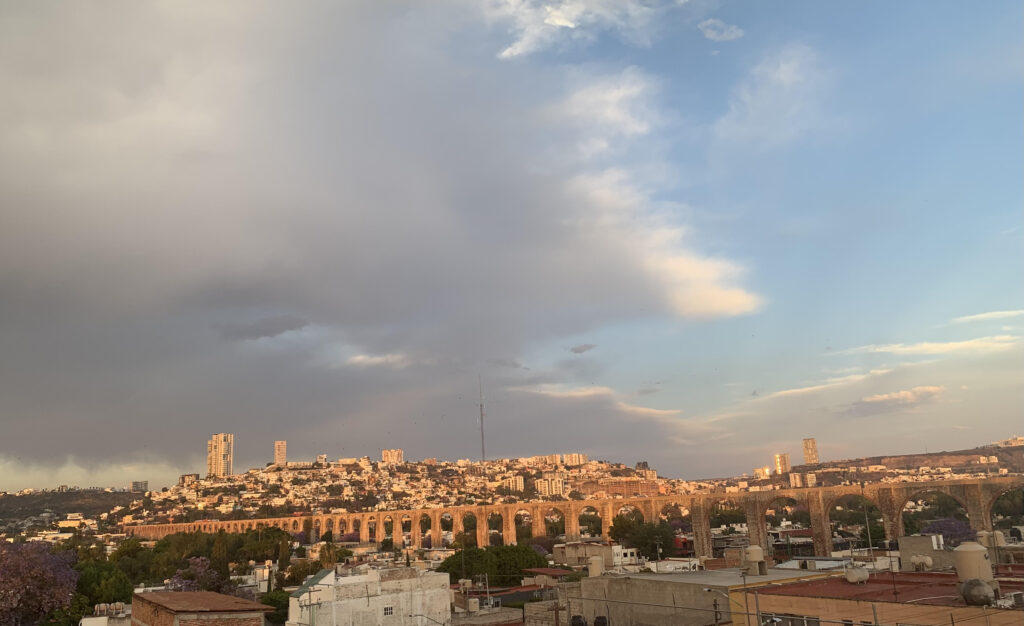
A crowd of people gathered in front of the Temple of San Francisco, a large church and former convent finished in the mid-1600. At the front of the imposing church is the Plaza de la Cruz. In early 1700, the city built an aqueduct, elevated on 74 arches, to bring fresh water to the city. The aqueduct ended in the Plaza de la Cruz and was distributed in fountains throughout the city.
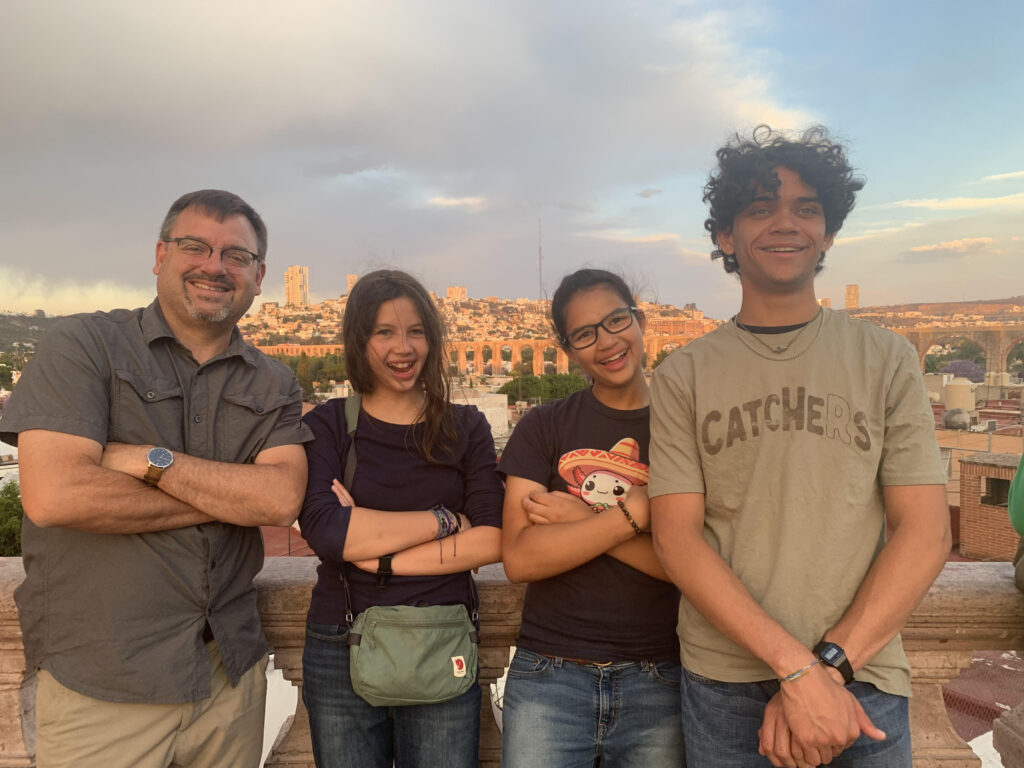
The aqueduct arches run along the bottom of this photo.
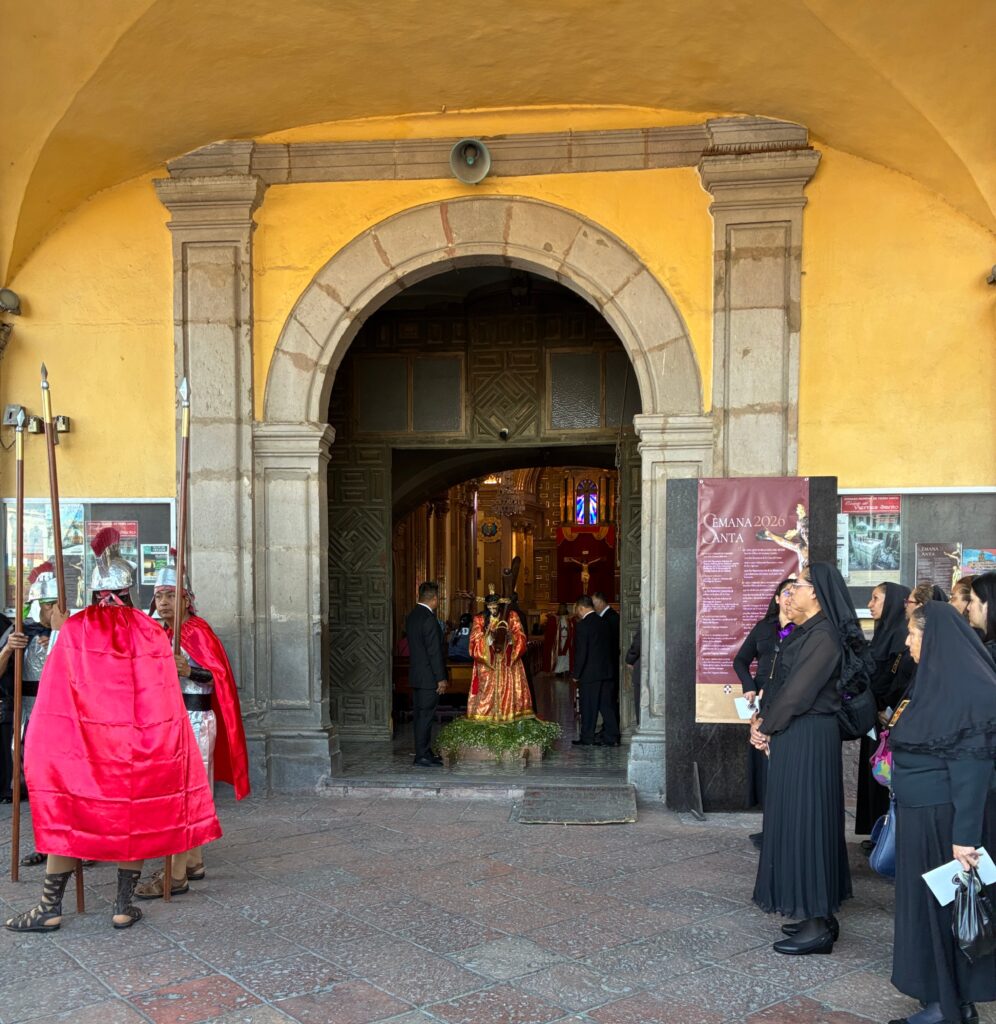
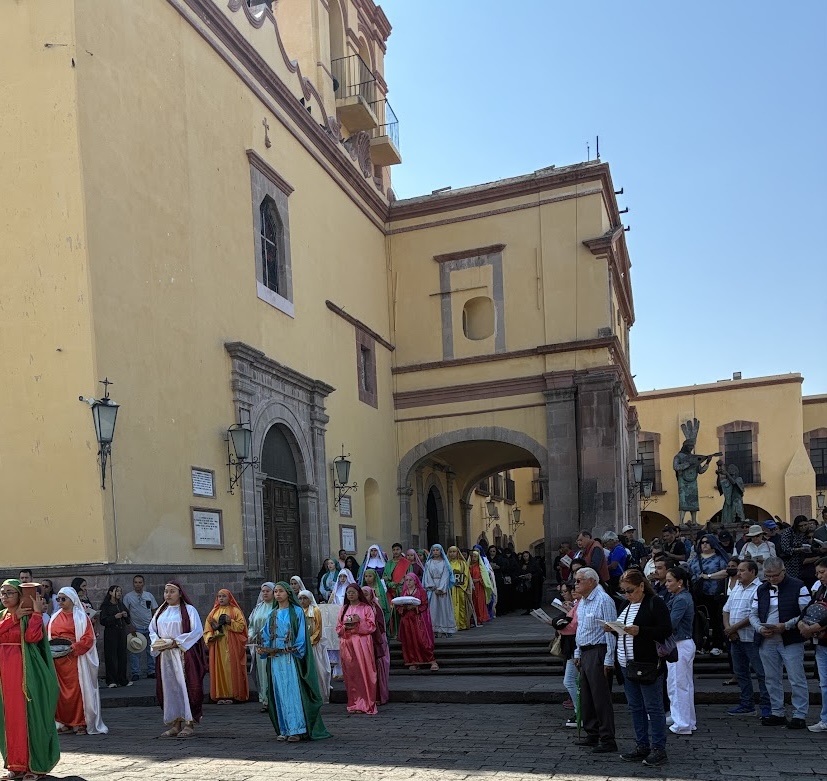
A man handed out a booklet with the readings for the day. Centurions in bright red capes appeared to one side of the church, and women in black lined up on the other side of the temple.
Preparing for the way of the cross.
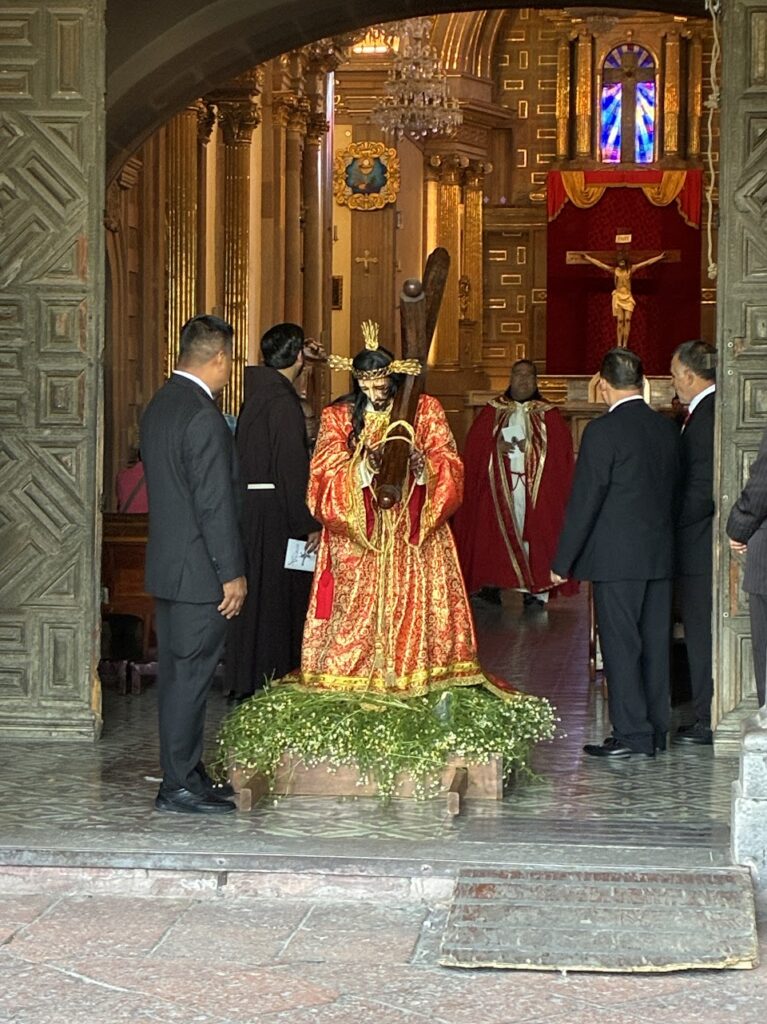
A figure of Jesus carrying a cross rested in the entrance of the church.
The figure of Jesus.
Music rang through the air to announce the beginning of the procession. A priest reminded us that today was not just about suffering, but about who God is and who we are as humans. Participating, he reminded us, was to experience the love of the Holy Spirit as we carry our own crosses. After praying, we said the Lord’s Prayer and Hail Mary.
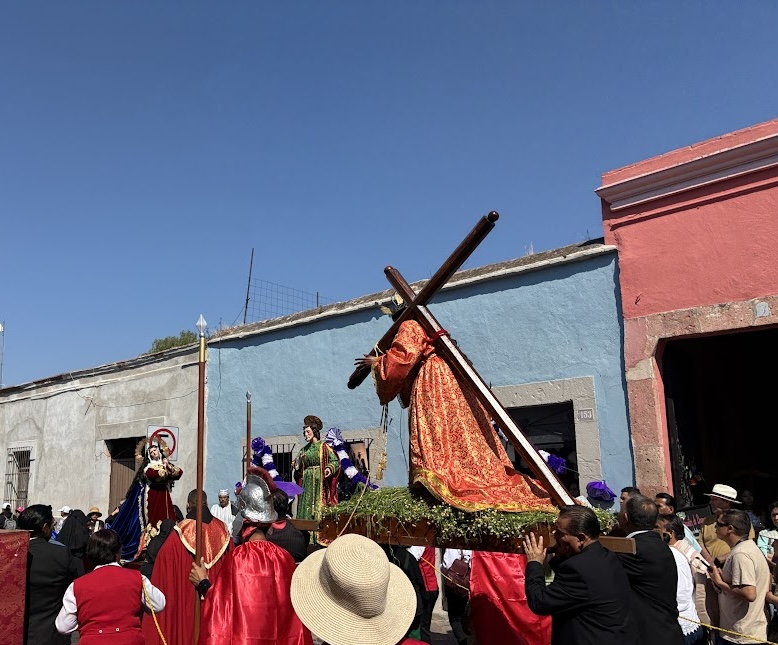
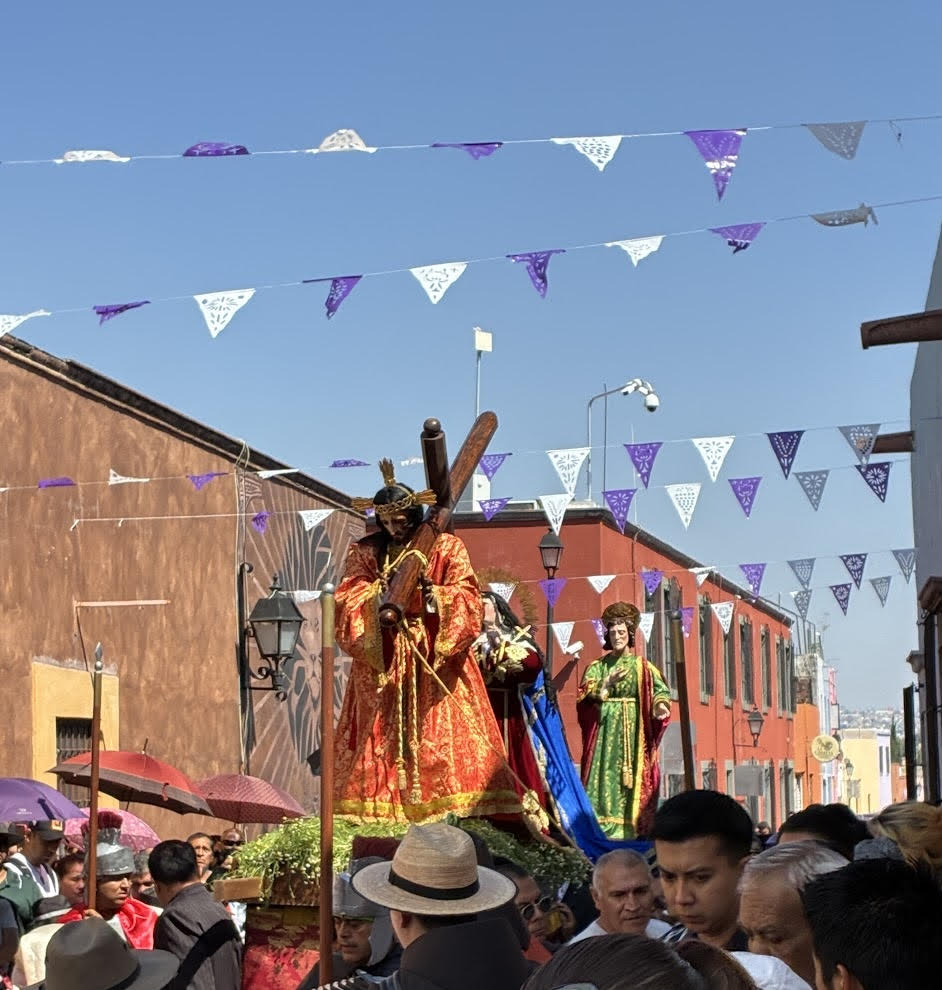
The figure of Jesus carrying the cross was carried past us. Women followed in bright robes carrying symbols of the crucifixion, twelve gold coins, a crown of thorns, a rooster.
The symbols of the crucifixion. Jesus being carried on the way of the cross.
We sang as we walked. The first station, Jesus being condemned to death, was set up in front of someone’s house. We paused and a woman in black swinging a metal censer full of incense walked towards us; worried about her having a reaction, I grabbed Marie, and we did our best to avoid the incense as the priests shared the readings and reflection. We all prayed and sang together before proceeding to the next station.
At the fourth station, Jesus meets his mother. A litter carrying the figure of Mary arrived to follow the figure of Jesus. At the fifth station, Simon of Cyrene helps Jesus and another litter carrying Simon followed Mary.
Jesus followed by Mary and Simon.
At the sixth station, the people in the home near the station brought out hundreds of plastic cups full of agua de jamaica (hibiscus tea) to make sure that everyone was hydrated. At each station we listened to scripture, sang, and prayed.
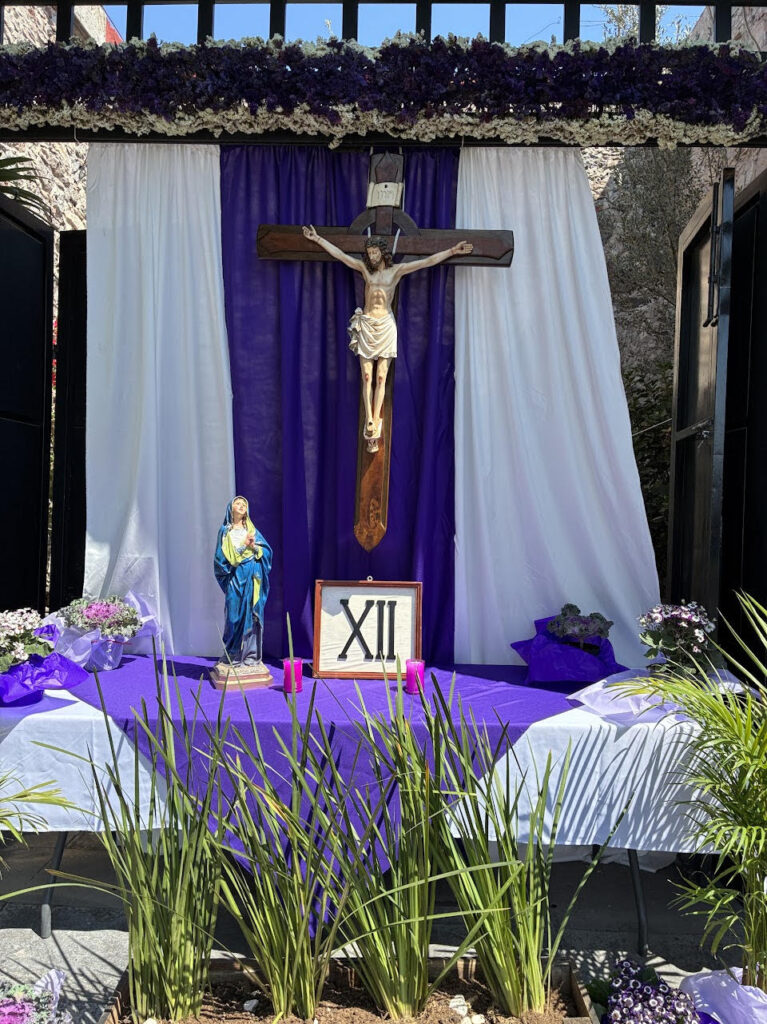
One of the stations of the cross set up along the sidewalk.Another station of the cross.
The viacrucis was literally and figuratively a moving service. We didn’t realize at the time how much more was to come.
Back at the church, the priest gave thanks that we could accompany Christ on his passion, death, and burial so that we could join him in his resurrection and learn to walk in the paths of love and peace that Christ has taught us.
“Would you go back to Puebla?” I asked about six months ago. I was talking on the phone with a professor from Seattle who had spent three months teaching in Puebla and had brought her family along with her.
“I don’t think so,” she said. “It is just that our family isn’t there. Our friends aren’t there. We enjoyed it, but I don’t think we would go again.”
Luckily, we are in a different situation than she was in; we do have family in Mexico, and we do have friends. We have had some rough days, but we have been anything but lonely here. Each person and visitor has helped us in different ways and taught us new things about where we live.
Leslie and Tim
My brother-in-law, Tim, lives about four hours from Puebla in Queretaro. Without my sister and Tim’s knowledge of Mexico and how to settle in for a few months with kids, I don’t know if we could have pulled off this semester.
Tim runs the program Wheaton in Mexico and brought his group of students to Puebla for a day. We got a group of students from my university, BUAP, to meet with the Wheaton students for a day. The students from Puebla showed the Wheaton students around, and they all had a meal together.
Wheaton in Mexico and BUAP Students
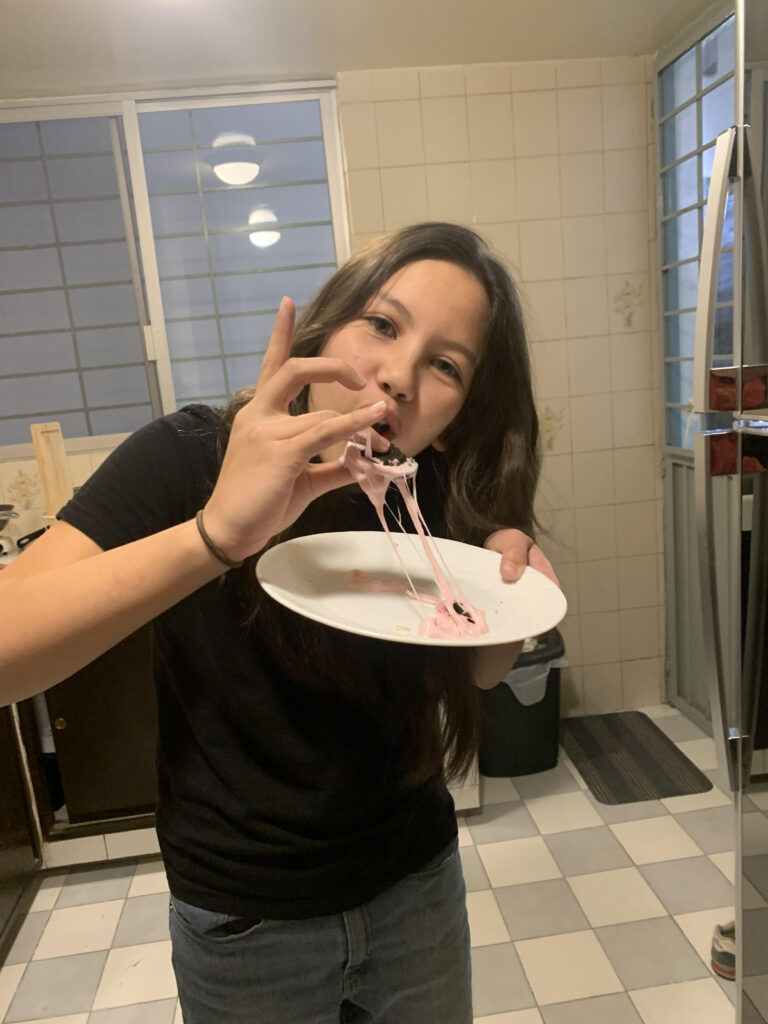
My dad came in February to help us settle in, and his visit gave us an excuse to explore new parts of Puebla. He took Langston to visit Tim in Queretaro, and Simone, Marie, and I had a girls’ weekend. Simone invented the “smoreo,” a marshmallow melted between two Oreos.
Marie eating a smoreo
Our dear friends, Seth and Kristen, from church came to visit with my kids’ frin-sons (friend-cousins), Hilde and Stephen.
Hilde and Marie
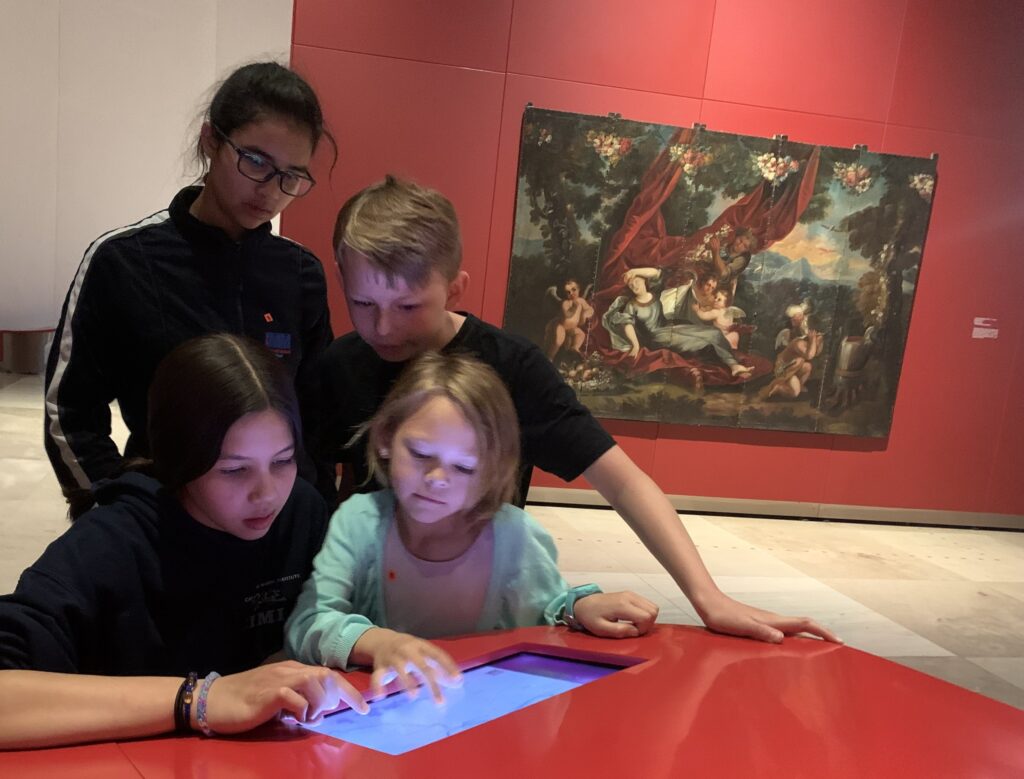
We went to the Baroque Museum.
In the Baroque Museum.
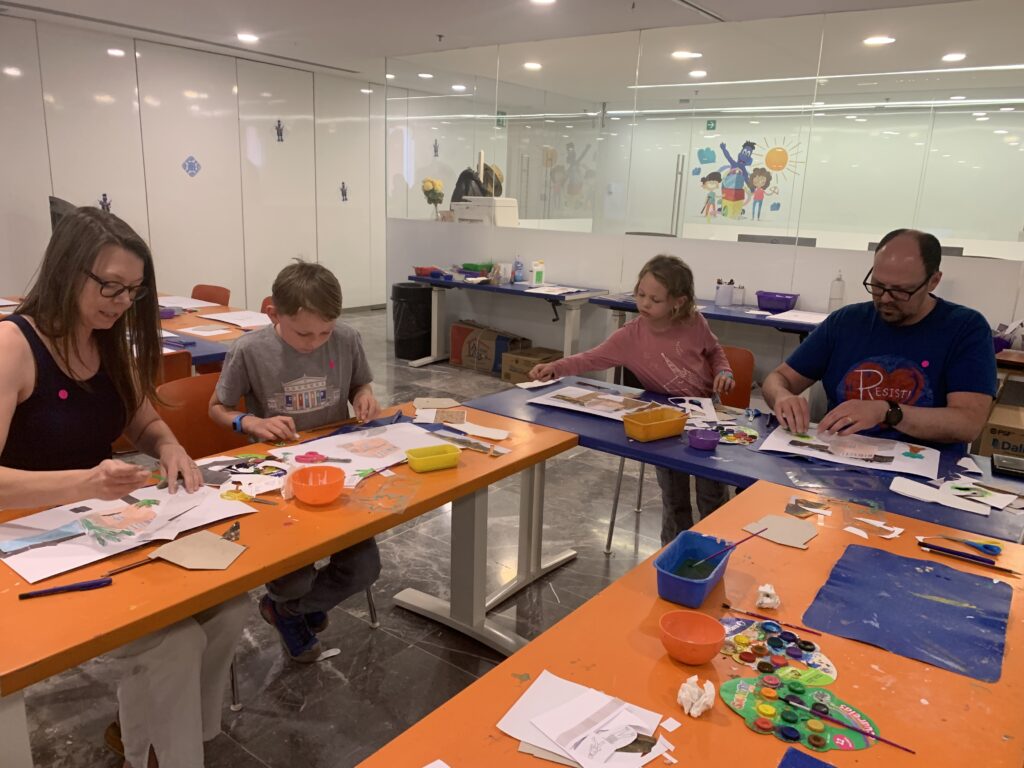
We did art projects at the Amparo Museum.
Art at Amparo
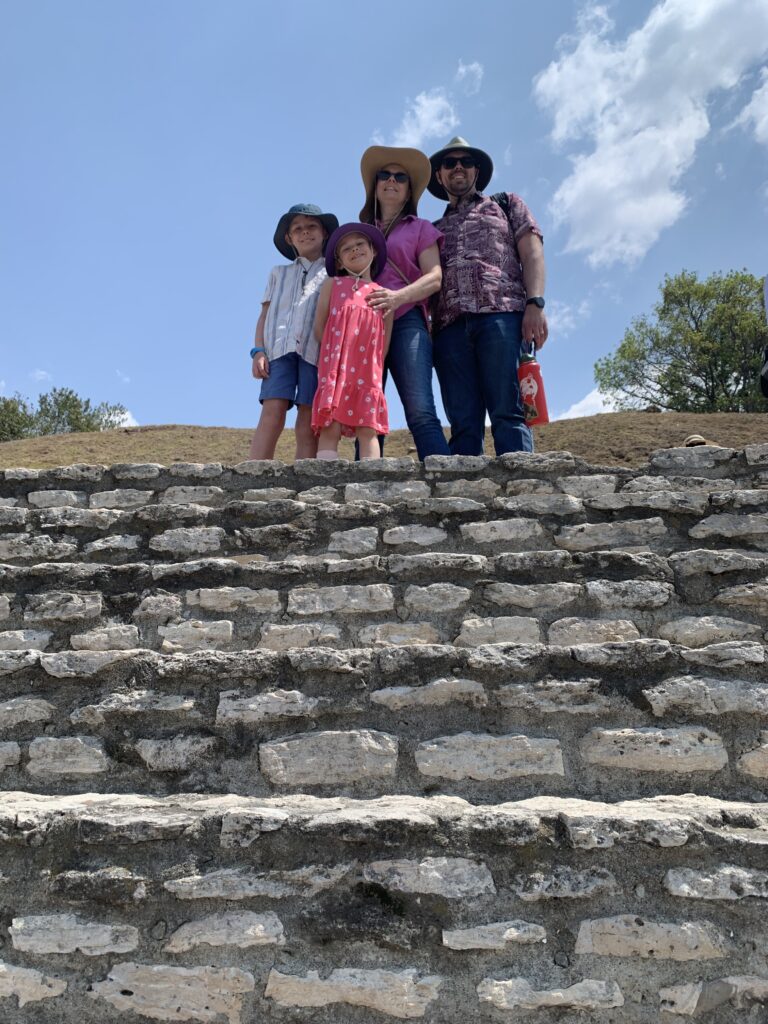
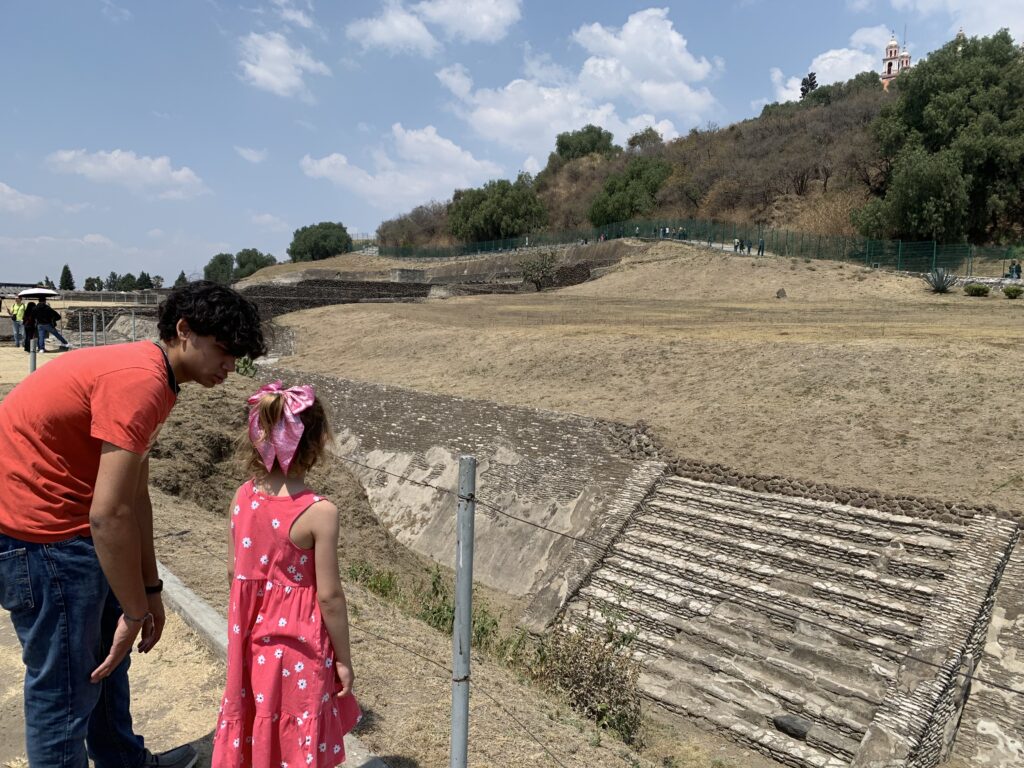
We visited the ruins in Cholula and ate paletas and ice cream. We had a wonderful time.
Ginters on pyramid. Hilde and Langston.
The night before they left, I asked Hilde what she most enjoyed about her visit, and she said, “washing the volleyball with Marie.” Between all the fun activities, the kids had decided that Marie’s volleyball needed to be washed; a reminder that just doing mundane things with friends is the best. Both my parents are here now, and we plan to visit Tim in Queretaro for Holy Week.
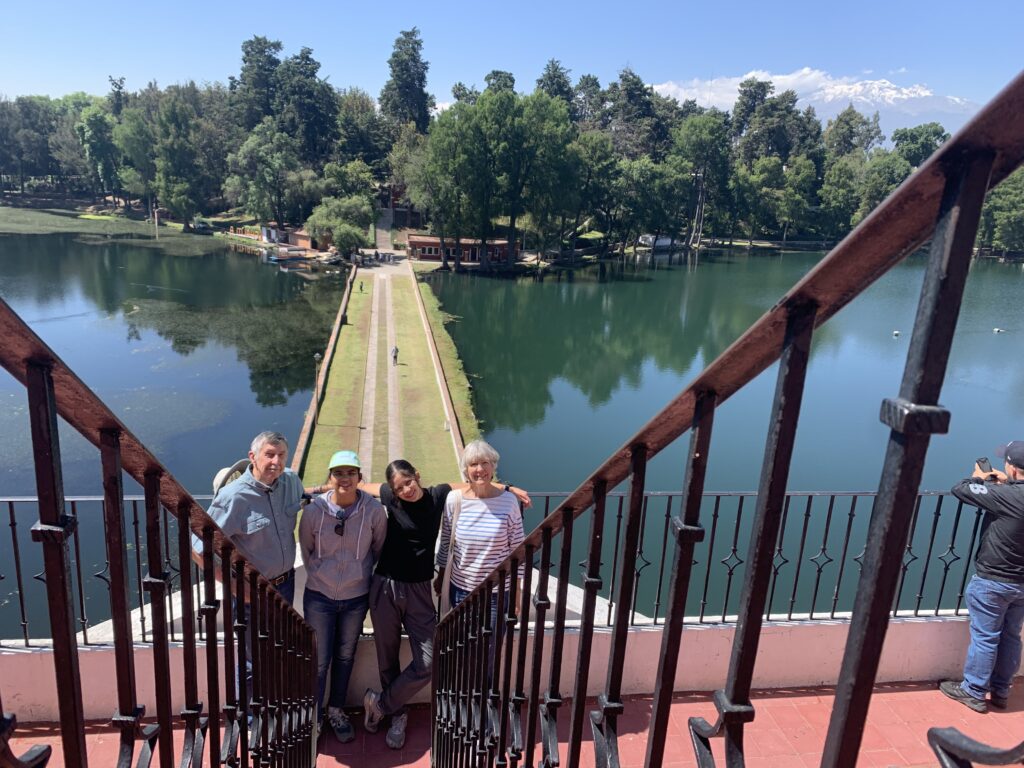
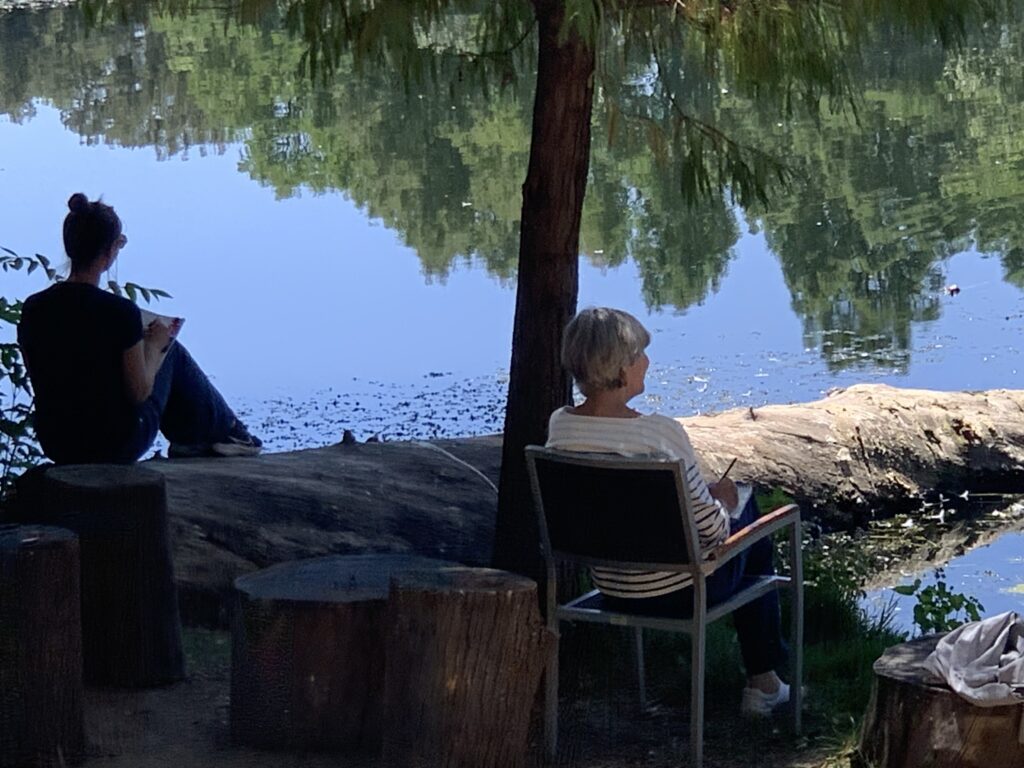
At the Ex-hacienda de Chautla.Drawing with my mom.
Having visitors has been lovely. But it isn’t just the visitors that have kept us from being lonely. We have been so well cared for here.
The humorist Dave Barry wrote an article on his recent visit to San Miguel de Allende, Mexico. He reports, “The people of San Miguel de Allende are warm and welcoming and genuinely just… nice. In fact, as far as I could tell — remember that I’m a professional; do not attempt this kind of generalization at home — everybody in Mexico is nice.”
I’m not a professional writer like Dave Barry, so I’m not making any general claims. I frequently remind myself of Solzhenitsyn’s line saying something like, “the line between good and evil does not lie between nations but right down the middle of my own crooked human heart.” But we have experienced so much kindness during these last few months.
The professors and me.
Last Thursday, I was giving my presentation, “A Guide to Pain-Free Thesis Advising” to a group of professors, and I started coughing. Two people ran to get water for me, and someone offered me a cough drop. I tried to speak again, and all seventeen people put up their hand to tell me to stop. “Take care of yourself,” someone said, “we know how it is.” One of the participants stepped in to give his perspective on the topic at hand until my coughing stopped. We have been so well cared for.
We have enjoyed having visitors to help us experience all the various parts of Puebla, But, as Hilde pointed out, just doing normal things with nice people is often just as good. Some days are hard, but the fact that those days are surrounded by times working and studying with people who are kind to us has made all the difference.
Oh! She wants me to love her the way she would love her If she were me!
Epiphany by Kent Foreman
Years ago, Mark and I saw this haiku performed online in a poetry jam. I’ve remembered it because nods to the endless swirl of our reference pointing back to our own viewpoint and experiences, even with the people we love the most.
I’ve been trying to be here in Mexico, to not compare Mexico with other places or with the United States. And I’ve been trying to encourage the kids to do the same. Does the driving here have to be crazier than in the U.S.? Or can we just appreciate that we spend almost no time in the car here? Does the fruit have to be better than the fruit in the United States? Or can we just enjoy this dazzling mango?
But maybe comparing is unavoidable. Mark flew into Mexico City last week, and we decided to take the opportunity to spend a few days in the oldest capital city in the Americas, the largest city in North America, a hub of art and culture. . . I was excited. In retrospect, I was also totally underprepared.
So, anyway, I’m just going to go ahead and compare.
What we discovered is that Puebla is better than Mexico City. Here is why:
Puebla Makes Sense and Mexico City Does Not
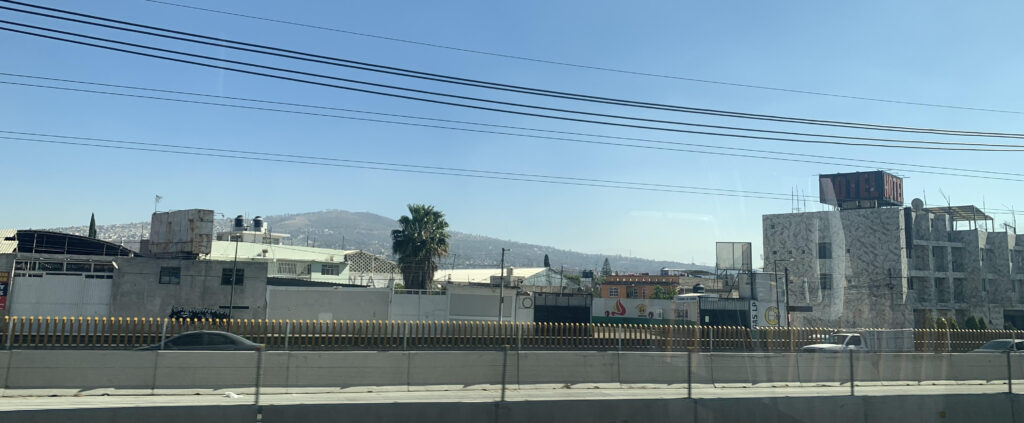
To get to Mexico City, we bought bus tickets for under $20, traveled out past the skyscrapers and auto manufacturers into agricultural fields, up into forested mountains and down into a layer of concrete buildings tightly packed next to one another.
View from the highway into Mexico City
The kids and I arrived at the bus station in Mexico City, and the plan was to meet Mark at the apartment we were renting. Our first problem was that we couldn’t figure out how to get out of the bus station. The signs pointed us in all different directions. We got outside and found a road where we hoped to catch an Uber, but the road was blocked off by a fence. After walking along the fence for a while, we gave up and turned back to the station. I decided this was a good time for Carl’s Jr. It was right there inside the bus station, our first meal in this city of gastronomic renown. We watched the river of people walking by the Carl’s Jr window, and, after our meal, followed the largest stream of people until we eventually found a road and could get an Uber.
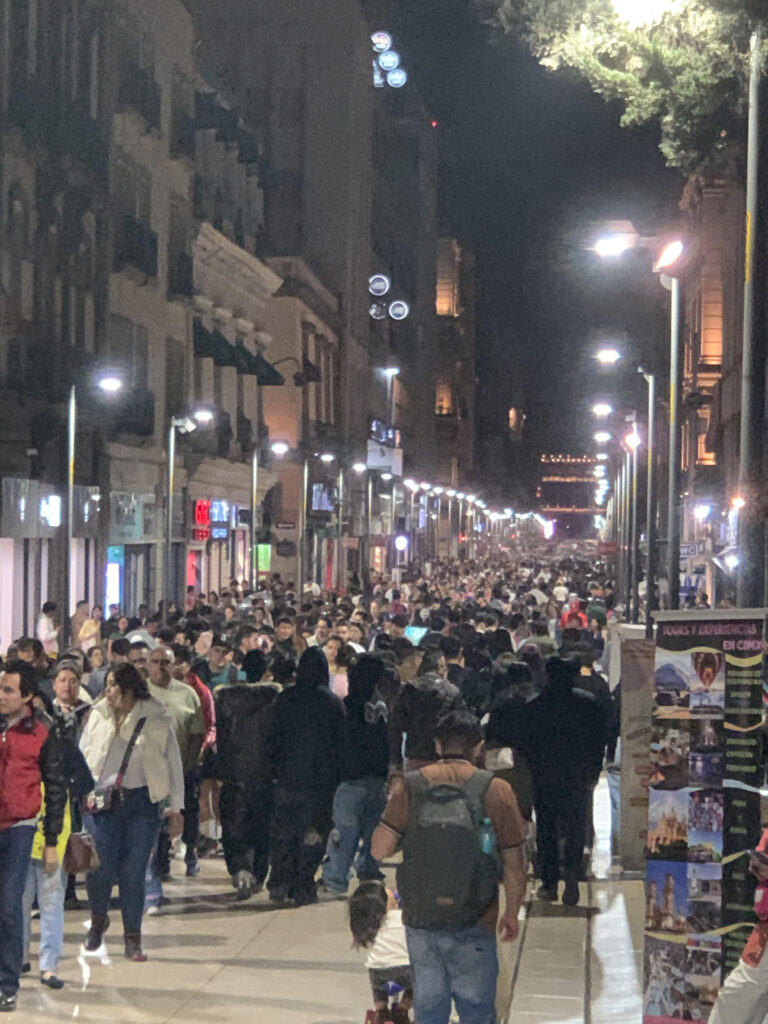
The trip to the apartment was under three miles, but it took us almost an hour to get there. Stalls selling stacks of stuffed animals, stacks of towels, electronics, clothes, and phone cases reached beyond the sidewalk into the street. Our driver weaved around the stalls and the people walking around them. When reaching an intersection of several streets, the driver gunned through a red light. I decided not to look.
Just another usual day in Mexico City
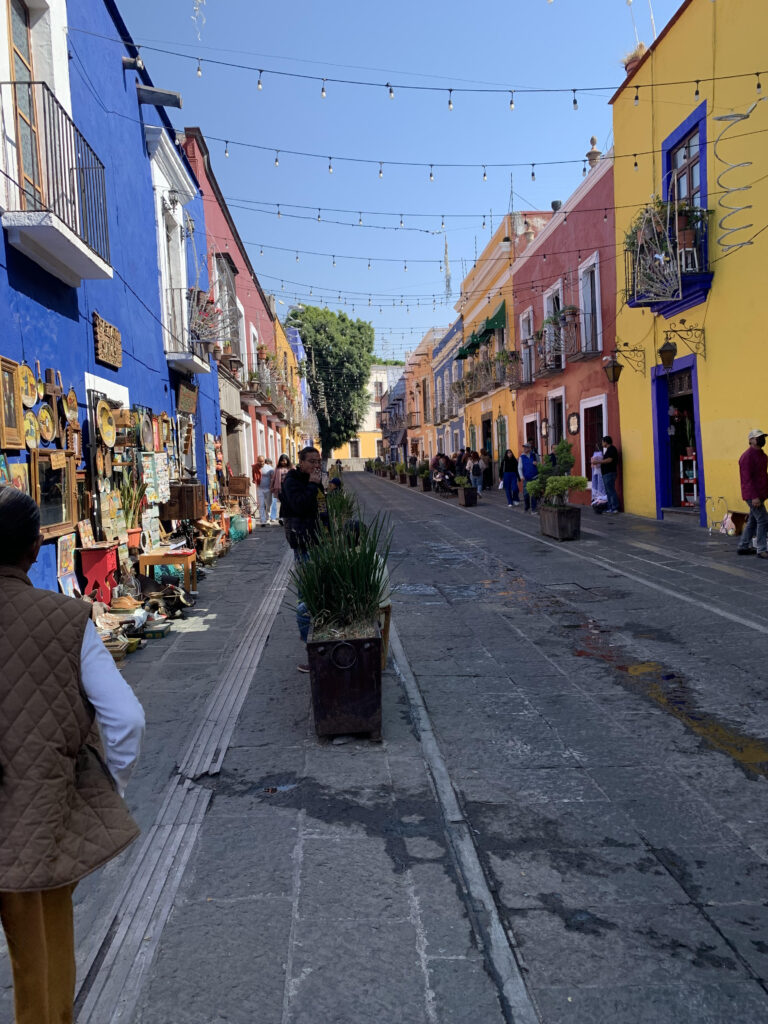
In contrast, Puebla’s streets are laid out in a grid. There are usually no lines on the roads marking the traffic lanes, and speed bumps pop up out of nowhere. But the streets are all one way, and the cars predictably stop at red lights.
Just another street in Puebla. (Not a fair comparison.)
Puebla’s Zocalo is Nicer than Mexico City’s
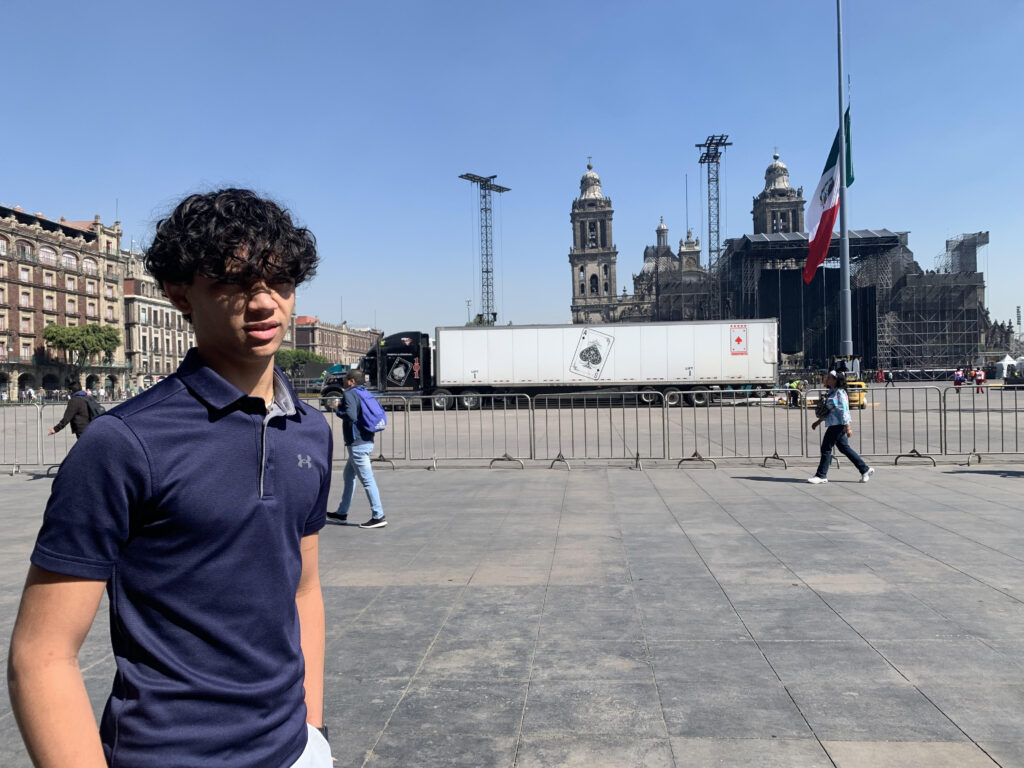
We met Mark at the apartment and ventured out to see the Zocalo and get some dinner. Mexico City’s Zocalo is a large, empty plaza with a huge flag in the middle. While the edges of the Zocalo were packed with people, the large swath of the center was blocked off with temporary fences. We learned later that Shakira was coming to give a free concert, and the city was setting up. The number of police monitoring the area was astounding. I counted 35 police officers on one corner.
Setting up for Shakira’s concert which totally took up the Zocalo. Thanks a lot, Shakira.
Puebla’s Zocalo is full of trees and fountains. Families walk and eat ice cream. Couples make out on benches. Cafes line the three edges not bordered by the cathedral and entertainers perform.
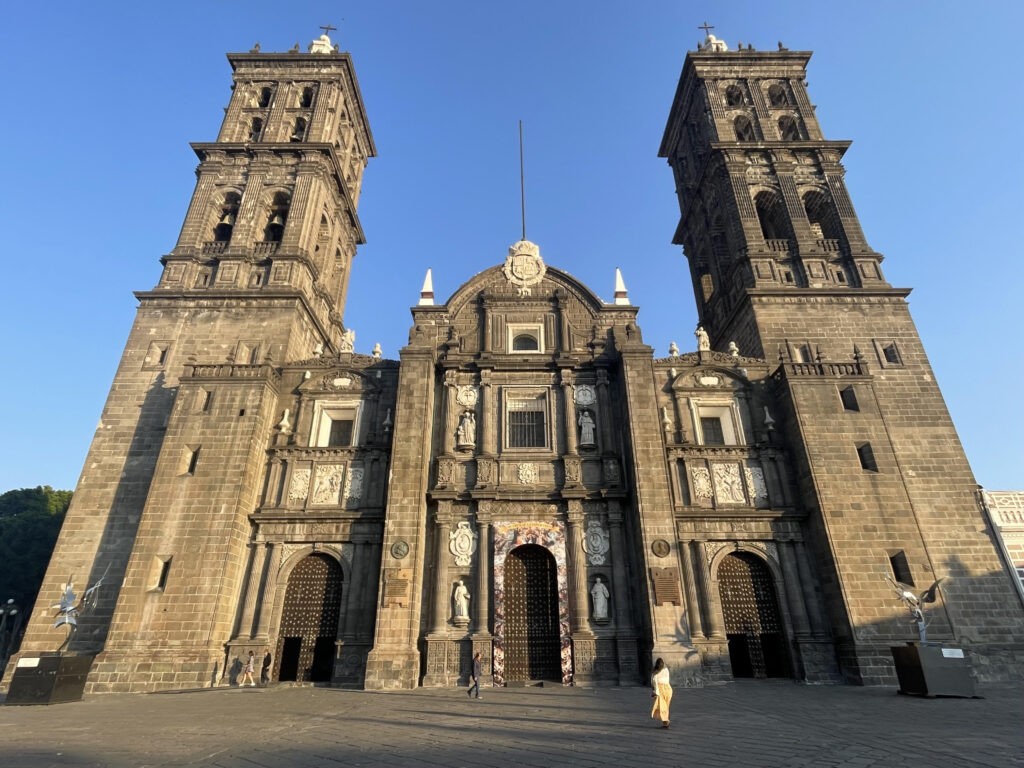
To my knowledge, Shakira has never blocked the front of Puebla’s cathedral.
The Cathedrals Are Equally Amazing
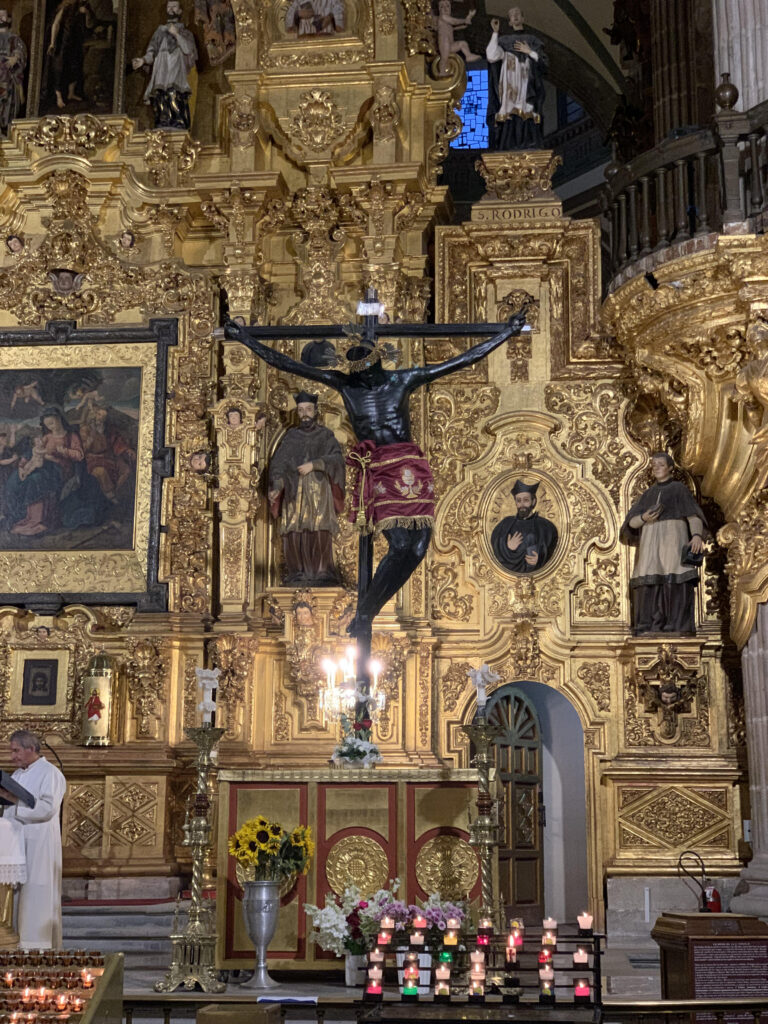
There is a story, beloved in Puebla, that when the cathedrals of Mexico City and Puebla were being built, someone switched the plans so that the more majestic cathedral was built in Puebla. Intellectually, I don’t know how to feel about either cathedral, knowing they were built with slave labor and many people died in the process. But entering either building is awe inspiring. The spaces evoke the holy with their gracious spaces, stone carved by hand, paintings by skilled and imaginative artists, and woodwork carved with impeccable craftmanship. The cathedrals work to welcome tourists and maintain the work of a church. I loved that there was a priest available to bless children in the Mexico City cathedral. (My kids were like, no thanks.)
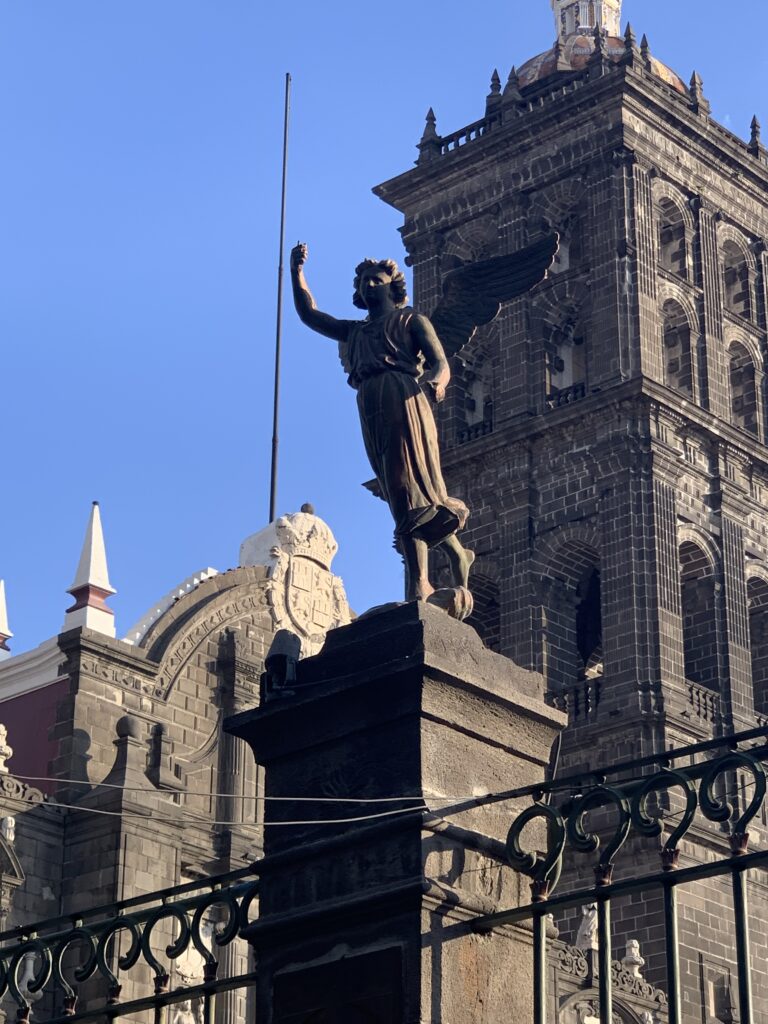
Christ on the cross in the Mexico City CathedralAn angel stands guard outside of Puebla’s Cathedral.
Puebla’s Museums are Better
This is not true. Mexico City has outstanding museums. We went to the Museo Nacional de Antropología. Not only do they have incredible artifacts like Aztec Sun Stone and giant Olmec stone heads that are thousands of years old, the exhibits are also thoughtfully laid out and engaging.
In the central plaza of the Museo Nacional de Antropología. Simone in the Museo Nacional de Antropología.
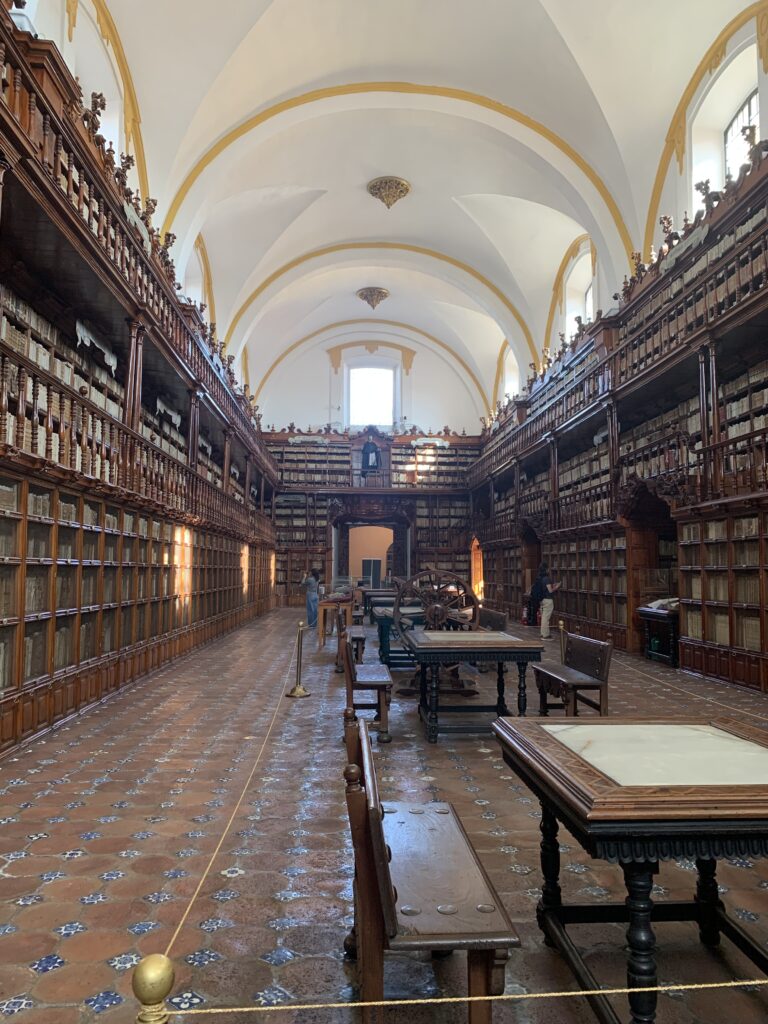
But Puebla’s has the oldest library in the Americas, the Museo Amparo and other excellent museums.
Biblioteca PalafoxianaThe original version of having too many tabs open on your computer. I like to think of some student’s mother fussing because her son couldn’t concentrate on one book at a time.
Puebla’s Food is Better
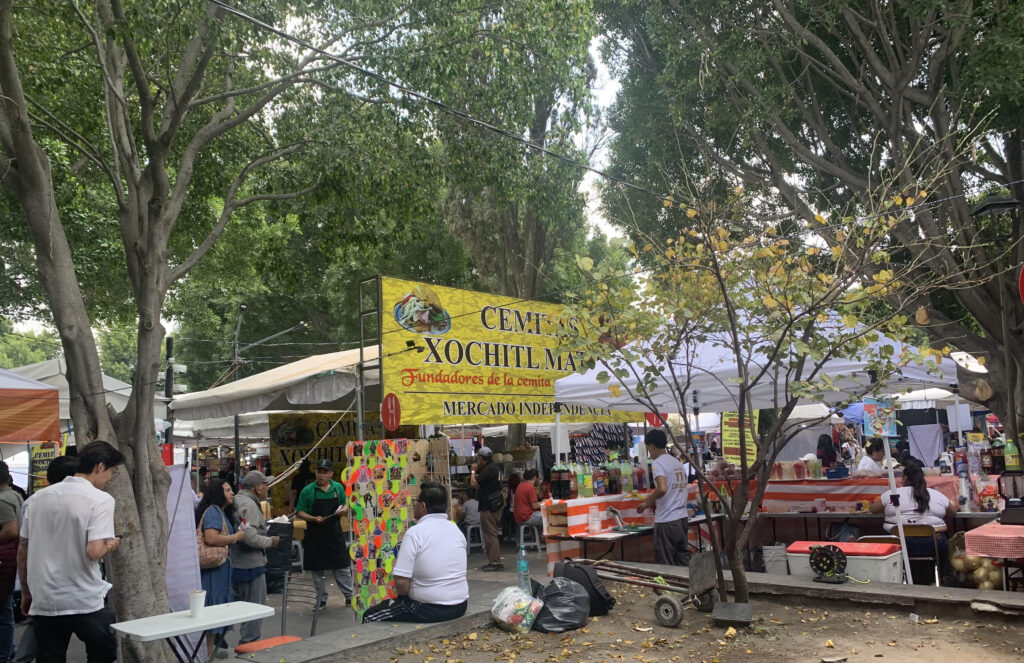
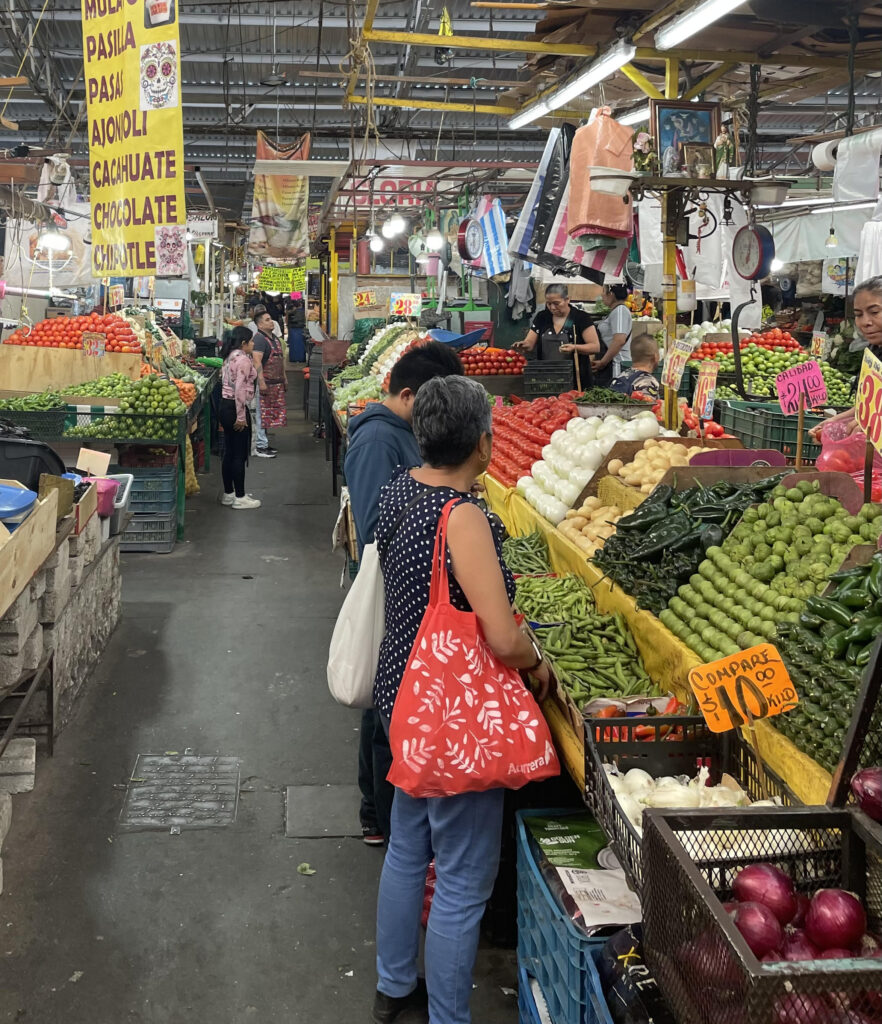
Again, this may or may not be true because what my children really wanted, needed, in Mexico City was MacDonalds. I love to go out to eat in Puebla; moles (spicy, smokey, slightly sweet sauce), cemitas poblanas (a huge sandwich with chicken, avocado, chiles, Oaxacan cheese, and papalo – a spice that is somewhat reminiscent of cilantro but knocks your socks off a little more), tacos arabes (what Lebanese immigrants created when they came to Puebla in the 1930s and met the taco), all these foods in Puebla make you want to cry with delight. But nothing shines more than the enormous, juicy carrot that must have been in the ground a few hours ago, or the jicama dripping with sweetness, or bread coming right out of the oven.
So fresh.
If She Were Me
“Well, I have a new appreciation for Puebla,” Langston said as we boarded the bus back to Puebla. And this is what Mexico City did for us, made us realize that Puebla is our point of reference right now. We didn’t see Mexico City for itself, but we might be getting closer to loving Puebla the way she would love her if she were us.
The recent violence in Mexico was not close to us. But it was close enough for anxiety to peek around the corner and remind us of the fragility of life and peace. Friends texted to make sure that everyone was safe at home. The kids’ school and the university were online yesterday. The constant noise of central Puebla was, for one day, almost silent.
Where we live in Puebla is never quiet.
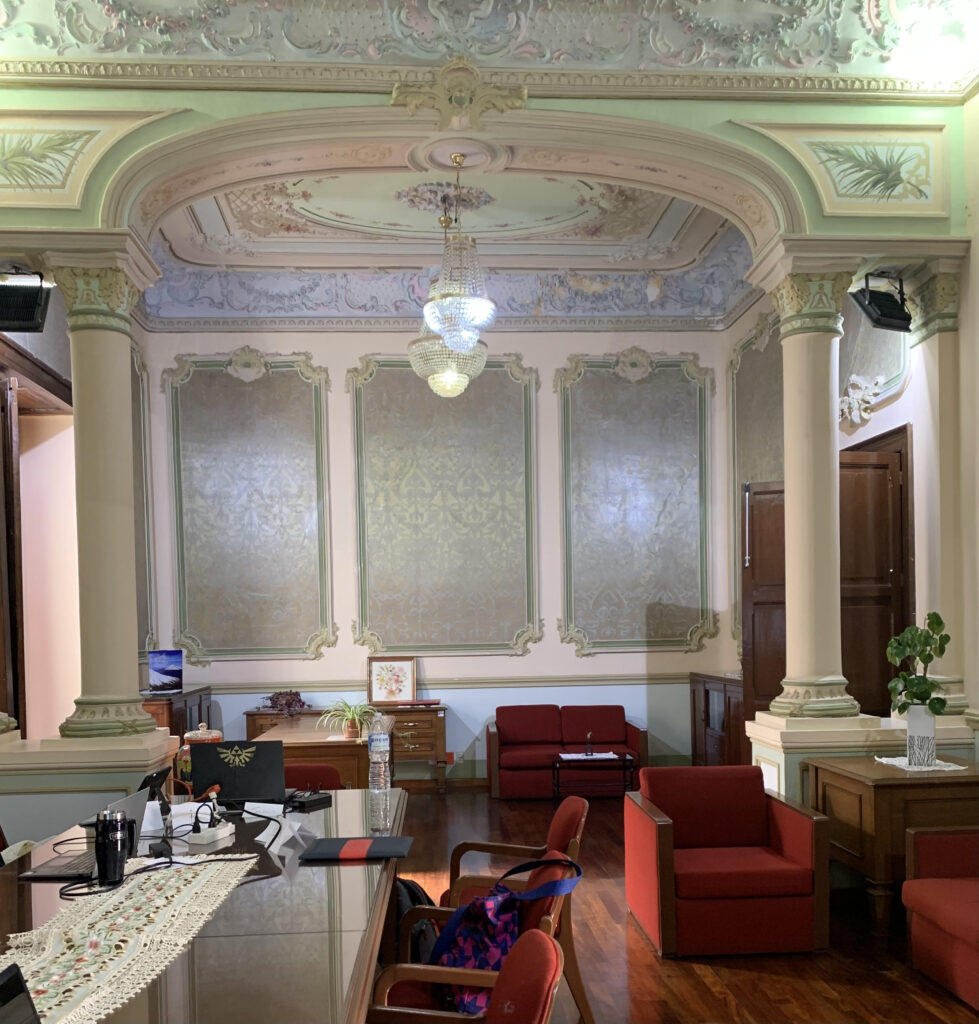
Yesterday felt far from my birthday last week when I stood in an ancient, ornate room, and my students sang:
Que linda esta la mañana En que vengo a saludarte Venimos todos con gusto Y placer a felicitarte El día en que tu naciste Nacieron todas las flores . . .
How beautiful this morning is Why have I come to greet you? We all come with joy And pleasure to congratulate you On the day you were born All the flowers were born. . .
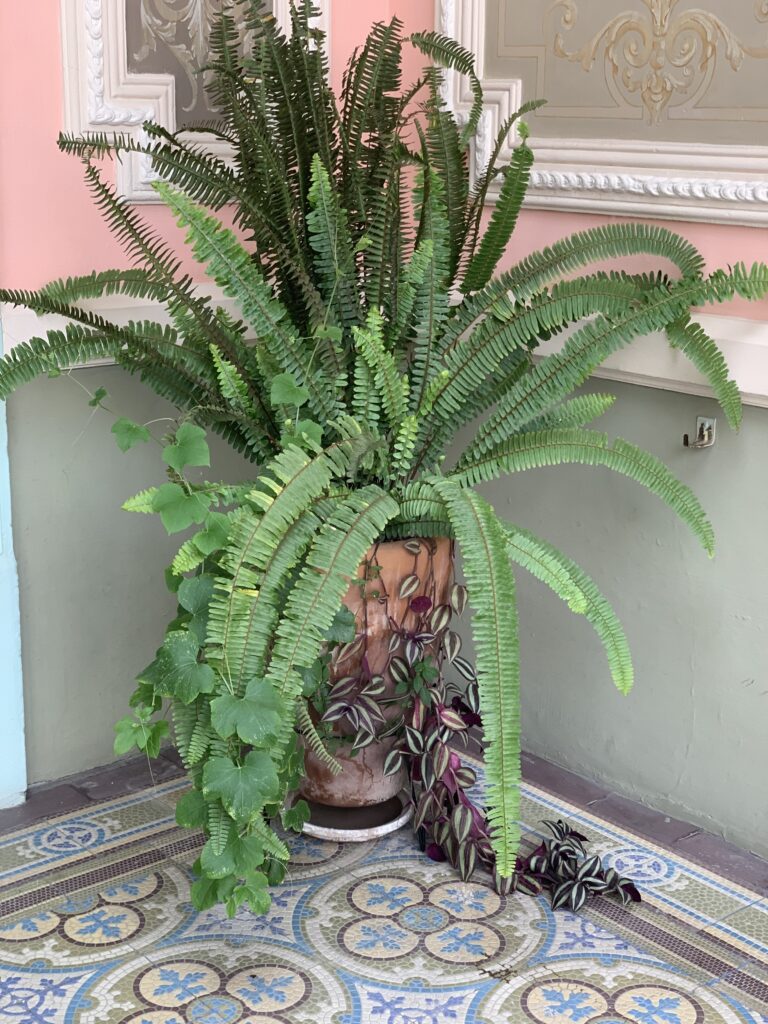
The room where I teach one of my classes.A plant outside the room where I teach. The tile!
The treats I brought sat on a heavy, wooden desk, and I felt so lucky to be with these amazing people, graduate students studying fields from political science, to architecture, to chemistry, to education. When I told them I was turning fifty, one student’s mouth literally dropped open. She is twenty-six; she doesn’t even believe she will ever be forty. And here I am.
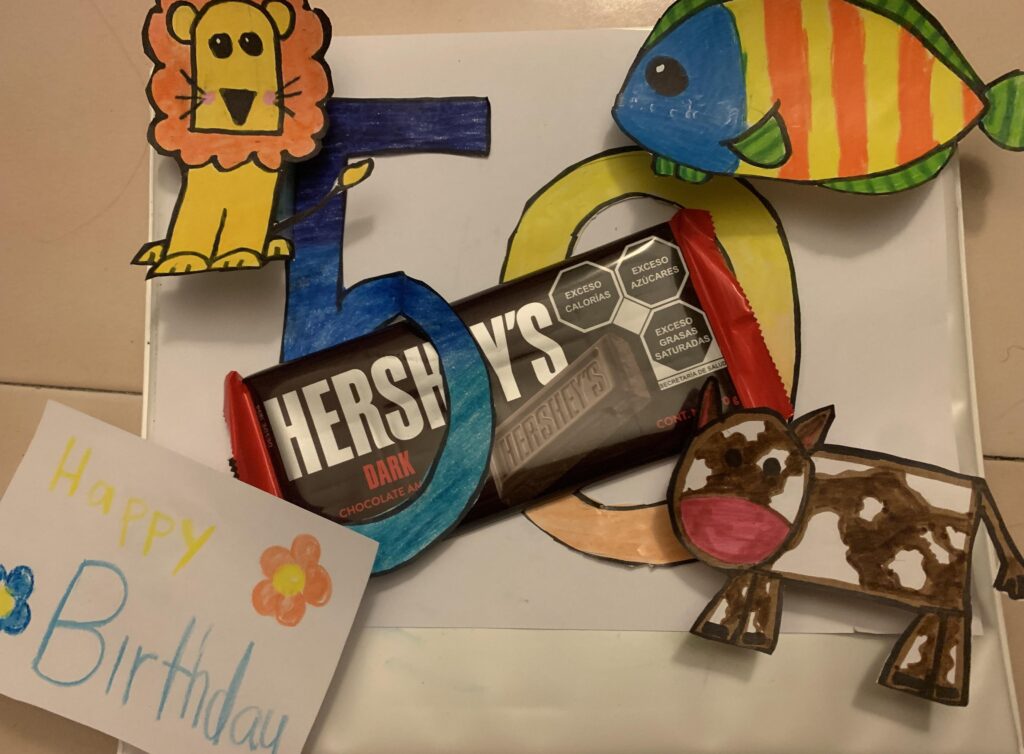
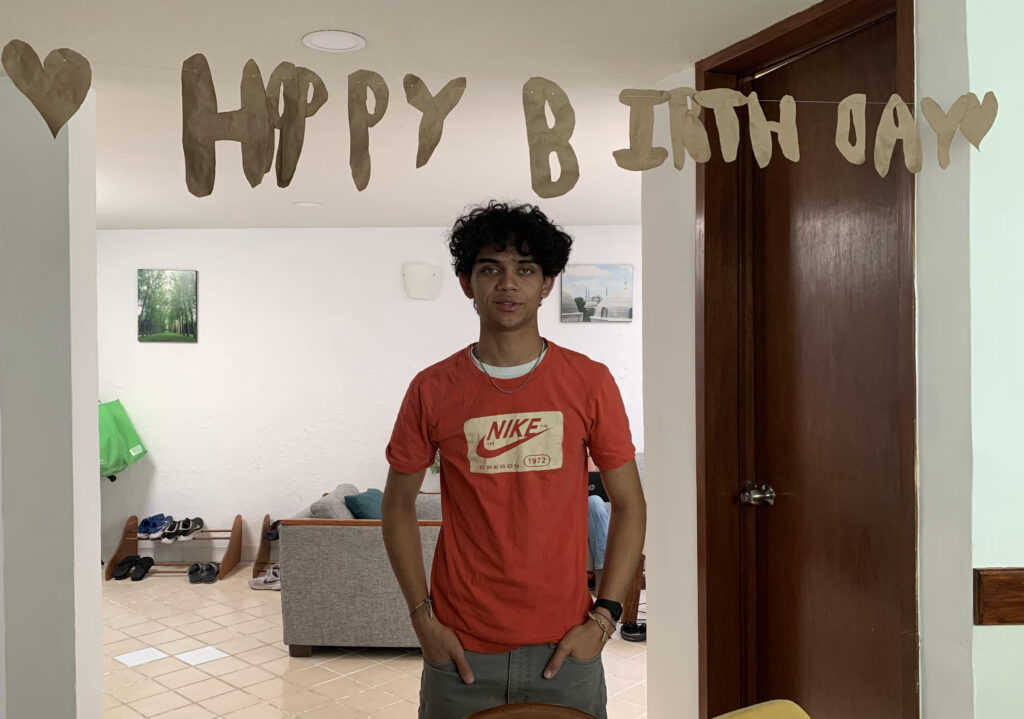
What a lovely birthday. Simone and Marie made cards. Simone drew animals and bought candy to make a sign she presented to me in the morning. Langston cut out every single letter to make a Happy Birthday banner. We went out to dinner with Veronica and her son.
Simone drew all these animals.Langston stayed up late to finish the sign.
Meanwhile, many people walked around with ashes on their foreheads remembering the fragility of life, that we are made of dust and to dust we will return.
Having my fiftieth birthday on Ash Wednesday seems like metaphorical overkill. My birthday has only been on Ash Wednesday one other day in my life, the day I turned 39. I remember getting my six-year-old ready for elementary school, my four-year-old ready for preschool, and dropping my one-year-old off at day care before heading to work. On my way to work, a church offered “ashes to go,” so I rolled through and received drive-through ashes and a prayer. If I squint a little, my forties have been bordered by Ash Wednesdays. I’m delighted to be done with my forties and on to a new decade.
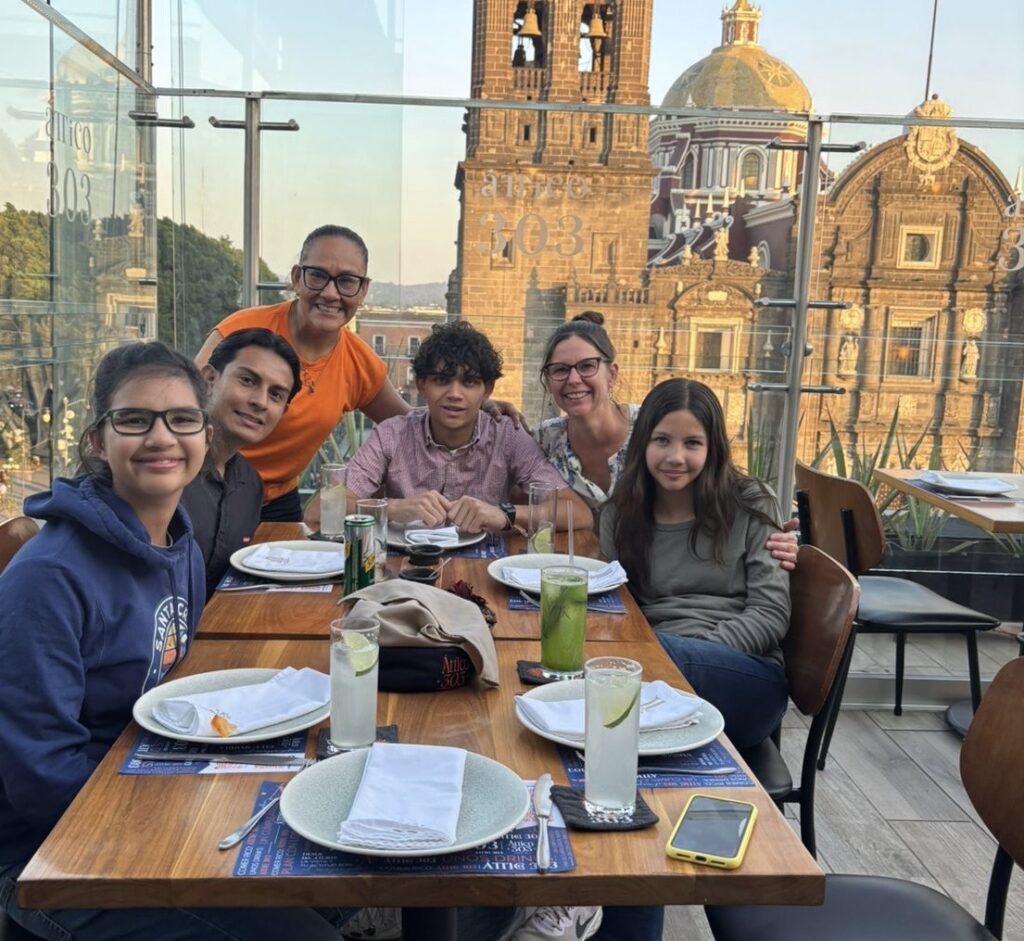
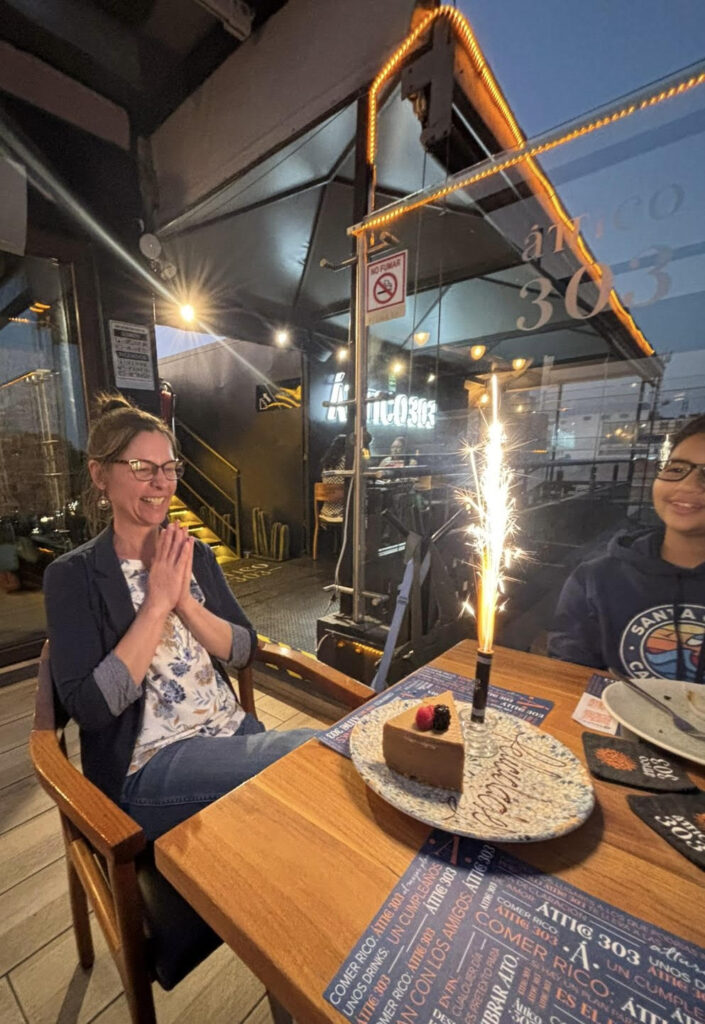
Mark treated us all to a birthday dinner. Beautiful and delicious.
“My fifties were great,” my friend Carol told me. She is one day and a few decades older than I am. My mom says the same thing. Every age has its challenges. I cannot say that parenting teens and a preteen is continual joy. And aging intimidates me.
The streets of our area of Puebla are full of people; a grandpa holding the hand of a toddler, a mother and her adult daughter arm in arm, a gaggle of teenagers laughing. And when I see a bent old woman taking micro-steps, carrying groceries in one arm and holding a cane in the other, I think, what courage. All that my parents and friends at church have been through as they age seems to take such bravery and grace.
“Make him think,” says Wormwood, the experienced demon in C.S. Lewis’ Screwtape Letters, “that he owns his time,” as he advises his mentee. (Disclaimer: I don’t have the book with me, and I’m fifty, so the quote could be from another book, or a poem, or a conversation. Who knows!) “Make him think that his time, his body, his home, are his, that he has earned them and owns them.”
Ash Wednesday, turning fifty, unrest in a country, these things give me a glimpse into the fact that nothing around us is ours, that every moment, every person, every leaf in the tree is a temporary gift, not mine at all.
When my kids work to make my birthday special, my colleagues take me out to a birthday lunch, and I get a video made by my best friend with many of you wishing me a happy birthday, sending love, these moments between the ashes are shining jewels. I am delighted. And grateful.