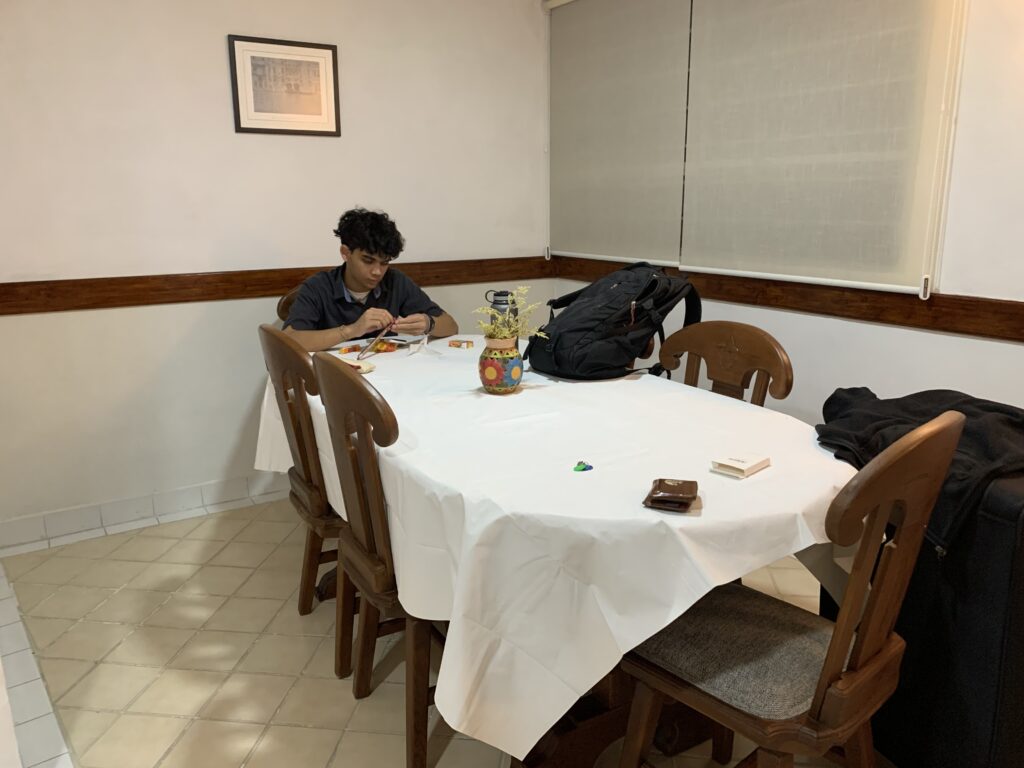
January 2026

We Thank You

Each morning, I drop the kids off at school in the cool dimness of 6:55 a.m. and walk the 8 minutes back to our apartment.
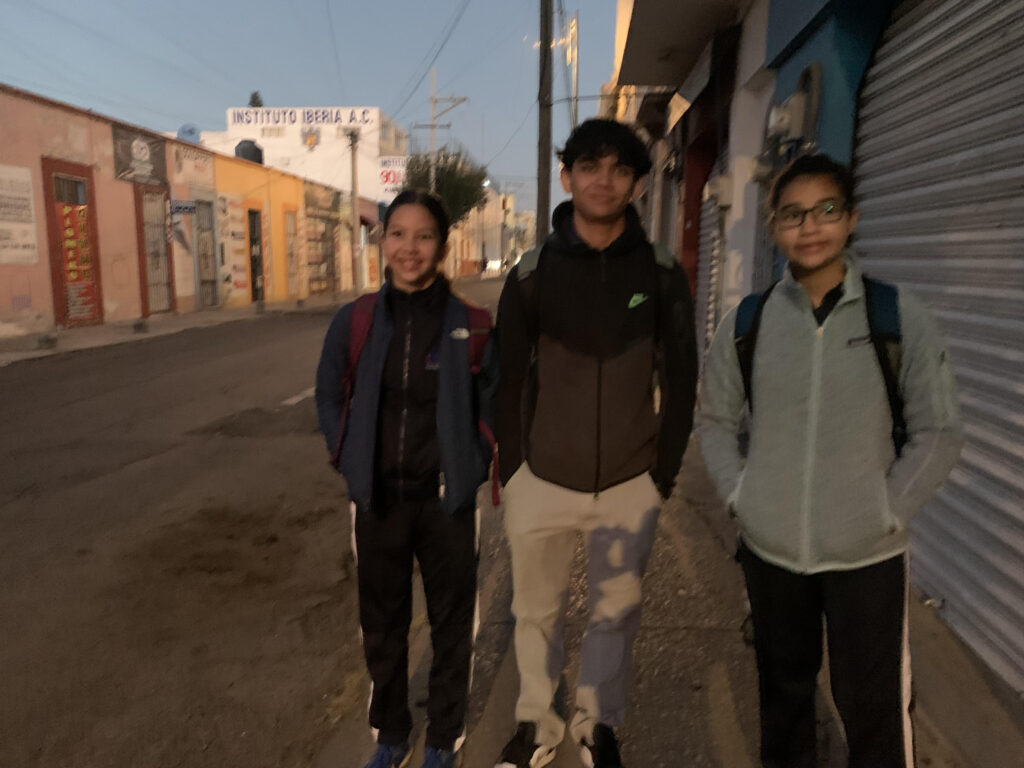
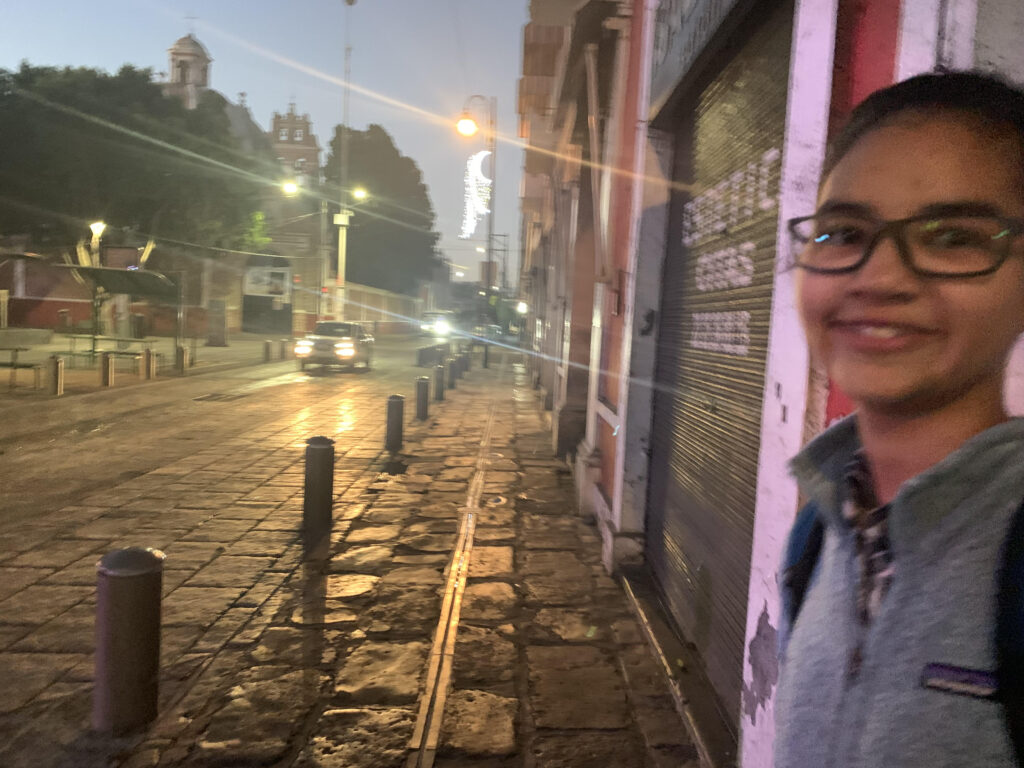
Some days, Langston is ready in time to walk together.
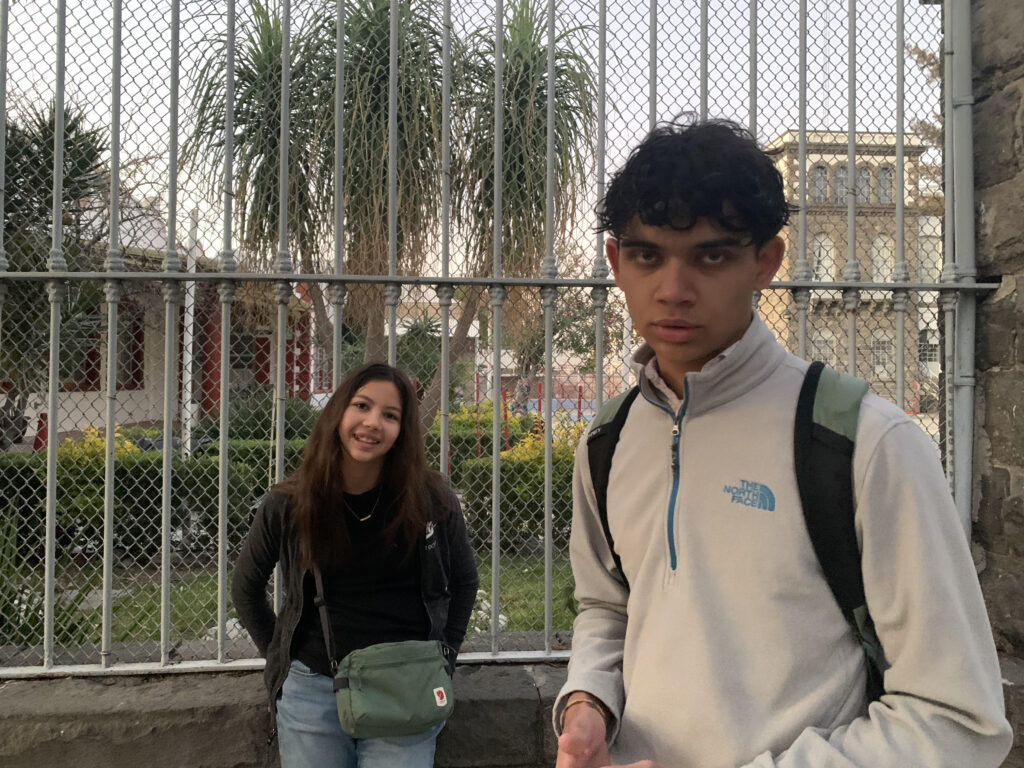
On our way to school!

Home alone a little after 7:00 a.m. (unless my colleague picks me up at 7:30) I have a few minutes of quiet. I have often been spending the moments of quiet in the prayers of thanksgiving from the Book of Common Prayer.

“We thank you for the splendor of the whole creation, for the beauty of this world, [and] for the wonder of life. . . “
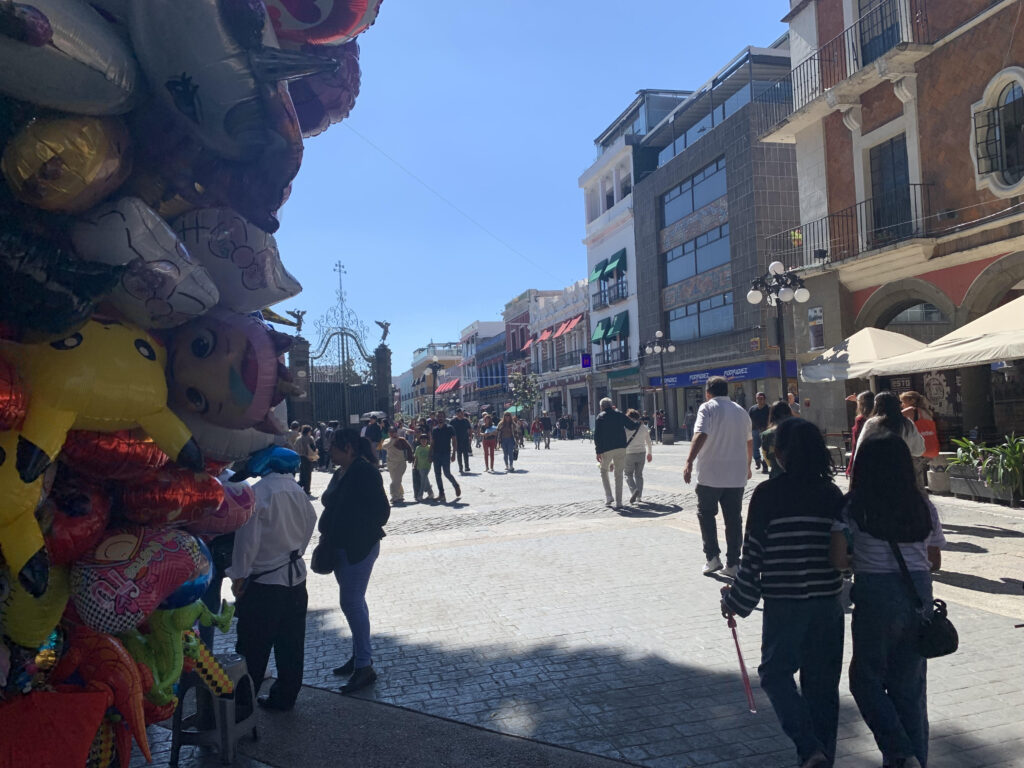
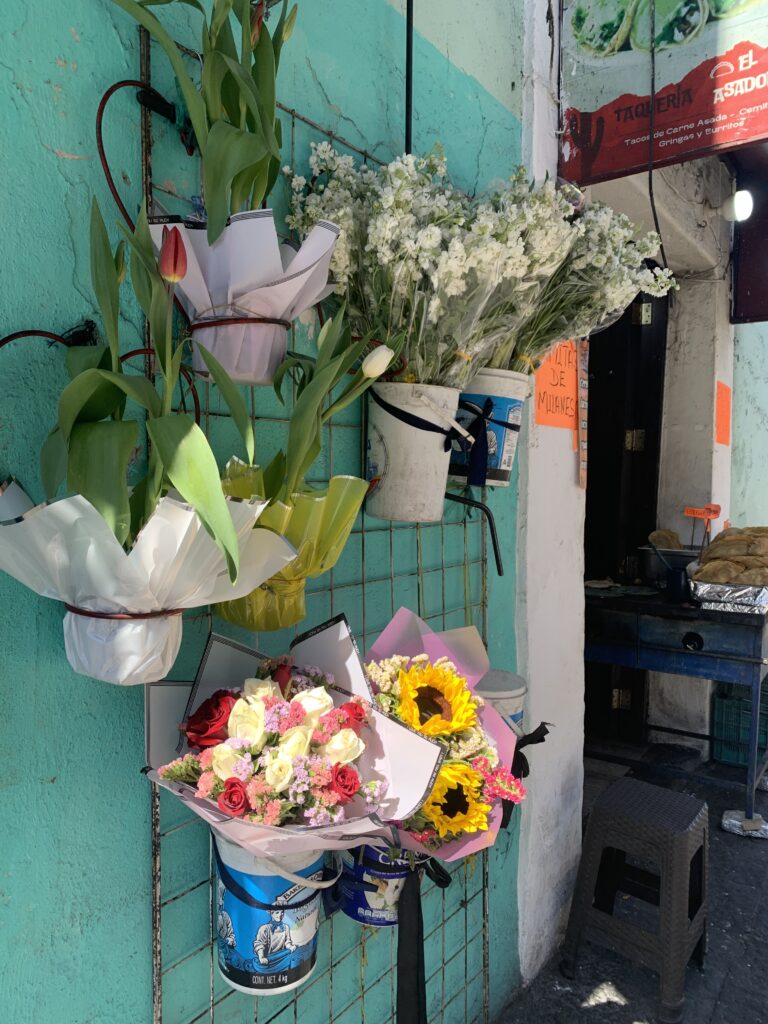
On a Saturday evening, we walk down 16 of septiembre towards the Zocalo. Fellow pedestrians fill the sidewalks. A tiny floral shop offers potted tulips. Across the street layers of roasting meat spin on a spit in front of a shop selling Tacos Árabes. A baby strapped to his father gives Langston a steady gaze. The dizzying scent of fresh bread wafts past us.
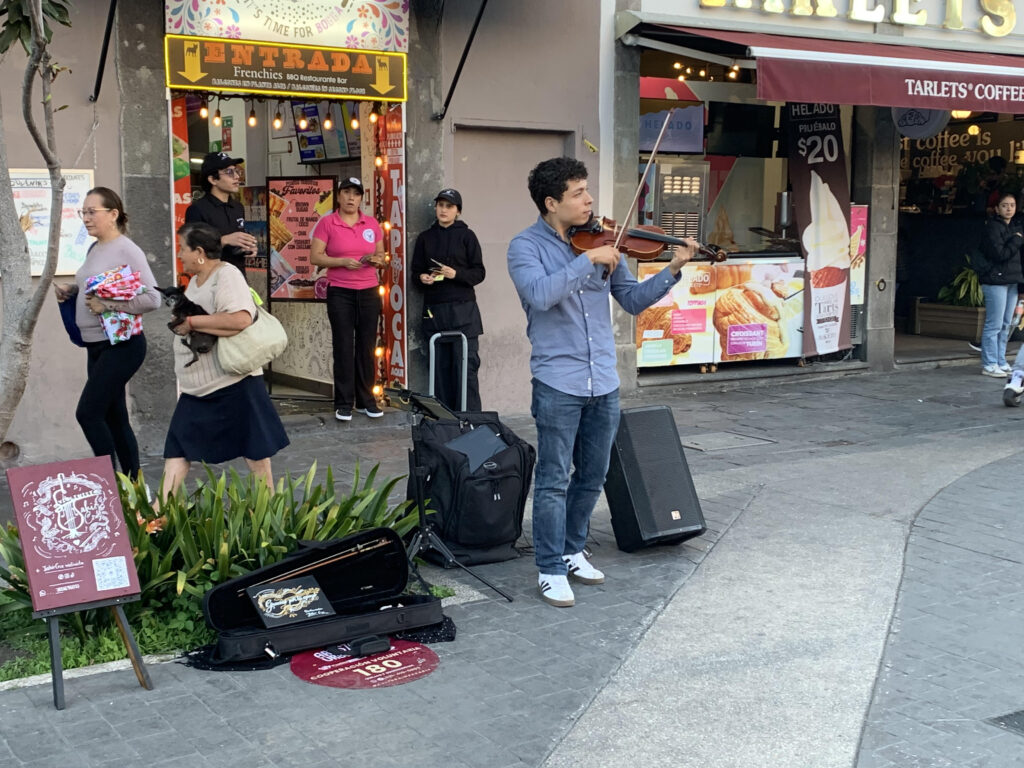
As we get closer to the Zocalo, performers fill the street. A couple covered in a bronze glaze poses as statues on a bench. The sound of Michael Jackson’s “Thriller” starts up, and a dancer lifts his head. Cords from “Thriller” intertwine with a violin playing “I Did It My Way.” We weave between families, couples, and groups of teenagers.
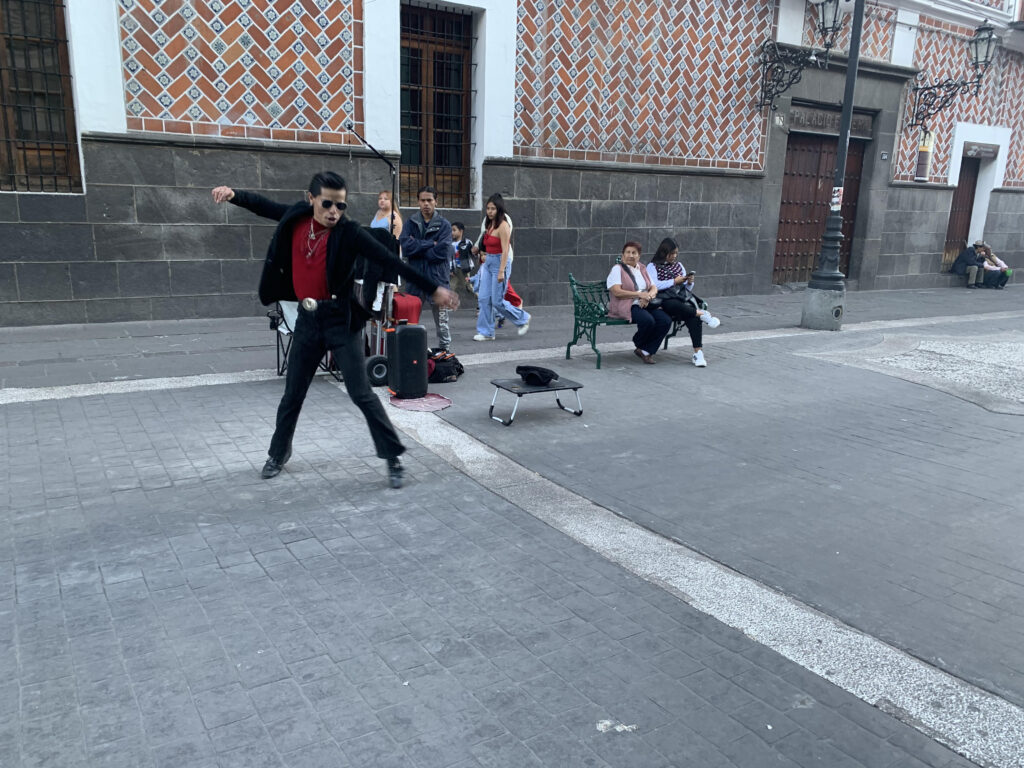
This guy dances nonstop.
One of the many musicians near the Zocalo.

“We thank you for all that is gracious in the lives of men and women, revealing the image of Christ.”

Two Fridays ago, Veronica motioned to the white chair in her office and sat down with coffee in hand. I had expected her to be in a hurry to get to work, but I sat down to chat. Veronica is a busy person. She teaches and supervises doctoral and masters’ students, travels for school evaluation work, oversees students doing practicums in schools, and so much more. Additionally, she now also often drives this Fulbright Scholar to work.

I had planned to take the bus to work, but Mark asked me, please do this one thing for him and take an Uber rather than navigate the bus system. That seemed like a fair request. But when Veronica heard I was taking an Uber, she told me that it would be “no problem” for her to pick me up on her way to work. Then she started showing up with coffee for both of us.
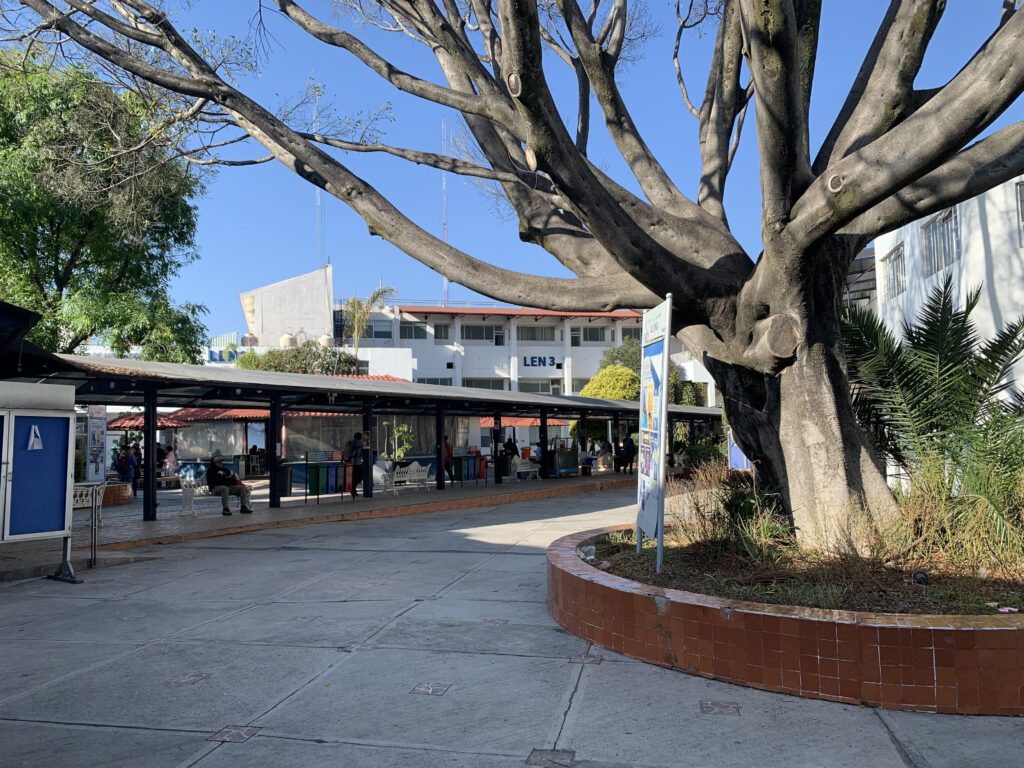
The Facultad de Lenguas in the morning before it fills up with students.

I have two sponsors with Benemérita Universidad Autónoma de Puebla (BUAP), Veronica in the Language Department and Chantal in Research and Postgraduate Studies. Both have been more than welcoming, but I have spent the most time with Veronica. On my first day at work, Veronica, several students, and a few faculty had a rosca de reyes to celebrate.
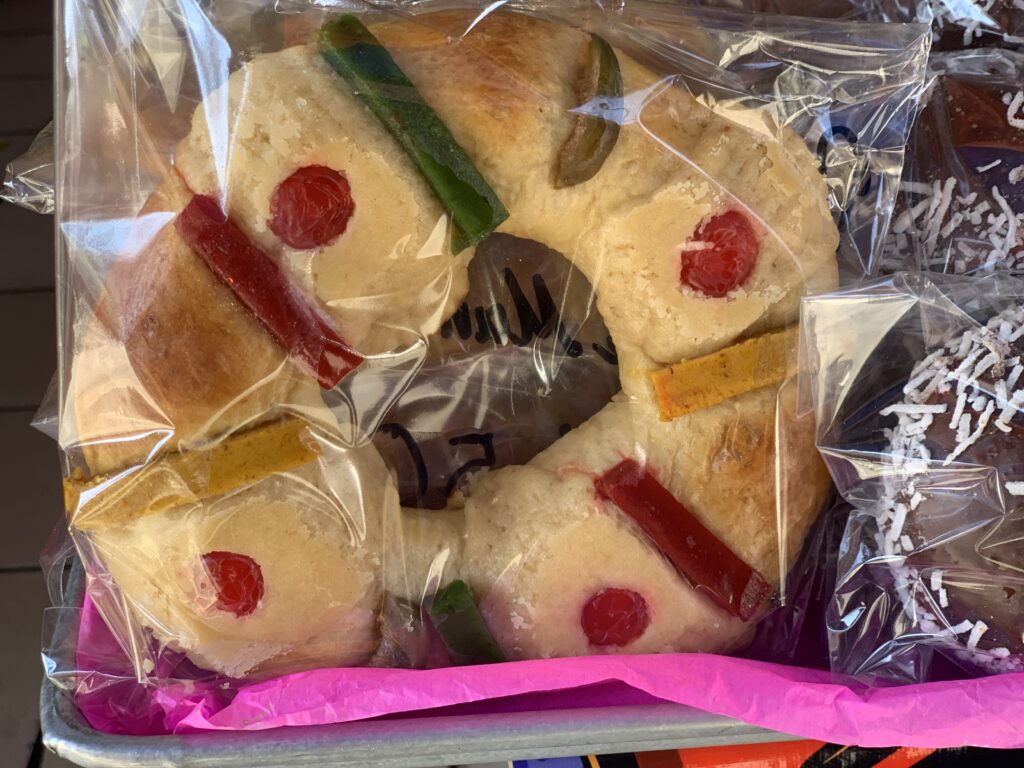
[Just as a note: I had thought the rosca de reyes was only for Three Kings Day, January 6. But I’ve had several times since then (and it is delicious). The bread has baby Jesus figurines in it, and the person who gets Baby Jesus in their piece of bread has to buy tamales for everyone on February 2, día de la Candelaria, celebrating the day Jesus was presented at the temple.]

Veronica and I talked for a few minutes before Veronica showed me where to get the key to my classroom for my first day of teaching and then made sure I could get in the classroom and use the technology. The students, all getting their master’s in Teaching English, came in one at a time, greeting me as they entered. Veronica introduced me to the students before leaving to teach her own class.

We thank you for setting us at tasks which demand our best efforts and leading us to accomplishments which satisfy and delight us.

One of the classes I am teaching is Academic Writing for the master’s students in the Teaching English program. While I felt confident about the content of the course, I had a lot to learn about the students and, as I prepared, I hoped the Academic Writing class was what they needed.

The classes are three hours long, so I spent a long time working on providing enough information combined with reflection and interaction. As I introduced the topic of academic discourse, it was clear that the students were interested. One student asked a question, and another shared an insight from his own experience. Before we left, several students stayed to express their interest in the class or ask additional questions.
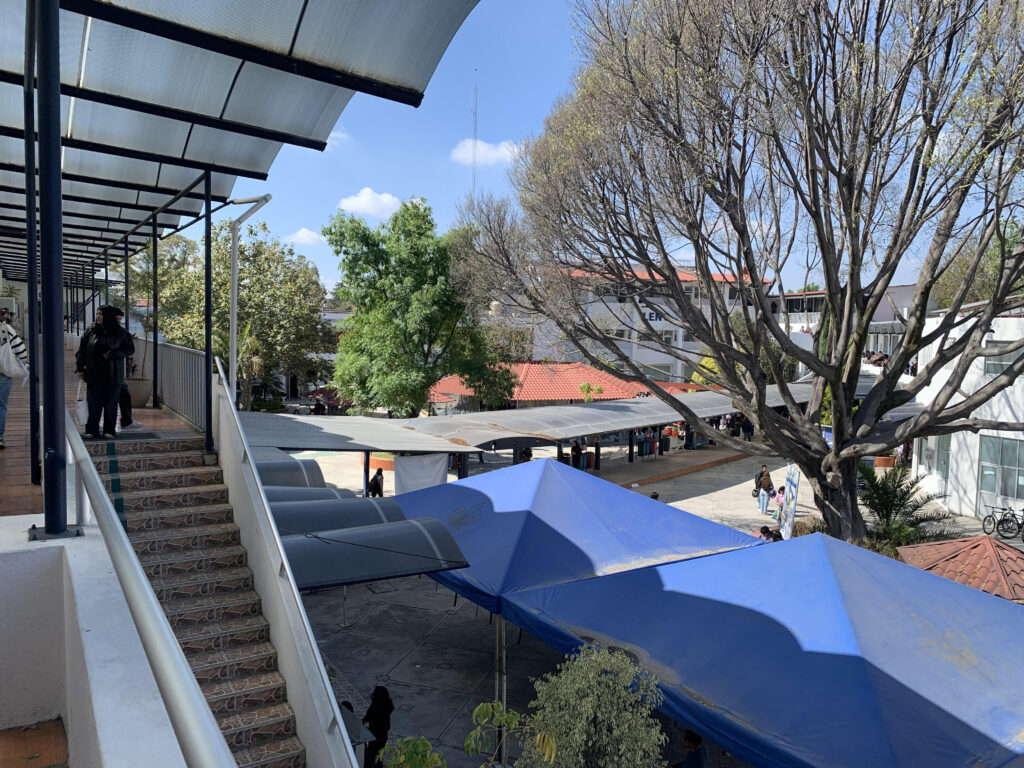
The center plaza of the Facultad de Lenguas is usually filled with students talking, eating, and studying.

“We thank you also for those disappointments and failures that lead us to acknowledge our dependence on you alone.”

Having had plenty of disappointments and failures, especially during my time in Peace Corps, I had expected so many more of these by this point in my time here. I, and we, have had some, but none that feel as crushing or as impossible as I expected. And this is largely due to the generous hospitality we have received.

Last Saturday, Veronica had the kids and me over for dinner. She drove for about 30 minutes to pick us up and then showed us around the beautiful Cultural Center on the way to her house. Her husband works out of town, but her delightful son and Langston hit it off. Over her homemade meal, we talked about her 107-year-old grandmother who had lived through the Revolution and how we had locked ourselves out of our apartment and had to climb in through a window. After a lovely evening, she drove us all the way back home.
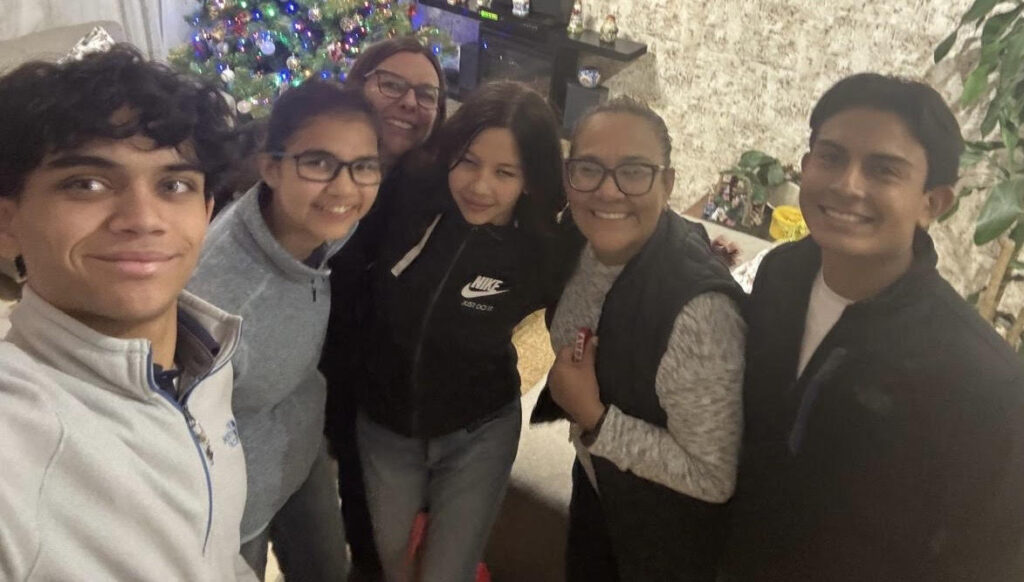
Dinner at Veronica’s house

For all this, and more, I am truly thankful.  
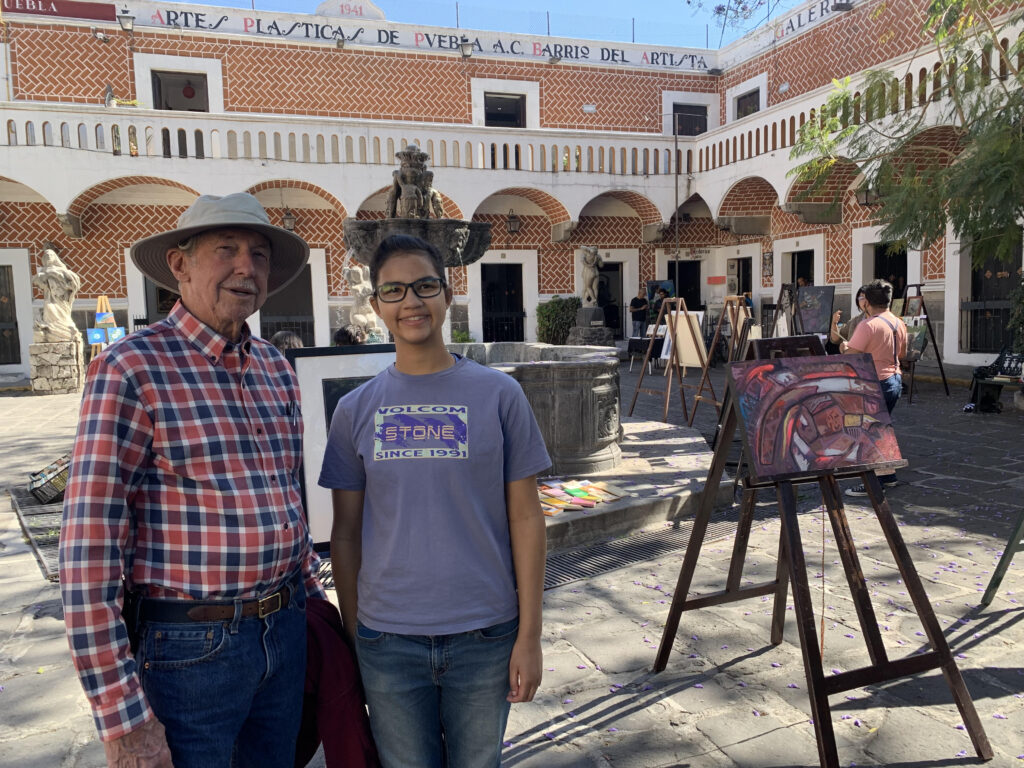
One more thing I am grateful for is my dad visiting. Here is my dad and Simone in the artists’ barrio.

Foiled

“You all have no idea how much you are going to need me in Mexico,” Mark sighed a few months ago.

But he is wrong. We do know. Mark embraced our new life with enthusiasm. He threw himself into trying Spanish, explored our neighborhood, and got our apartment set up.

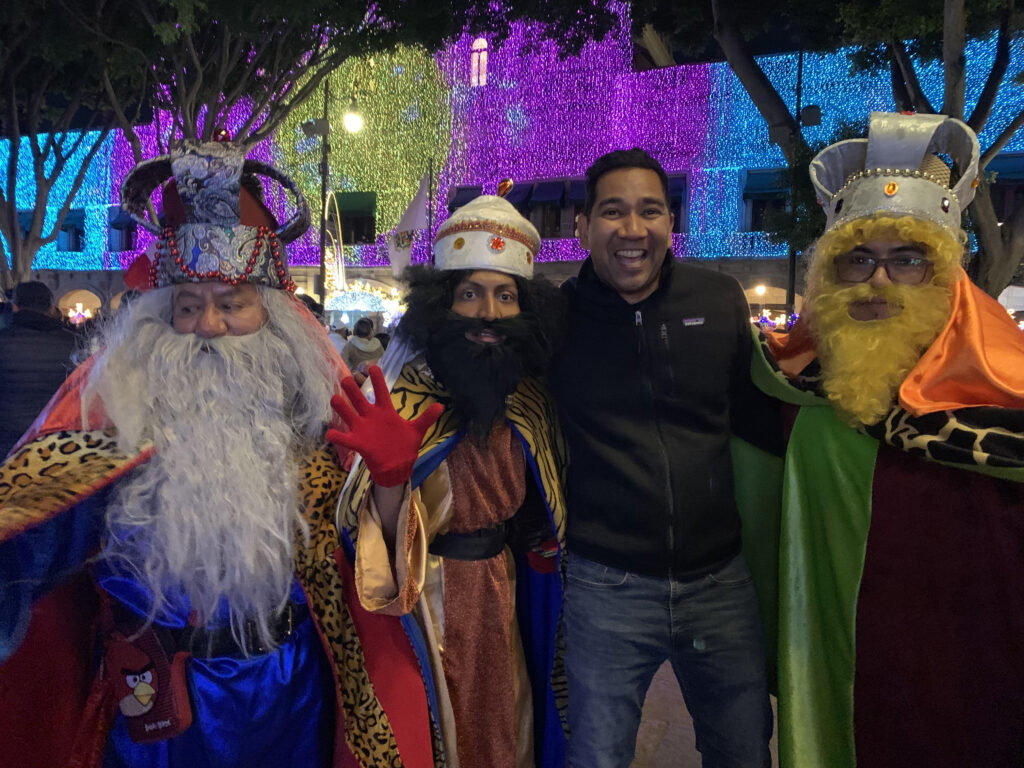
We went to the Three Kings Procession. The kids did not want their photo taken with the Three Kings, but Mark did.

Mark replaced the harsh white lights in our apartment with warmer light bulbs, got a microwave for us, and rearranged Simone and Marie’s bedroom. Mark headed back to Tucson last week. I do know how much we need him; I also know that the only reason we can take this detour from our normal life is that if we do need him, he will be right there to help us. 

The day after Mark left, the plan was for our normal life to begin. At 6:45 a.m. the four of us, all nicely combed and buttoned up, marched the two blocks to the kids’ school. It was Langston’s first day of school. We crossed the street to avoid a crew of men fixing the stucco on an old building. A man selling juice greeted us from his little cart.

“It doesn’t seem like there are many kids,” Simone observed. Maybe we were too early.

But the school did seem very quiet. We stood outside the heavy iron school gate on the sidewalk. Simone was cold because she had forgotten a jacket. Church bells rang.

How Langston felt and how Marie felt about Langston’s first day of school.

Finally, we noticed some people entering the campus at another gate. The guard at that gate graciously tried to understand why we were there and then told us to wait. An English-speaking teacher came to the gate. I had the date wrong. This was not Langston’s first day of school; in fact, he does not begin school for almost two weeks. He and I feel very differently about this.

I decided that we needed to join a gym to keep him busy. But first I had to go to work, which, by the way, is going great. We visited one gym that was too fancy, another gym that was too far for him to walk, and another that seemed to work. Prior to joining, though, we needed proof of residency, a doctor’s note, and a certain number.

Meanwhile, the kids all need to eat. So often. How can kids eat so much? Mexico is a comparatively easy place for a dairy-free, egg-free, nut-free, seed-free diet. But we don’t have a stove yet. We do have an air fryer, but I can’t seem to make enough food in it; the meals seem to come out for two people rather than four. I bought a single electric burner and tried to make pasta. The water boiled, but once I put the pasta in the pot, the little burner wouldn’t heat up the water fast enough and we ended up with a gooey dish. “Mom, I thought you knew how to cook,” Marie said.

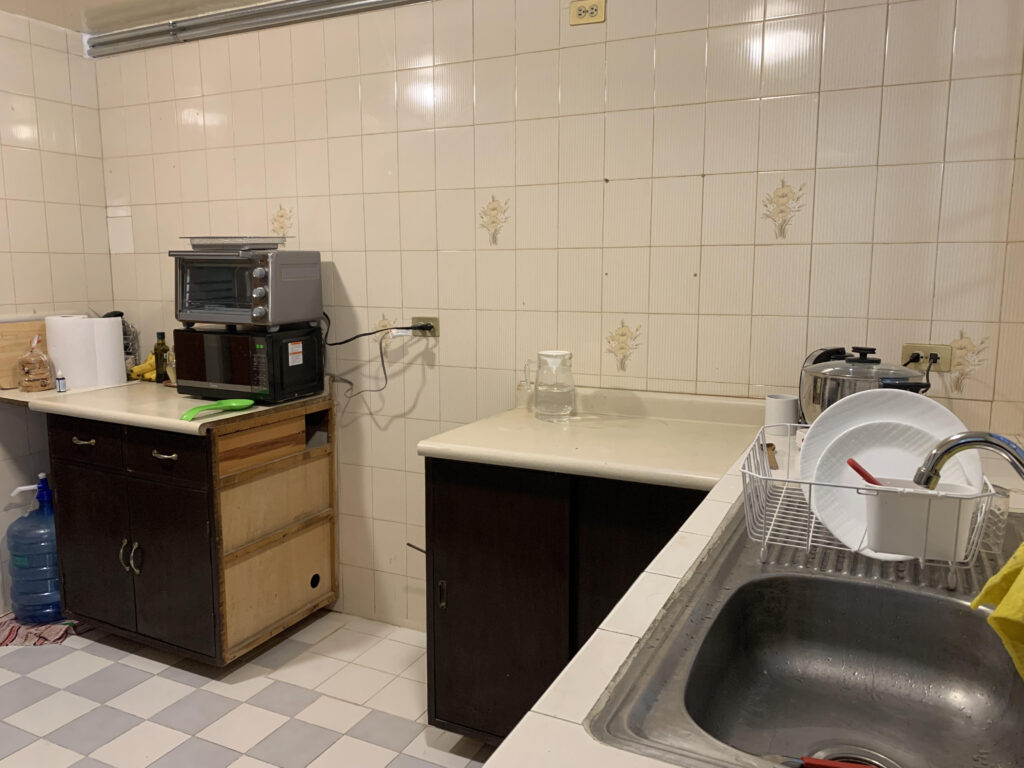
Despite the stacked appliances, something is clearly missing from our kitchen.

I was going to get us signed up for that gym. I called my doctor in Arizona for the doctor’s note. He said, no, providing a note like that is not something he can do. I texted my sister complaining about this, and she said to go to the closest pharmacy with a consultorio. So, I walked half a block to a consultorio medico, knocked on the door, and waited two minutes. The doctor answered the door and asked what I needed. He spent 20 minutes in a thoughtful conversation and kind examination and then gave me the note. At the end of the appointments, after confirming that I had all I needed, he asked for payment, 70 pesos, or about 4 US dollars, which I gave to him. He then gave me a candy.

Saturday morning, I thought we were ready to join the gym. I had gathered the other required documents in addition to the doctor’s note. We were ready and excited to swim and work out. We walked the 0.8 miles to the gym, and we were told that the woman who does memberships is out and will be back on Monday.

“Foiled again,” I said as we excited the building.

I have not successfully started the kids in school or joined a gym, and I am losing the constant Parent Vs Screen Time War, but I have hope that some of our larger goals, like expanding our hearts and minds are still in sight. I’ve convinced the kids that when we take out the garbage at night, we walk once around the plaza outside our apartment.

“Mom,” Simone said as we walked out of the gate one night. “How long do you have to wait after doing one Fulbright to apply for another one?”

“Oh,” Marie said, “look that up, Simone.” And I felt a little triumphant.

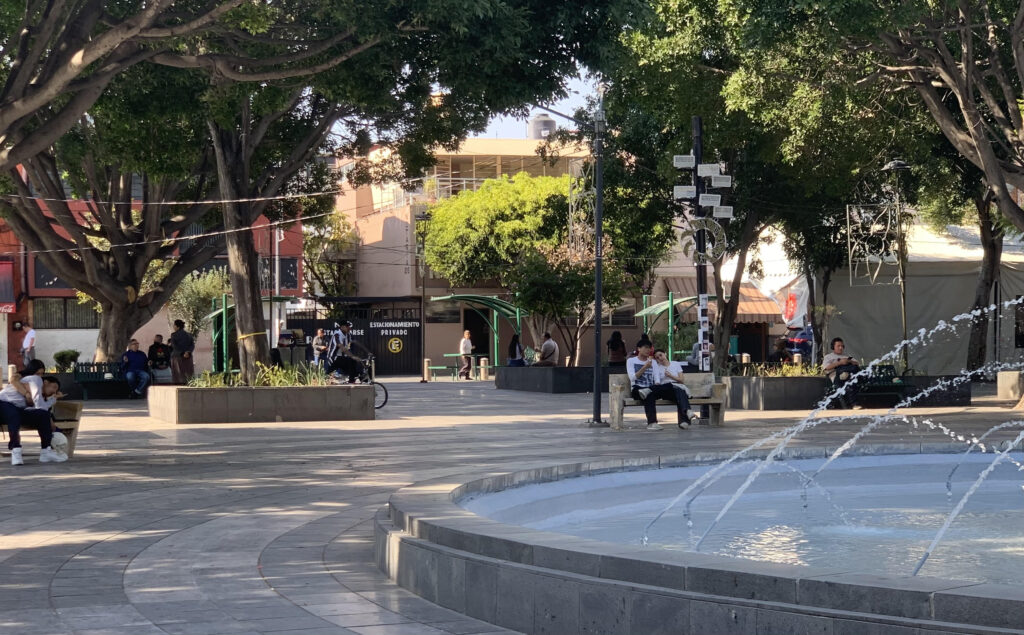
The plaza near our house.

Earthquake (and People Who Make You Want to Smile)

Before we got our baggage in the airport, one child told me that they liked the U.S. better. And by the time we got to our apartment, another told me that they were ready to go home.

The kids did not choose this experience. I realize now that I imagined that they would be transformed into cooperative, inquisitive adults in the space between leaving our home and arriving at the Puebla bus station.

On our way. Not in the picture, my one-inch binder of documentation authorizing the transportation of Marie’s shots. None of the airport authorities were interested in it.

The travel went seamlessly. My sister and her family drove us to the airport and gave us a warm goodbye. The five-month supply of shots that Marie gets every two weeks and that must be refrigerated went through both TSA and customs without a hitch. A friend of ours, Sara, grew up in Puebla and is visiting her family here. Her husband, Jim, met us at the Puebla bus station and drove us to our apartment near the historic center of Puebla.

Our living room
Our dining room

We have been met with such care and hospitality. Jim is an archeologist and gave us a tour of the area and the pyramids in Cholula. After spending most of the day with us, he offered to take us to the grocery store because he knows how hard it is to shop without a car. Sara and her extended family welcomed us into their New Year’s celebration in their family home with fireworks, so much good food, and celebration.

Over a decade ago, when I was teaching freshman composition, one of my students from Mexico wrote an essay titled “Americans Don’t Know How to Party.” Sara and her family showed us how to do it.

Our landlady, Celia, their son, and husband, have done all they can to welcome us. “She’s the kind of person,” Marie said after meeting our landlady, “that makes you want to smile when you meet her.”

Celia has answered all my questions so far.

“How do I wash the vegetables?” I asked her. She told me to use soap and then soak them in water with disinfectant drops. “I’ll give you a bottle, so you know what to buy.”

I asked her what to do if we have a medical emergency. “Call us first,” she told me. “Our friend is a doctor who works one block away, and he will take you to the hospital.”

One day Celia took me on a three-mile walk through our neighborhood, guiding me through the crowded streets showing me where to buy the freshest meat and vegetables, which cafes to visit, and which small shop is best for school supplies.

This is the first time that the kids have had to adjust to a new place. School begins soon, and it is all a lot. But we are having our moments – joining in Sara’s family’s hugs at the start of the new year, eating ice cream on a bench at night under the silhouette of the cathedral against the moon, sampling an array of fresh pastries until we decided on our favorite.

One morning the kids navigated their first earthquake, racing out of the apartment and down to the courtyard. They did this all with cool composure. Since it was only a small earthquake in Puebla, that experience was easier than starting a new school. But an earthquake is not an inaccurate metaphor for what I have imposed on them, and their reaction gives me confidence that they will continue to adjust.

Waiting out the earthquake in the courtyard of our building.